

Affordable Tuition for International Schools in Singapore
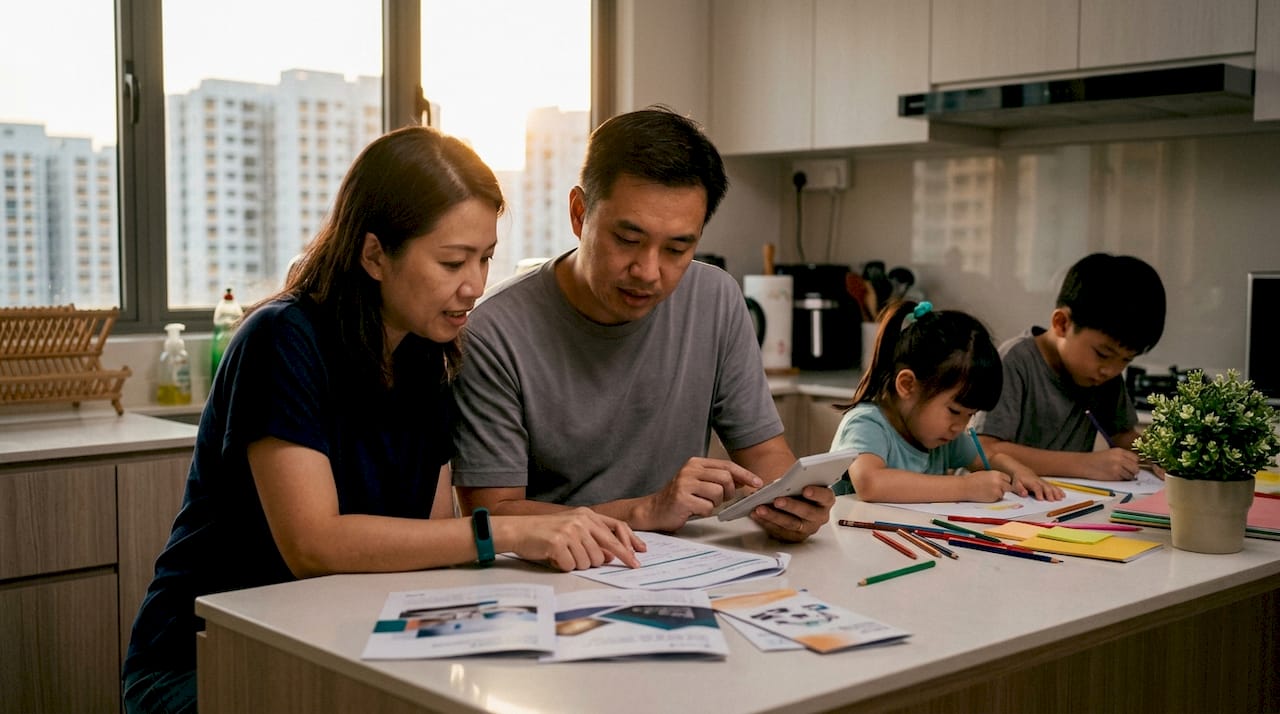
Affordable tuition is defined as the total cost of schooling, including base fees and all mandatory charges, that fits within a family’s budget while delivering quality education. For expat parents in Singapore, understanding what is affordable tuition means looking well beyond the headline figure on a school’s website. International school tuition in Singapore typically ranges from SGD 25,000 to over SGD 50,000 per year depending on year level. That range alone tells only part of the story. The real number, once you add capital levies, enrollment fees, transport, and activity charges, is almost always higher. Knowing the full picture before you commit protects your family’s budget and your child’s sense of stability.
What is affordable tuition, really? Understanding the true cost
Affordable tuition is not just the number printed on a school’s fee page. It is the sum of every cost your family will pay across a full school year. Many parents are surprised to learn that advertised tuition covers only 60–80% of the actual total. That gap, representing 20–40% of additional costs, is where budgets quietly break down.
Singapore’s international school market is one of the most expensive in Asia. A premium IB school with all fees included can cost SGD 95,000 to SGD 140,000 for two children in a single year. That figure includes capital levies, amenities charges, and other mandatory items that rarely appear in the headline tuition. For families working with employer education allowances or a fixed relocation budget, this gap between expectation and reality is the single biggest financial shock of the first school year.
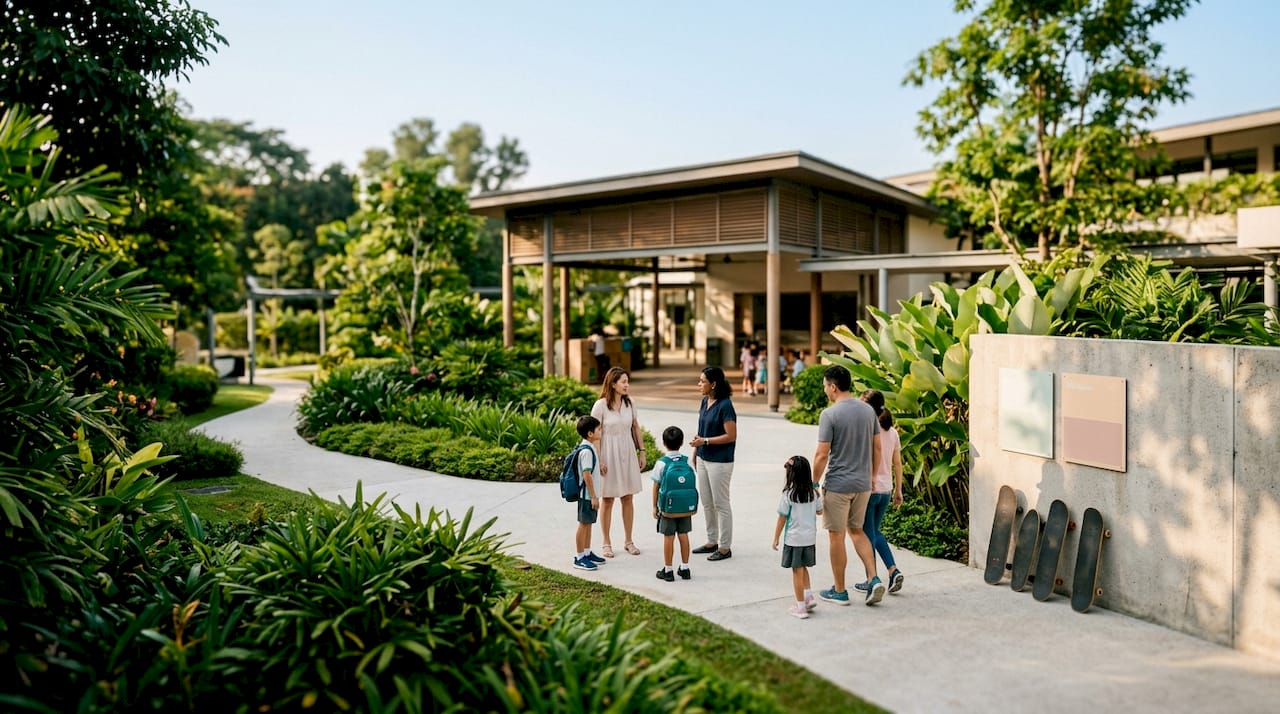
The good news is that more accessible options exist. Some schools offer entry-level tuition starting around SGD 15,000 to SGD 22,000 in the early years, though fees rise with each year group. Knowing which schools offer transparent, lower-entry pricing is the first step toward finding genuinely affordable schooling in Singapore.
What costs are included in affordable tuition?
Every international school in Singapore charges more than just tuition. Understanding each fee category is the only way to make a fair comparison between schools.
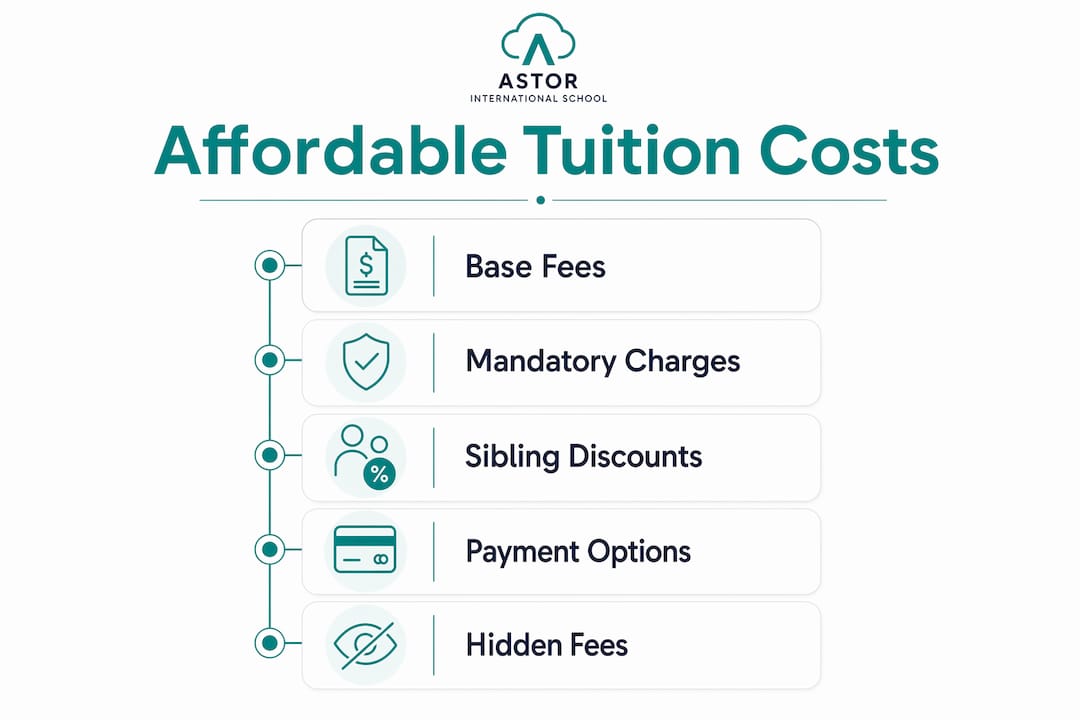
The typical fee components you will encounter include:
Base tuition: The core annual or termly fee, which is the figure most commonly advertised.
Capital levy or building fund: A mandatory annual charge that funds school facilities. Some schools bill this per child; others cap it per family.
Enrollment and registration fees: One-time charges at the point of application. These average SGD 2,500 to SGD 5,000 in the first year alone.
Technology levy: A recurring annual fee for devices, software licenses, and digital learning platforms.
Uniforms: Required at most schools, with full sets typically costing several hundred Singapore dollars per child.
School bus: Transport fees vary by distance and provider but are a consistent recurring cost.
Activity and exam fees: Activity fees and uniforms together can add SGD 1,000 to SGD 3,000 annually per child.
Debentures: Some schools require a one-time debenture payment, which can push first-year costs significantly above the advertised rate.
Debentures deserve special attention. In Singapore, debenture payments can cause first-year costs to exceed advertised tuition by 35–50%. This is not a hidden fee in the legal sense, but it is frequently underemphasized in school marketing materials. Always ask about debentures before you visit a campus.
Some schools offer sibling discounts and annual payment options that reduce the total. Sibling discounts typically give 10–20% off the second child’s tuition, and some schools cap capital levies per family rather than per child. These structures can make a meaningful difference for families with two or more children enrolled.
Pro Tip: Request a full, itemized fee schedule before attending any school tour. A school that cannot or will not provide this document upfront is telling you something important about how it communicates with families.
How to find affordable tuition options in Singapore
Finding genuinely low-cost tuition for an international school in Singapore takes more than a quick Google search. The process rewards parents who ask the right questions early and compare schools on total cost, not just headline fees. Here is a practical approach:
Compare total cost, not headline tuition. Request the full fee schedule from each school on your list. Add every mandatory charge to arrive at a true annual figure. This single step eliminates most misleading comparisons.
Identify schools with transparent, lower-entry pricing. Some boutique international schools publish clear, all-in fee structures and keep base tuition accessible, particularly for younger year groups. These schools often provide strong value relative to their size and class structure.
Confirm your employer education allowance early. Employer education allowances are common in expat packages and can cover a significant portion of tuition. Confirm the exact amount, whether it covers mandatory fees beyond base tuition, and whether it is paid directly to the school or reimbursed to you.
Ask about scholarships and bursaries. A growing number of international schools in Singapore offer merit-based or need-based financial aid. Academic, sports, and music scholarships are the most common. Ask the admissions team directly, as these programs are not always listed on school websites.
Time your application strategically. Schools occasionally offer reduced enrollment fees or waived registration charges during specific intake periods. Applying early in the admissions cycle can also improve your chances of securing a place before fee increases take effect.
Negotiate with your employer. If your education allowance does not fully cover your preferred school, ask your HR department whether the allowance can be adjusted or whether a top-up is possible. Many expat employers have flexibility that is never formally advertised.
For a broader view of your options, the guide on education options for expat families in Singapore covers a range of schools recognized for both quality and accessible pricing.
Comparing affordable international schools: What to consider besides cost
The cheapest school is not always the best value. Strong academic outcomes and genuine pastoral care justify higher tuition for many families. The goal is to find the school that delivers the best education for your child at a cost your family can sustain.
Academic quality and curriculum fit
The curriculum a school follows shapes your child’s entire learning experience and affects future school transitions. The International Primary Curriculum (IPC), the Cambridge Primary framework, and the International Baccalaureate Primary Years Programme are the most common options in Singapore. Each has different strengths, and the right fit depends on your child’s learning style and your family’s likely future moves.
Class size and teacher qualifications
Small class sizes are one of the clearest indicators of personalized learning. A teacher managing 12 students gives each child far more attention than one managing 28. Teacher qualifications, experience with international students, and staff turnover rates all affect the quality of education your child receives day to day.
Location and transport
A school that is geographically convenient reduces both transport costs and daily stress for your child. Schools located in central areas like Tanglin or Holland are accessible from many expat neighborhoods without long commutes.
Value factors at a glance
Factor | What to look for | Why it matters |
Curriculum | IPC, Cambridge, or IB PYP | Affects learning style and school transitions |
Class size | Under 20 students per class | More individual attention for each child |
Fee transparency | Full itemized schedule available | Prevents budget surprises after enrollment |
Sibling discounts | 10–20% off second child’s tuition | Reduces total family cost meaningfully |
Location | Close to home or well-served by transport | Lowers transport costs and daily fatigue |
Pastoral care | Dedicated counselor or wellbeing program | Supports emotional adjustment for expat children |
School culture and community also matter deeply, especially for expat children who may be adjusting to a new country. A nurturing environment where every child feels seen and supported is not a luxury. It is the foundation of good learning.
Tips to manage and reduce total school costs without sacrificing quality
Managing school costs well starts before enrollment, not after. These strategies give you the most control over your family’s total education spend:
Ask for full fee transparency upfront. Before you visit any school, request a complete fee schedule that includes every mandatory and optional charge. Transparency in fee disclosure is a key indicator of a school’s communication culture.
Apply for scholarships and financial aid. Academic, sports, and music scholarships exist at several international schools in Singapore. Ask the admissions office directly, even if you do not see a formal program listed online.
Budget for hidden costs from day one. Uniforms, school bus fees, and activity charges are predictable once you know to ask. Build them into your annual budget before you finalize a school choice.
Use sibling discounts where available. If you have two or more children, prioritize schools that offer meaningful sibling discounts or cap capital levies per family rather than per child.
Pay fees annually when possible. Paying school fees annually upfront can yield a 2–5% discount compared to termly payments. On SGD 30,000 tuition, that saves between SGD 600 and SGD 1,500 per year.
Negotiate with your employer. Education allowances are often negotiable, particularly at the point of contract renewal or relocation. Many expat packages have more flexibility than the initial offer suggests.
For more practical guidance on budgeting for international education, the 2026 guide for expat parents covers the full range of costs and planning strategies in detail.
Pro Tip: Pay fees annually if your cash flow allows. The 2–5% discount is guaranteed savings with zero additional effort, and it removes the administrative burden of termly payment deadlines.
Key Takeaways
Affordable tuition in Singapore means the total verified cost of schooling, not just the headline fee, and finding it requires comparing full fee schedules, using employer allowances, and choosing a school that delivers genuine value for your child.
Point | Details |
True cost exceeds headline tuition | Add all mandatory fees to base tuition; the real total is typically 20–40% higher. |
First-year costs carry extra charges | Enrollment fees and debentures can add SGD 2,500 to SGD 5,000 or more in year one. |
Employer allowances reduce out-of-pocket spend | Confirm your education allowance covers mandatory fees, not just base tuition. |
Annual payment saves money | Paying fees upfront annually can save SGD 600 to SGD 1,500 per year on a SGD 30,000 tuition. |
Value matters as much as price | Class size, curriculum fit, and pastoral care determine whether a school is genuinely worth its cost. |
What I have learned about affordable tuition after years in Singapore schools
Parents consistently underestimate first-year costs. Not because they are careless, but because schools do not always make the full picture easy to find. I have seen families budget carefully for headline tuition and then absorb a debenture charge, enrollment fee, and uniform bill that together equal two months of additional tuition. That kind of surprise is avoidable with the right questions asked early.
The parents who navigate this best are the ones who treat school selection like a financial decision as much as an educational one. They request itemized fee schedules before they fall in love with a campus. They confirm their employer allowance in writing before they commit to a school. They ask about sibling discounts, annual payment options, and scholarship availability in the first conversation, not the last.
The other thing I have noticed is that the most affordable school on paper is rarely the best fit for every child. A school with lower tuition but large class sizes, high teacher turnover, or a curriculum that does not match your child’s learning style will cost your family more in the long run, in tutoring, in emotional adjustment, and in school transitions. The right school is the one where your child genuinely thrives. Cost is a real constraint, and it deserves serious attention. But it is one factor in a decision that shapes your child’s confidence, curiosity, and love of learning for years to come.
Approach the search with both rigor and warmth. Ask hard questions about fees. Then ask equally hard questions about how the school supports each child as an individual.
— Elena
Astor International School and what affordable tuition looks like in practice
Astor International School, located in the Tanglin area of Singapore, was awarded best affordable international school in Singapore. It offers a transparent fee structure designed with expat families in mind.
Astor serves children aged 5 to 12 in small classes where every child is genuinely known by their teachers. The school’s IPC curriculum delivers internationally recognized, inquiry-based learning without the premium price tag of larger institutions. Families can also explore the full curriculum overview to understand exactly what their child will experience. If you want to see the school and ask questions about fees in person, a private school tour is available, or you can connect directly through a virtual tour with founder Elena from wherever you are in the world.
FAQ
What is affordable tuition for an international school in Singapore?
Affordable tuition is the total annual cost of schooling, including base fees and all mandatory charges, that fits within a family’s budget. In Singapore, this total typically ranges from SGD 20,000 to SGD 40,000 per child per year at more accessible international schools.
What hidden fees should I budget for beyond advertised tuition?
Expect enrollment fees, capital levies, technology charges, uniforms, transport, and activity fees. These additional costs typically add 20–40% to the base tuition figure advertised by the school.
How can I reduce the total cost of international schooling in Singapore?
Pay fees annually to secure a 2–5% discount, apply for sibling discounts, confirm your employer education allowance covers mandatory fees, and ask about scholarships during the admissions process.
What makes a school genuinely affordable rather than just cheap?
A genuinely affordable school delivers strong academic outcomes, small class sizes, and transparent fees at a total cost that fits your budget. The cheapest option is not always the best value when pastoral care and curriculum fit are factored in.
How do I find affordable international schools in Singapore as an expat?
Start by requesting full, itemized fee schedules from each school you consider. The guide on how to select an affordable school in Singapore walks through the key criteria and questions to ask during the admissions process.
Recommended
I really loved reading your blog. It was very well authored and easy to understand. Unlike other blogs I have read which are really not that good.Thanks alot! Zwembadaanleg tuin
You might comment on the order system of the blog. You should chat it's splendid. Your blog audit would swell up your visitors. I was very pleased to find this site.I wanted to thank you for this great read!! Zwembad tuin prijs
Your content is nothing short of brilliant in many ways. I think this is engaging and eye-opening material. Thank you so much for caring about your content and your readers. Inbouwzwembad prijs
Great tips and very easy to understand. This will definitely be very useful for me when I get a chance to start my blog. Inbouwzwembad prijs
I feel a lot more people need to read this, very good info! . Zwembad polypropyleen