

Effective ways to support your child's learning in Singapore
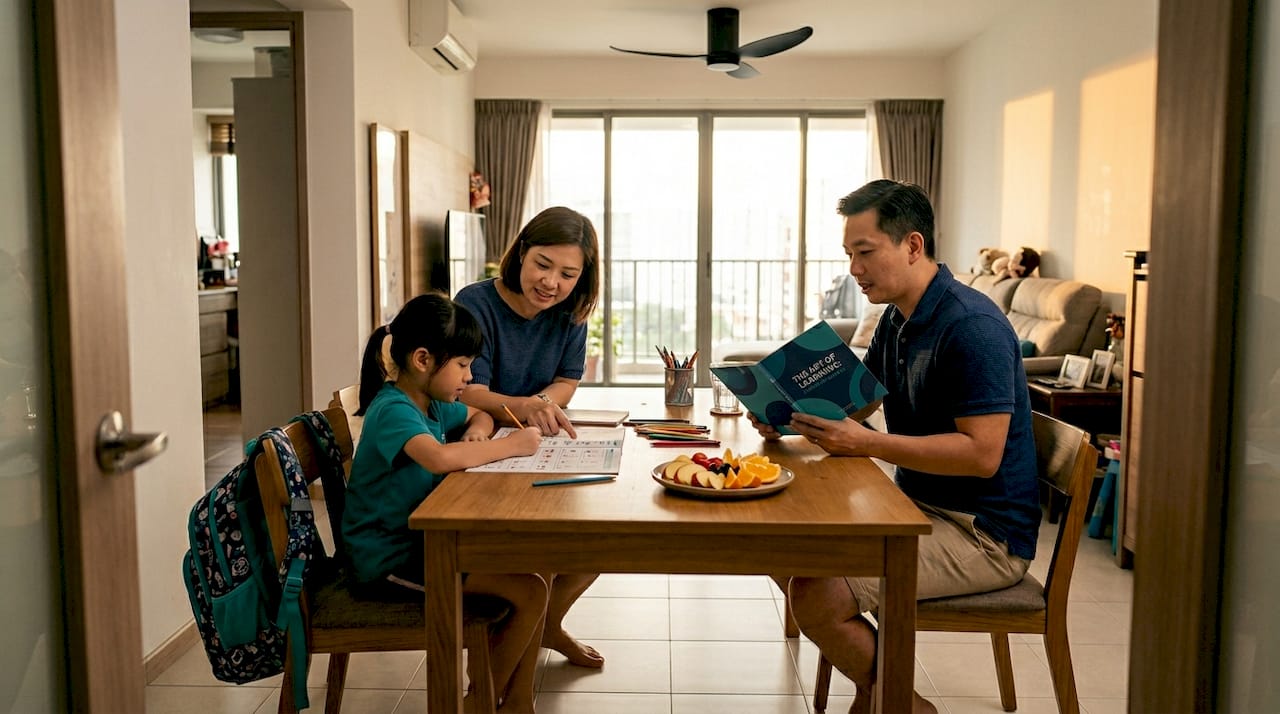
You’ve just landed in Singapore, your child starts school in three weeks, and you’re staring at a list of acronyms — MOE, IB, IGCSE, DSA — wondering which path will set them up for success without uprooting everything they know. It’s a scenario many expat parents know intimately. Singapore offers world-class education, but navigating it as a newcomer takes more than a good school brochure. This article walks you through practical, evidence-based strategies covering school selection, early learning, home support, and emotional resilience, so you can feel genuinely confident in the choices you make for your child.
Table of Contents
Key Takeaways
Point | Details |
Choose the right school | Evaluate both MOE and international school options based on your child’s needs and family plans. |
Prioritize early play | Responsive caregiving and play-based activities lay a strong foundation for your child’s lifelong learning. |
Strengthen school partnerships | Active family-school engagement amplifies educational and social success for your child. |
Use active learning methods | Techniques like teach-back boost retention and make home learning more effective. |
Support emotional wellbeing | Recognizing and addressing transitions smooths the expat experience for the whole family. |
Understanding your school choices in Singapore
Choosing the right school is the single most consequential decision you’ll make as an expat parent in Singapore. Get it right, and everything else becomes easier. Rush it, and you may find yourself switching schools mid-year, which is stressful for everyone.
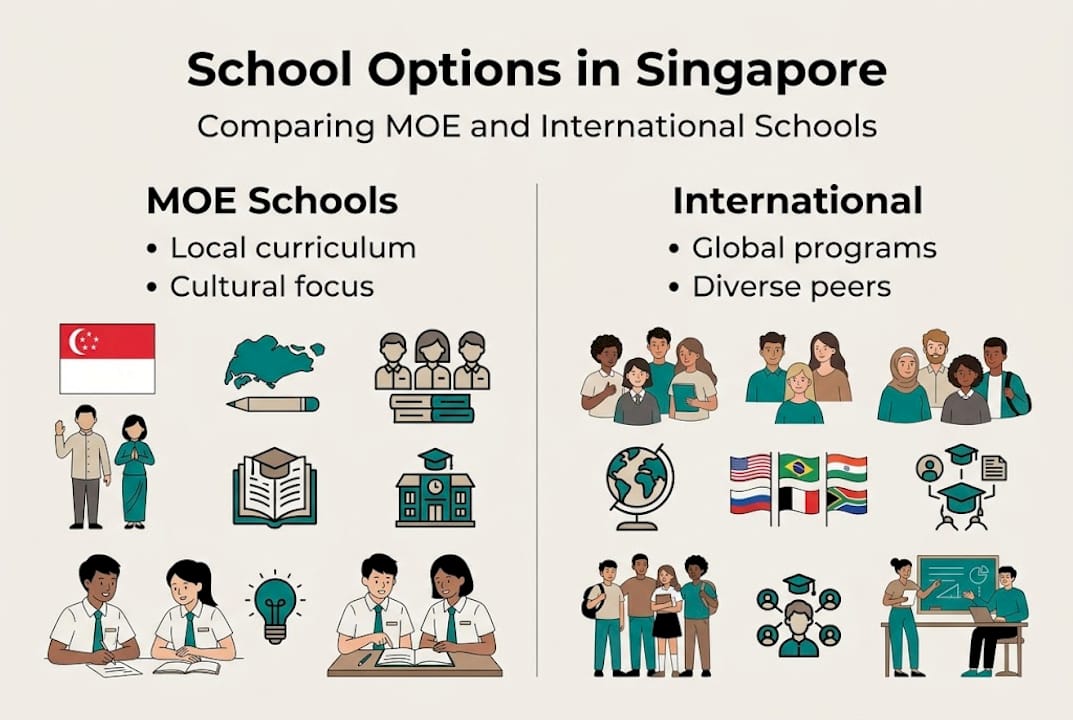
Singapore offers two broad pathways. The first is the Ministry of Education (MOE) system, which serves local Singaporean families but also admits eligible foreign children. MOE schools follow a rigorous national curriculum, emphasize bilingualism, and provide deep cultural immersion. The second pathway is the international school network, which offers globally recognized curricula such as the International Baccalaureate (IB) or Cambridge IGCSE, designed to provide continuity for families who move frequently.
As Singapore’s expat education guide makes clear, the right choice depends on your child’s age, language readiness, and how long your family plans to stay. A child who arrived at age four and will remain through secondary school may thrive in an MOE school with time to adapt. A child joining at age nine for a two-year posting benefits far more from curriculum continuity in an international setting.
Here’s a quick comparison to help you think it through:
Factor | MOE local school | International school |
Curriculum | Singapore national curriculum | IB, Cambridge, or home country |
Language | English and Mandarin (or Malay/Tamil) | Primarily English |
Class sizes | Typically 30–40 students | Often smaller, more personalized |
Cultural immersion | High | Moderate |
Curriculum continuity | Low for mobile families | High |
Cost | Subsidized for PR, higher for foreigners | Higher tuition fees |
When visiting schools, come prepared with specific questions. Ask how teachers support children who are new to the school community, what the typical class size is, how they communicate with parents, and what pastoral care looks like. These questions reveal far more than a glossy prospectus. You might also find it helpful to read through international school admission tips before your visits to know exactly what to look for.
Key factors to weigh before deciding:
Length of stay: Short postings (under two years) favor international schools for continuity.
Child’s current language ability: A child with no Mandarin foundation will struggle in an MOE school initially.
Curriculum alignment: If you’re returning to your home country, curriculum alignment matters enormously.
Social fit: Smaller schools often offer tighter-knit communities, which eases transition.
For a deeper look at how to evaluate your options, the guide to selecting an international school offers practical criteria that go beyond rankings and reputation.
Laying the groundwork: Responsive caregiving and early learning (1.5–3 years)
With your school options clearer, the next step is ensuring the home environment enables your child’s learning journey from the very earliest stages. For toddlers and young preschoolers, what happens at home is every bit as important as what happens in a classroom.
Responsive caregiving means tuning in to your child’s cues and responding consistently and warmly. It sounds simple, but it’s the foundation of everything. When a toddler points at a bird and you say “Yes! That’s a mynah bird, can you hear it singing?” you’re building vocabulary, attention, and emotional connection simultaneously. WHO guidelines on early development confirm that for children aged 1.5 to 3, prioritizing responsive caregiving, play-based activities, and stimulation promotes cognitive, language, and socioemotional development far more effectively than academic drilling.
This is worth repeating, because many well-meaning expat parents feel pressure to enroll toddlers in structured academic programs to “keep up.” The research simply does not support early drilling for this age group. What it does support is rich, varied play.
Here’s what responsive, learning-rich caregiving looks like in practice:
Activity | Developmental benefit | How to do it |
Narrating daily routines | Language and sequencing | Talk through every step: “Now we wash hands, then we eat” |
Sensory play (sand, water, clay) | Fine motor and creativity | Set up a simple tray with materials |
Reading aloud daily | Vocabulary and listening | 10–15 minutes before nap or bedtime |
Singing and rhyming | Phonological awareness | Nursery rhymes in any language count |
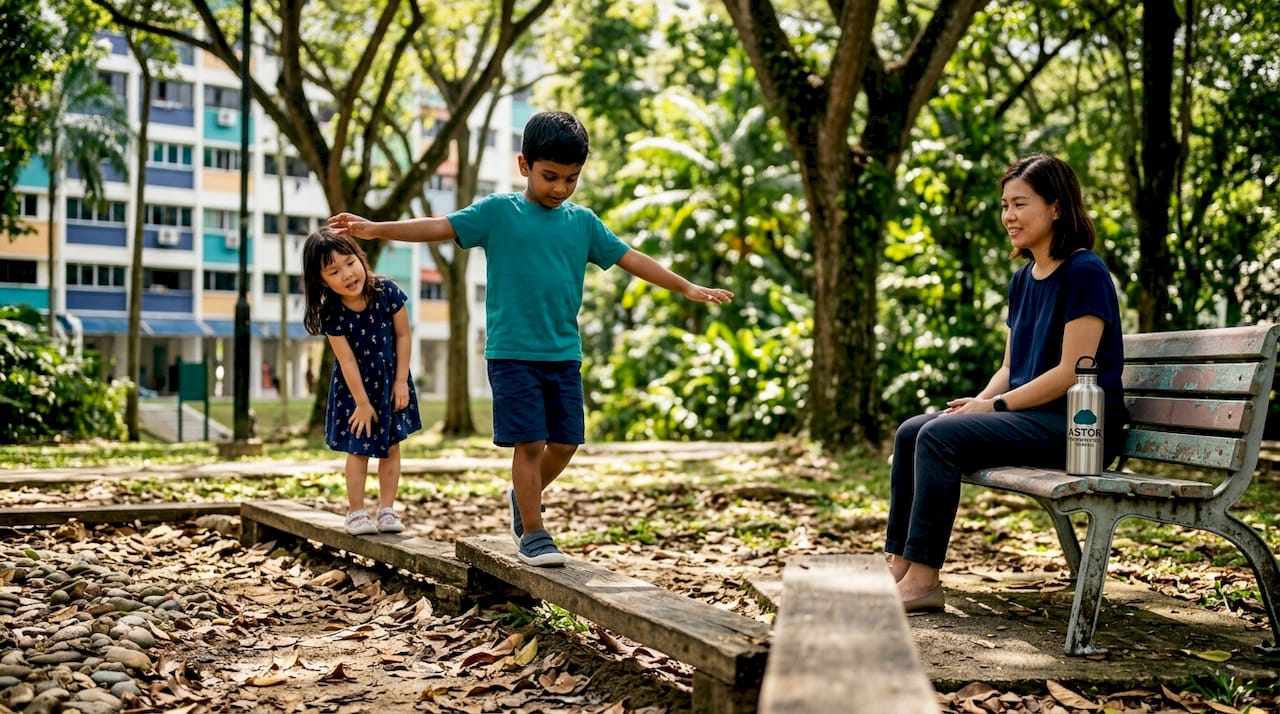
Unstructured outdoor play | Gross motor and confidence | Visit a park or playground regularly |
Singapore’s outdoor environment is genuinely wonderful for young children. Astor International Preschool in Holland, for example, offers two playgrounds that blend outdoor exploration with classroom learning — a model that reflects exactly what early childhood research recommends. You can read more about play-based learning approaches and how they differ from more structured methods.
For a broader view of contrasting early childhood education approaches, the Child Development Authority provides useful context on what Singapore’s early childhood landscape looks like.
Pro Tip: Turn your morning routine into a learning ritual. While getting dressed, ask your toddler to name colors, count buttons, or describe what the weather looks like outside. These micro-moments of learning through play accumulate into meaningful developmental gains over weeks and months.
Building strong school partnerships
Once you’ve created a supportive home base, forging productive links with your child’s school is the critical bridge to successful learning. Many expat parents underestimate how much influence they can have simply by showing up and communicating well.
Research consistently shows that family-school engagement improves outcomes when parents attend meetings, communicate regularly with teachers, join parent support groups, and participate in school events. The key word is regularly. A single parent-teacher conference per semester is not enough to build a genuine partnership.
Here are concrete steps to build that relationship:
Introduce yourself early. In the first week, send a brief, warm email to your child’s teacher. Share one or two things about your child’s personality, interests, and any concerns you have about the transition.
Attend every scheduled meeting. Parent-teacher conferences are not optional extras. They’re your clearest window into how your child is really doing.
Ask specific questions. Instead of “How is she doing?” try “What does she seem most engaged by?” or “Are there moments where she seems hesitant to participate?”
Join the parent community. Most international schools have active parent networks. These groups are invaluable for practical advice, cultural tips, and social connection for both you and your child.
Volunteer when you can. Even small contributions — helping at a school fair, joining a reading program — signal to your child that school is a place you value.
“The most effective family-school partnerships are built on trust, not just information exchange. When parents and teachers share the same goal — the child’s wellbeing — communication becomes easier and more honest.”
One thing that makes a genuine difference is choosing a school where teachers are truly accessible. Small class sizes mean teachers know each child individually, which makes every conversation more meaningful and every concern more quickly addressed.
Pro Tip: When speaking with teachers, frame your questions as collaborative rather than evaluative. Say “I’d love to understand how I can reinforce what you’re working on at home” rather than “Why isn’t she improving?” This judgment-free approach builds trust and keeps communication open. For more on what sets international schools apart in this area, international school insights is a worthwhile read.
Empowering learning at home: Practical techniques for older children
While school partnerships are foundational, the home remains one of the richest arenas to reinforce learning, especially as children grow. For children aged 4 to 12, the techniques that work best are active, social, and low-pressure.
One of the most powerful tools you can use is the 60-second teach-back method. After your child studies something, ask them to explain it to you in one minute as if you’ve never heard of it before. It sounds playful, but the effect is real. A study on retrieval practice backed by the Association for Psychological Science shows that explaining concepts aloud produces significantly better long-term retention than re-reading or highlighting. Your child becomes the teacher, which forces them to organize and consolidate what they know.
Here are additional techniques that work beautifully at home:
Ask “why” and “what if” questions. Instead of testing recall, encourage reasoning. “Why do you think that happened?” builds critical thinking more than “What was the answer?”
Create a consistent study space. A dedicated, clutter-free area signals to your child’s brain that it’s time to focus. It doesn’t need to be elaborate — a quiet corner with good lighting works perfectly.
Use spaced practice. Rather than one long study session, short daily reviews of previously learned material are far more effective for retention.
Celebrate effort, not just results. When children see that persistence is valued, they’re more willing to tackle difficult problems without fear of failure.
Connect learning to real life. Cooking involves fractions. A trip to the hawker center involves reading, social skills, and cultural learning. Singapore itself is a rich classroom.
For parents whose children are working on math, hands-on learning in math offers a look at how concrete, tactile approaches make abstract concepts genuinely accessible for primary-age children.
The goal at home is not to replicate school. It’s to create an environment where curiosity is welcome, questions are celebrated, and learning feels like a natural part of daily life rather than a chore.
Handling transitions and emotional challenges
The final piece in a child’s learning journey is supporting their emotional resilience, a core challenge for mobile expat families. Academic support alone is not enough if your child is struggling internally with the upheaval of relocation.
Expat-specific emotional challenges are real and well-documented. Transition grief and Expat Child Syndrome — which can manifest as regression, grade decline, anxiety, or withdrawal — affect a significant number of children who move internationally. Recognizing the signs early makes an enormous difference.
Warning signs to watch for include:
Regression in behavior, such as bedwetting in a child who was previously dry, or increased clinginess.
Declining academic performance that appears suddenly after a move or school change.
Social withdrawal, including reluctance to attend school or avoiding new friendships.
Increased irritability or emotional outbursts that are out of character.
Physical complaints like stomachaches or headaches with no medical cause, often linked to anxiety.
“Children don’t always have the words to describe what they’re feeling. Behavior is their language. When we listen to behavior with curiosity instead of frustration, we can respond to what they actually need.”
Family strategies that genuinely help include creating portable traditions — rituals your family carries from country to country, like a special Friday movie night or a particular way you celebrate birthdays. These anchors provide continuity and safety when everything else feels new. Immersing your child in local culture also matters. Visiting Singapore’s neighborhoods, trying local food, learning a few Singlish phrases together — these small acts of engagement build belonging.
Outdoor play is another underrated tool for emotional regulation. Physical activity reduces anxiety, improves mood, and gives children a healthy outlet for the big feelings that come with transition. Singapore’s parks and green spaces make this beautifully accessible year-round.
If your child’s distress persists beyond a few weeks, seek professional support without hesitation. School counselors, child psychologists, and expat-focused family therapists in Singapore are experienced with exactly these challenges.
Why support goes beyond academics in Singapore
Here’s a perspective worth sitting with: many expat parents arrive in Singapore with a laser focus on academic outcomes, and it’s understandable. Singapore’s reputation for educational excellence creates real pressure. But the children who truly thrive here are rarely the ones with the most tutoring hours. They’re the ones who feel emotionally safe, culturally connected, and genuinely seen by the adults around them.
We’ve observed this repeatedly. A child who is academically capable but emotionally unsettled will underperform. A child who feels belonging and confidence will often exceed expectations. Holistic education isn’t a soft alternative to rigorous learning — it’s the foundation that makes rigorous learning possible.
The best learning happens when every child is truly seen and supported. That means attending to social, emotional, and cultural dimensions with the same intentionality you bring to choosing a curriculum. Academic success follows from that foundation, not the other way around.
Support your child’s journey with expert guidance
Navigating education in Singapore as an expat family is genuinely complex, but you don’t have to figure it out alone. Astor International School in Tanglin is a small but mighty school serving children aged 5 to 12, recognized as both the best small school and the best affordable international school in Singapore. Small class sizes mean every child is known, supported, and challenged in ways that large schools simply cannot replicate.
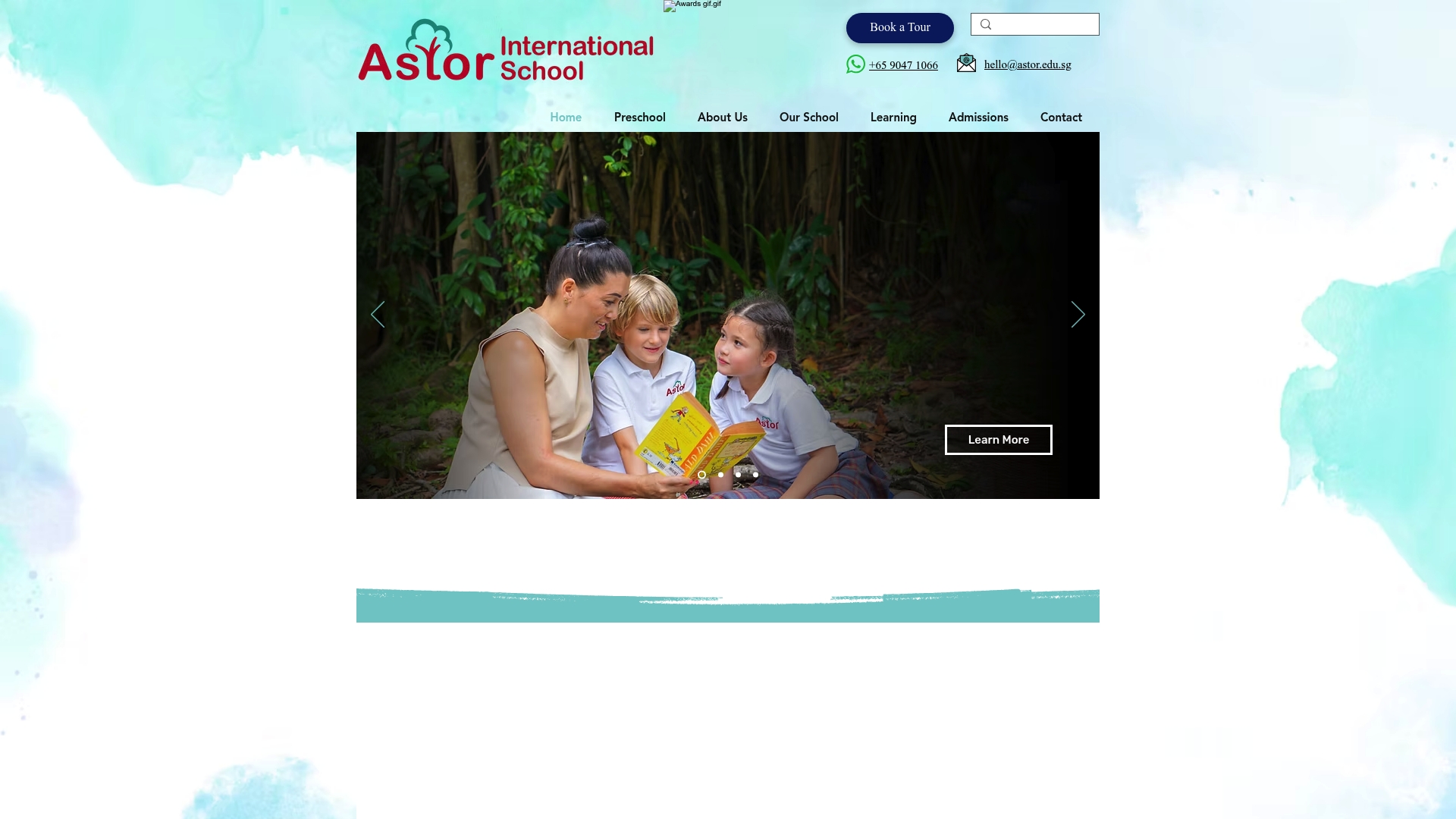
Our innovative learning approach is designed with expat families in mind, blending academic rigor with the emotional and social support children need to thrive in a new environment. From our thoughtfully designed curriculum to our warm, accessible teaching team, we build the kind of partnership with families that makes a real difference. We’d love to welcome you for a school visit and show you what personalized international education looks like in practice.
Frequently asked questions
What’s the difference between local MOE and international schools in Singapore?
MOE schools offer local curriculum and deep cultural immersion, while international schools provide globally recognized curricula and continuity for families who relocate frequently.
How can I help my toddler learn at home?
Focus on responsive caregiving and daily play-based activities. WHO guidelines confirm that stimulation, warmth, and unstructured play promote the strongest cognitive, language, and socioemotional development for children aged 1.5 to 3.
What’s a simple but effective study technique for primary children?
Try the 60-second teach-back method, where your child explains a concept aloud to you after studying it. Retrieval practice research shows this produces significantly better long-term retention than passive review.
How do I support my child emotionally during an international move?
Validate their feelings without minimizing them, maintain portable family traditions for continuity, and encourage local cultural immersion. If transition grief symptoms persist, connect with a counselor experienced in expat family challenges.
Recommended

Comments