


Top 3 Middleton.edu.sg Alternatives International Schools 2026
- sasha2644
- Jul 14
- 9 min read
Finding an international primary school in Singapore that matches the personalized feel and official standards of Middleton.edu.sg is difficult. Many schools either have large class sizes that reduce individual attention or do not publish clear information about curriculum certification and tuition. This comparison details class size, curriculum, and transparency so parents can match a school’s approach and information to their priorities for learning and well-being.
Table of Contents
Astor International School
At a Glance
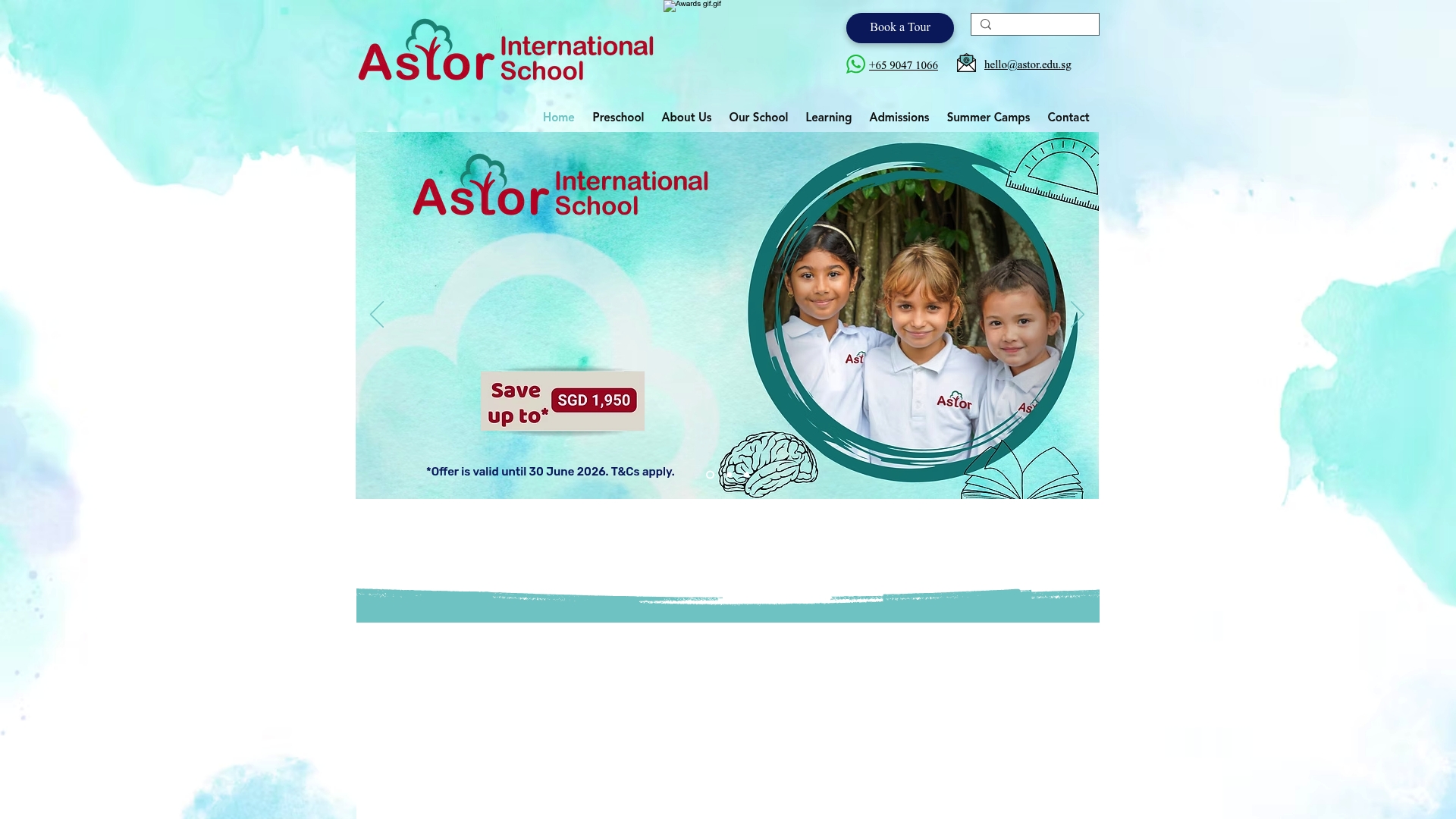
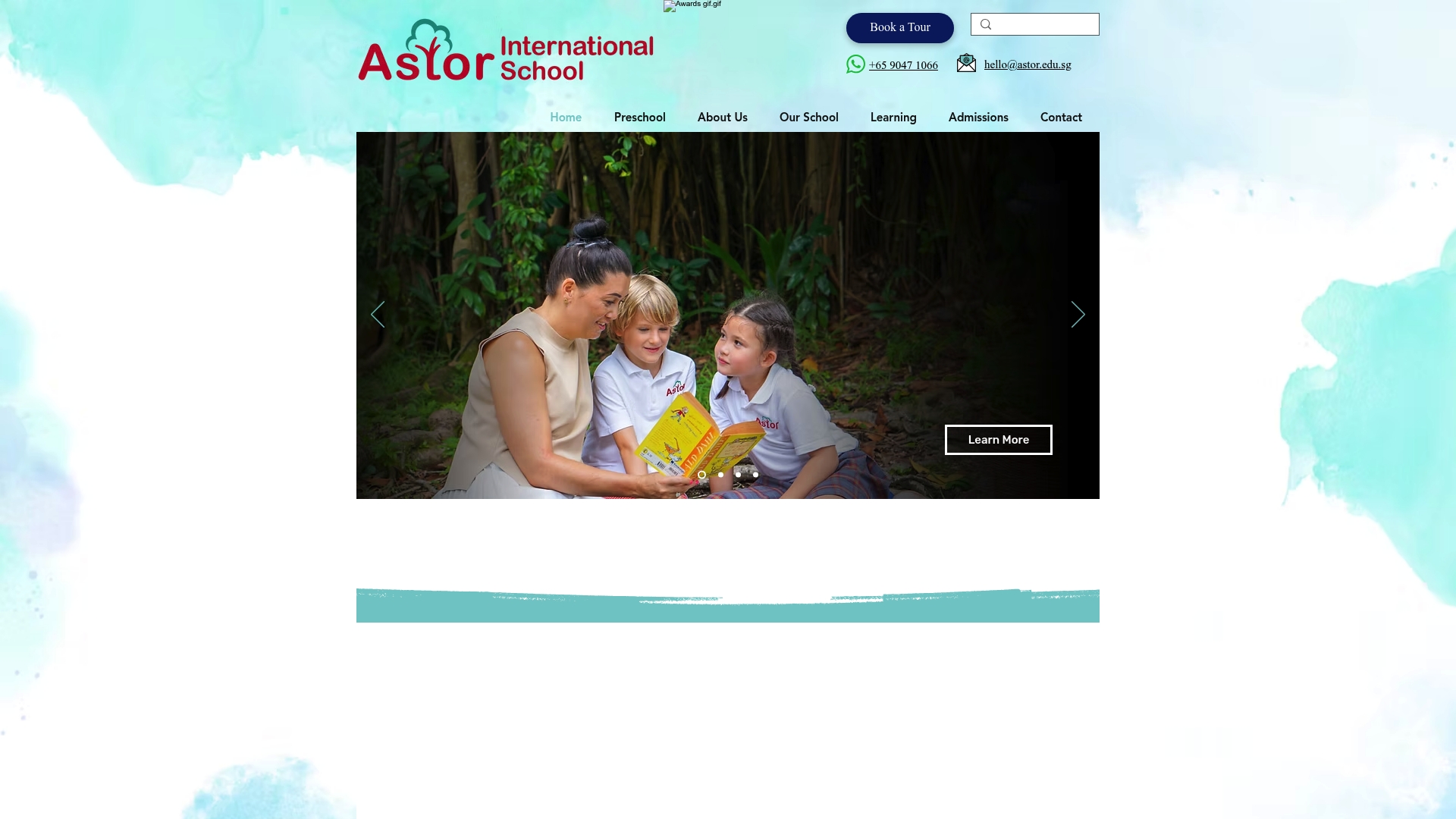
Astor runs two small campuses: an international primary at Tanglin for children aged 5 to 12 and a recently acquired preschool in Holland with two playgrounds. The primary keeps small class sizes with an average of 15 students per class. The school has won awards as a top small school and for affordability in Singapore.
Core Features
Classes follow the International Primary Curriculum (IPC) together with British English and Singapore Math, delivered through inquiry-based, child-centered lessons. The school emphasizes experiential learning and offers foreign language options in four or more tongues. A diverse student body with 30+ nationalities supports daily multicultural interaction and mother tongue study.
Key Differentiator
The defining strength is the combination of average 15 students per class and a personalized inquiry curriculum that both shortens feedback loops and lets teachers adapt lessons quickly. That configuration supports more one-to-one guidance than typical larger international schools. The result is a small-school feel with formal primary curriculum standards.
Pros
Small classes produce clear benefits for daily learning. Teachers can give specific feedback and tailor tasks to each child, which helps accelerate understanding in reading and math. The inquiry approach encourages hands-on projects and real-world tasks that deepen comprehension. A genuinely international student mix strengthens language exposure and cultural awareness. Flexible schedules and after-school enrichment make it easier for working parents to arrange pick up and extra lessons.
Cons
Limited age range: the school serves only children aged 5 to 12, so families seeking secondary education must plan for a move after primary years.
Who It’s For
Expatriate parents in Singapore who want affordable, small-class international primary education for children aged 5 to 12 will find this school a fit. Parents who value frequent teacher contact and experiential learning will see practical classroom benefits. Families seeking many campus amenities or secondary pathways should compare options.
Unique Value Proposition
An active admission fee waiver promotion running until June 2026 lowers initial costs for enrolling families. That short-term reduction makes a boutique primary more accessible for newcomers on relocation budgets. Combined with small classes and flexible schedules, the waiver can reduce upfront financial friction for parents arranging international school logistics.
Real World Use Case
A family moving to Singapore on a two-year posting can enroll siblings into the Tanglin primary and use the Holland preschool subdomain to arrange early learning for a younger child. Teachers coordinate flexible schedules and enrichment so parents can balance work hours and pick up. The small class format speeds social integration for newly arrived children.
Pricing
Tuition figures are not listed publicly and require direct inquiry with admissions. The school promotes an admission fee waiver through June 2026 for eligible applicants. Contact admissions for current tuition bands, scholarship options, and fees for enrichment classes.
Website: https://astor.edu.sg
Holland International School
At a Glance
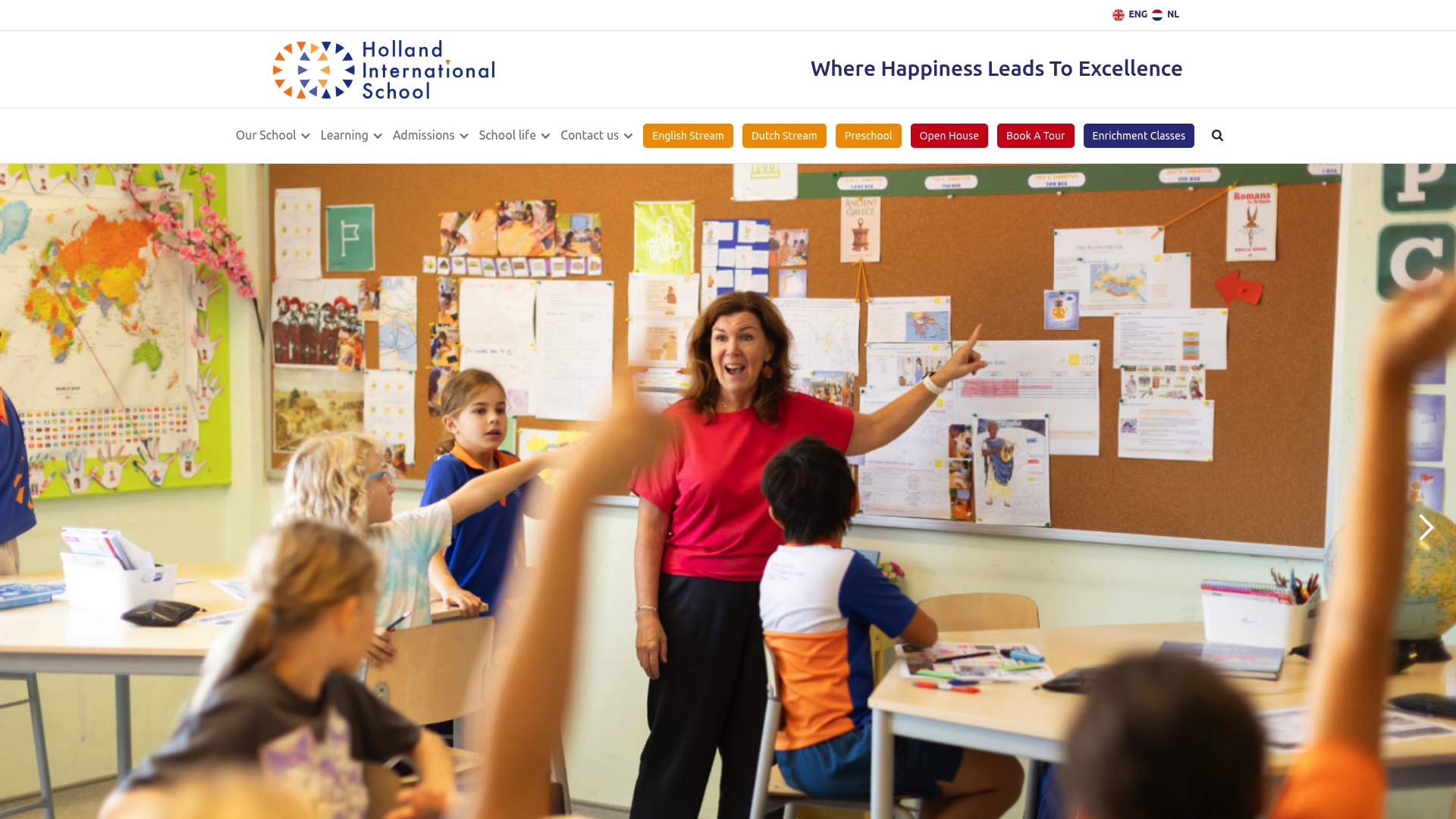
Over 100 years of heritage informs the school’s blend of Dutch and international practices. The campus offers both Dutch and English Stream instruction for children aged 1.5 to 12 years. Small classes and a mix of classroom and outdoor activities create a family-style learning environment.
Core Features
The school follows the International Primary Curriculum (IPC) alongside Dutch-language programmes, with a focus on ownership, collaboration, and critical thinking. Teachers keep classes small to deliver individual attention, and the co-curricular roster includes sports, arts, languages, coding, and cooking. Classrooms use interactive smartboards and Google Classroom to share work and coordinate home learning.
Key Differentiator
Heritage and curriculum shape day-to-day life here. The combination of long-standing Dutch educational roots with international primary practice gives families a bilingual option in a compact, community school. That mix suits parents who want cultural continuity and personal attention in one place.
Pros
Experienced and qualified teaching staff support individual student development and confidence. The school reports strong parental involvement and a supportive community culture that helps children settle quickly. Cultural celebrations such as Sinterklaas, Kingsday, Chinese New Year, Deepavali, and Hari Raya feature in the calendar and reinforce multilingual awareness.
Cons
No specific academic performance rankings or standard test scores are published, which limits direct academic benchmarking.
The school does not publish detailed language proficiency outcomes for Dutch and English, so expected fluency timelines are unclear.
Extracurricular program costs and individual activity fees are not listed publicly, making budget planning harder.
Families outside the local area may face longer travel times, although the school works to optimize transport routes.
When It May Not Fit
If you need a school that posts formal test scores or league-table positions, this school may frustrate you. If precise fee breakdowns for clubs and activities are a priority, the available information is limited. Long commutes from distant neighborhoods will reduce the small-school benefits for your child.
Who It’s For
Parents of children aged 1.5 to 12 years who want a bilingual Dutch and international primary education in Singapore will find this school relevant. It fits families that value cultural continuity, hands-on celebrations, and close teacher relationships. It also suits those who prefer small cohorts over large campus systems.
Real World Use Case
A Dutch-speaking family newly moved to Singapore wants their child to keep Dutch language development while gaining an international classroom experience. The family chooses this school for small classes, a calendar that honors Dutch traditions, and bilingual classroom options. The child receives regular individual attention and participates in local festival events.
Pricing
Tuition and fees are not listed in detail on public pages. The school asks families to consult the fees section on its website for the current schedule and any activity charges. Contacting admissions will provide the exact figures and available payment options.
Lotus Bridge International Academy
At a Glance
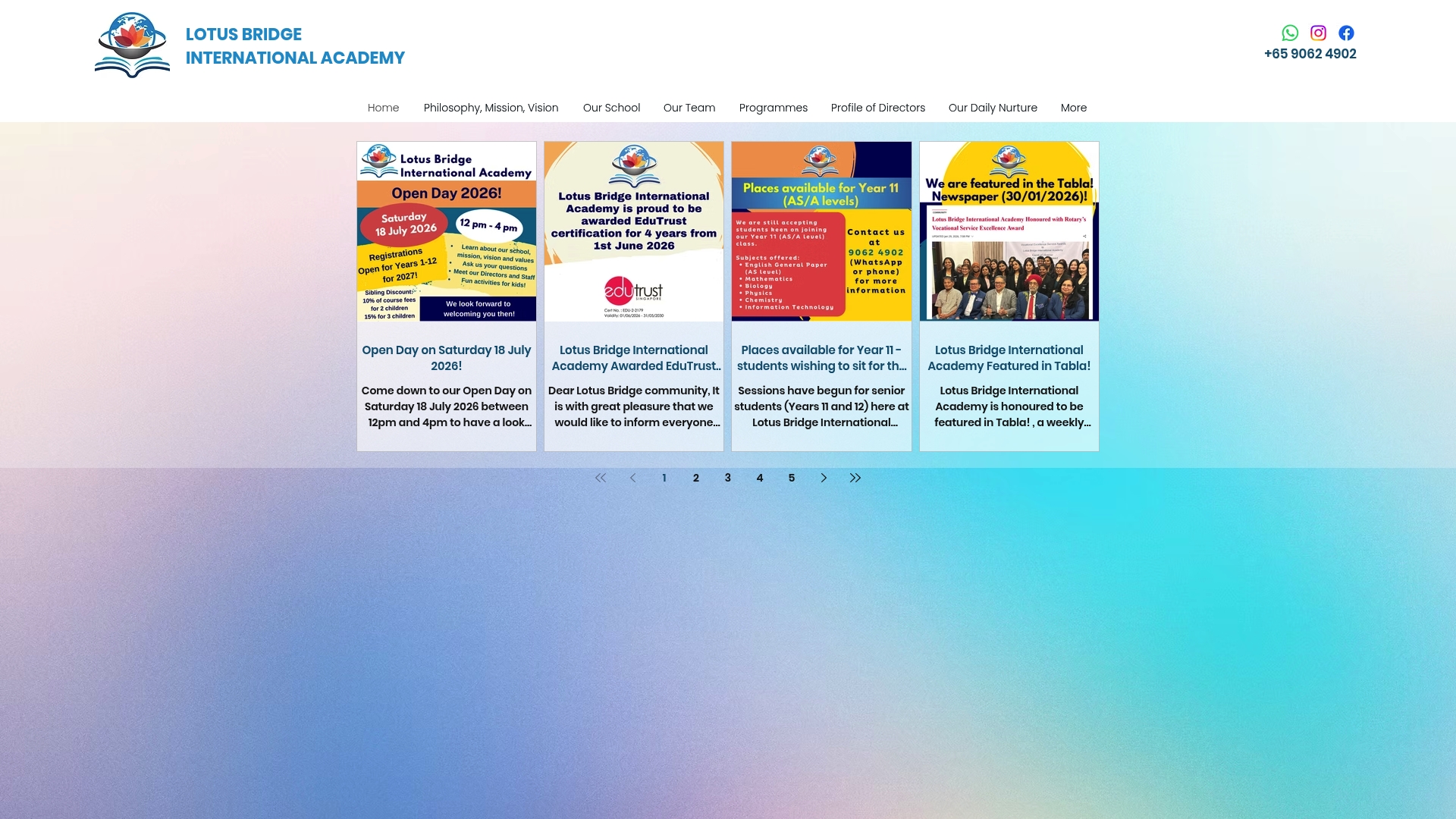
The academy reports EduTrust certification for four years and a Vocational Service Excellence Award 2026 from the Rotary Club of Kampung Gelam. These recognitions appear alongside media mentions and an emphasis on safety and student development. Open day notices and programme summaries appear regularly on the site.
Core Features
Lotus Bridge publishes programme outlines, school policies, and facility descriptions so parents can review logistics and campus resources. The site highlights community engagement and media recognition, and lists regular open days that invite families to meet staff and students. Accreditation and procedural details are presented to demonstrate administrative and safety practices.
Key Differentiator
That four year EduTrust certification and the vocational award mark the academy as formally recognized in Singapore private education circles. This combination signals administrative oversight and community validation rather than a single curricular claim. For parents prioritizing documented accreditation and public recognition, that emphasis is the academy’s strongest distinguishing feature.
Pros
The school lists EduTrust certification and public awards on its pages, which helps parents verify formal oversight. The website provides accessible information on policies and facilities so families can assess safety and operational standards before visiting. Regular open days and media coverage create practical touchpoints for parents to meet staff and observe classroom activities.
Cons
Limited online detail about specific curricula and daily lesson content, which makes academic comparisons harder.
Several internal pages return errors or appear missing, which restricts deeper research on programs and fees.
No clear fee schedules or technology integrations visible on the homepage, so cost and platform expectations remain unclear.
When It May Not Fit
Families seeking detailed subject-level syllabi, sample timetables, or transparent tuition bands will find the site short on those specifics. Parents who need an online portal or evident digital learning tools will not see clear platform integrations. Larger families wanting a full course catalogue before an in-person visit will need to contact the academy directly.
Who It’s For
This academy suits parents and students in Singapore who want a privately run A Level path with formal accreditation and public recognition. It fits families who value verified administrative standards and opportunities to meet staff through open days. It is less well suited for those who need exhaustive online curriculum previews.
Real World Use Case
A family compares private A Level options and prioritizes documented accreditation and a visible community reputation. They attend an open day, review the policies listed online, and speak with staff to confirm course availability and safety measures.
Website: https://lotusbridge.edu.sg
Comparison of alternatives
Choosing the right international school involves weighing strengths like curriculum design, class sizes, cultural inclusion, and teacher-student interaction.
Class size and student-to-teacher interaction
Astor International School differentiates itself with an average class size of 15 students, allowing personalized instruction tailored to individual learners. Alternatively, Holland International School also keeps class sizes moderate but emphasizes bilingualism through its Dutch and International streams. Lotus Bridge International Academy, while recognized for its community engagement and accreditation, does not highlight specific class size metrics prominently.
Cultural and community integration
Holland International School advances cultural continuity with its calendar that celebrates both Dutch traditions like Sinterklaas and local festivities such as Deepavali. Astor International School, with its diverse student body representing over 30 nationalities, fosters global citizenship. On the other hand, Lotus Bridge International Academy aligns its commendable extracurricular approach with a focus on policy transparency and regular parent engagement during open days.
Best fit
For expatriate families prioritizing small-class, boutique international education for primary-aged children, Astor International School provides an environment focused on personalized learning and experiential development.
Parents seeking to maintain bilingual fluency and cultural traditions while engaging in international curriculum standards should consider Holland International School, making its combined Dutch and IPC approach ideal.
Those valuing formally recognized accreditation and extensive transparency in policies will find Lotus Bridge International Academy aligns well with their expectations.
Our pick
Astor International School stands out for its boutique, small-class approach tailored to international primary education, embodying values of personalization and global inclusion. However, families seeking education pathways that align with Dutch cultural traditions or provide extensive accreditation documentation might find Holland International School or Lotus Bridge International Academy more fitting.
Choosing the best international primary school depends on factors such as class sizes, curriculum offerings, and special programs. The table below compares several alternatives to middleton.edu.sg for their core characteristics:
School | Core Offering | Distinct Feature | Best For | Pricing | Limitation |
Astor International School | International Primary Curriculum and British English | Small class sizes and inquiry approach | Expat families desiring personalized international education | Contact for details | Limited to ages 5 to 12 only |
Holland International School | Bilingual instruction in Dutch and English | Blend of Dutch roots with IPC | Families valuing cultural continuity and bilingual programs | Contact for details | No detailed academic performance metrics published |
Lotus Bridge International Academy | Privately run A Level preparation programs | EduTrust Certification and public awards | Families prioritizing formal accreditation standards | Contact for details | Limited curriculum details available online |
Choosing the Right Alternative to Middleton.edu.sg for Your Child’s Education
Parents seeking Middleton.edu.sg alternatives often struggle to find a small, nurturing international school that balances affordability with a personalised approach. Astor International School addresses these concerns by offering small class sizes of about 15 students, delivering engaging inquiry-based lessons tailored to each child’s pace. This setup encourages meaningful teacher-student connections that simplify daily feedback and build confidence in reading and math.
Astor’s network includes a boutique preschool in Holland and a primary school at Tanglin for ages 5 to 12. Both campuses focus on hands-on learning and cultural diversity in a welcoming environment. You can learn more about how the Astor education network provides a small but mighty option for families prioritizing personalised care and flexible schedules.
If your family needs an award-winning, affordable international education with a warm community feel, visit Astor International School’s website to start a conversation about your child’s placement now.
FAQ
How does Edu benefit families looking for small-class learning?
Edu offers small class sizes, averaging 15 students per class, which enables teachers to provide personalized attention. This format allows for tailored curriculum delivery and quick feedback, ensuring that each child gets the support they need. Families can expect a nurturing, engaging environment that accelerates academic growth.
What is the difference between Astor International School and Holland International School?
Holland International School boasts a long heritage and offers bilingual Dutch and English Stream instruction for children aged 1.5 to 12 years. In contrast, Edu focuses strictly on international primary education with a personalized inquiry curriculum targeting children aged 5 to 12 years. This distinction makes Edu an excellent choice for expatriate families seeking a more focused international primary experience.
Which platform is better for parents seeking flexible schedules?
Edu and Holland International School both offer flexibility in scheduling. However, Edu emphasizes flexible after-school enrichment programs that cater to working parents’ needs. Parents can expect better arrangements for pick-up and extra lessons at Edu, which supports more balanced family routines.
Can families expect strong parental involvement at Edu?
Yes, Edu promotes a supportive community culture with active parental involvement. This engagement helps create a strong connection between teachers and families, facilitating smoother transitions for children into the school environment. Parents who value collaboration in their child’s education will find Edu to be a great fit.
What are the advantages of enrolling in smaller international schools like Edu?
Small international schools like Edu provide individualized feedback and a nurturing environment, which enhances learning outcomes. The hands-on, inquiry-based approach encourages deeper understanding and fosters closer relationships between students and teachers. Families can anticipate an educational experience that prioritizes personal growth and cultural awareness.
Recommended
Comments