


Why small international schools thrive: Benefits for expat families
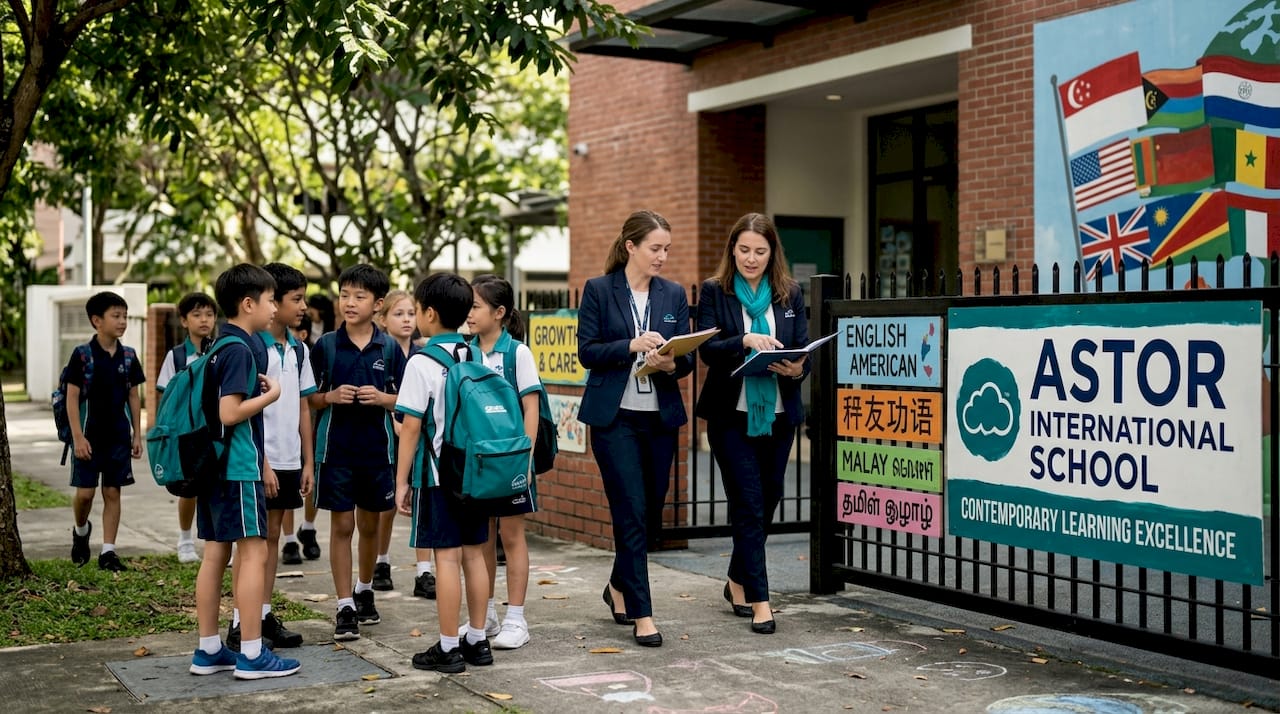
Many expat parents arriving in Singapore assume that bigger means better when it comes to choosing a school. Larger institutions with sprawling campuses and well-known names can seem like the safest choice. But small class sizes improve learning outcomes in measurable ways, particularly during the early and primary years. This article explores the evidence behind that claim, examines what small international schools in Singapore genuinely offer, and helps you make a confident, informed decision for your child’s education.
Table of Contents
Understanding the appeal: Small international schools in Singapore
Personalization and community: The hidden strengths of small schools
Meeting the needs of expat families: Flexibility, inclusion, and thriving students
The truth most guidebooks miss about thriving small international schools
Explore the best small international school experience in Singapore
Key Takeaways
Point | Details |
Personalized education | Small international schools offer tailored learning and strong relationships that benefit expat families. |
Proven academic results | Empirical studies show small schools often outperform bigger schools in early education outcomes. |
Community support | Close-knit communities in small schools help students and families adapt quickly and thrive. |
Nuanced evidence | Class size effects are strongest for early years and specific groups, so context matters. |
Understanding the appeal: Small international schools in Singapore
When we talk about small international schools in Singapore, we generally mean schools with student populations of fewer than 500 children and class sizes that rarely exceed 18 to 20 students per classroom. These are what some families fondly call “boutique international schools.” They are not simply scaled-down versions of large schools. They operate with a fundamentally different philosophy, one that places individual attention, flexible learning, and genuine community at the center of every decision.
The appeal is growing among expat families, and it is easy to understand why. When your child joins a school where the principal knows every student by name, and where teachers can truly track each child’s progress week by week, the educational experience shifts in a meaningful way. This kind of personalized attention is especially valuable for children aged five to twelve, who are still developing their confidence, curiosity, and core academic foundations.
Singapore has become a destination where these schools are flourishing. The city-state’s multicultural environment naturally suits smaller, inclusive schools that can adapt to students arriving from Australia, the United Kingdom, the United States, Japan, and dozens of other countries. Affordable international school options are increasingly attractive to families who want quality education without the price tag of Singapore’s largest international institutions.
Research backs up the intuition that smaller is often better, particularly in the early years. As one report found, the strongest gains in student outcomes are concentrated among younger students and those from disadvantaged or minority backgrounds, with long-term benefits that include higher college persistence rates. These findings matter deeply to expat families, whose children often face the additional challenge of adapting to a new country while also navigating new academic expectations.
Here are the key reasons families choose smaller international schools in Singapore:
Personalized learning paths tailored to each child’s strengths, pace, and interests
Smaller class sizes that allow teachers to identify learning gaps early and respond quickly
Stronger parent-teacher communication that keeps families genuinely involved in progress
A nurturing community where children feel safe, known, and valued
Flexible curriculum that accommodates children arriving mid-year or from different educational systems
International peer groups that normalize cultural diversity and encourage global mindedness
“The best learning happens when every child is truly seen and supported. In a small school, that is not an aspiration. It is the daily reality.”
A stronger educational start in these formative years sets a child up for confidence and curiosity that carries forward through their entire school journey. That is a foundation worth choosing carefully.
Evidence in action: Do small class sizes really matter?
With the appeal established, the next question is whether the evidence supports the buzz around small class sizes. The short answer is yes, with important nuance attached.
The most frequently cited study is the STAR study (Student-Teacher Achievement Ratio) conducted in Tennessee. It placed students in classes of 13 to 17 students versus the standard 22 to 26. The results were clear: students in smaller classes showed a 4 percentile point gain in academic performance during the first year alone. That gain was most pronounced for students in kindergarten through third grade, which aligns perfectly with the primary years that many expat families are navigating right now.
New York City’s small schools initiative provided further compelling data. Schools that reduced size and class numbers saw 8 to 10 percent higher graduation and college enrollment rates compared to larger counterparts. These are not marginal improvements. For a child’s long-term trajectory, they are significant.
However, not every study tells the same story. Research from Norway found no significant class size effect in certain contexts, and studies from Japan have shown only modest outcomes. This tells us something important: the benefits of small class sizes are real, but they are not automatic. Context matters enormously.
Study | Location | Class size reduction | Outcome |
STAR Study | Tennessee, USA | 22 to 15 students | 4 percentile point academic gain in year 1 |
NYC Small Schools | New York, USA | School-wide reduction | 8 to 10% higher graduation and college enrollment |
Angrist and Lavy | Israel | Maimonides’ rule applied | Positive reading and math gains |
Bonesrønning Study | Norway | Class size reduction | Zero significant effect found |
Japanese research | Japan | Modest reductions | Small, variable improvements |
What the table shows is that class size benefits are strongest when the whole school culture supports personalized learning, not just when headcounts are reduced on paper. A small class in a school that still operates with rigid, factory-style teaching won’t automatically produce better outcomes.
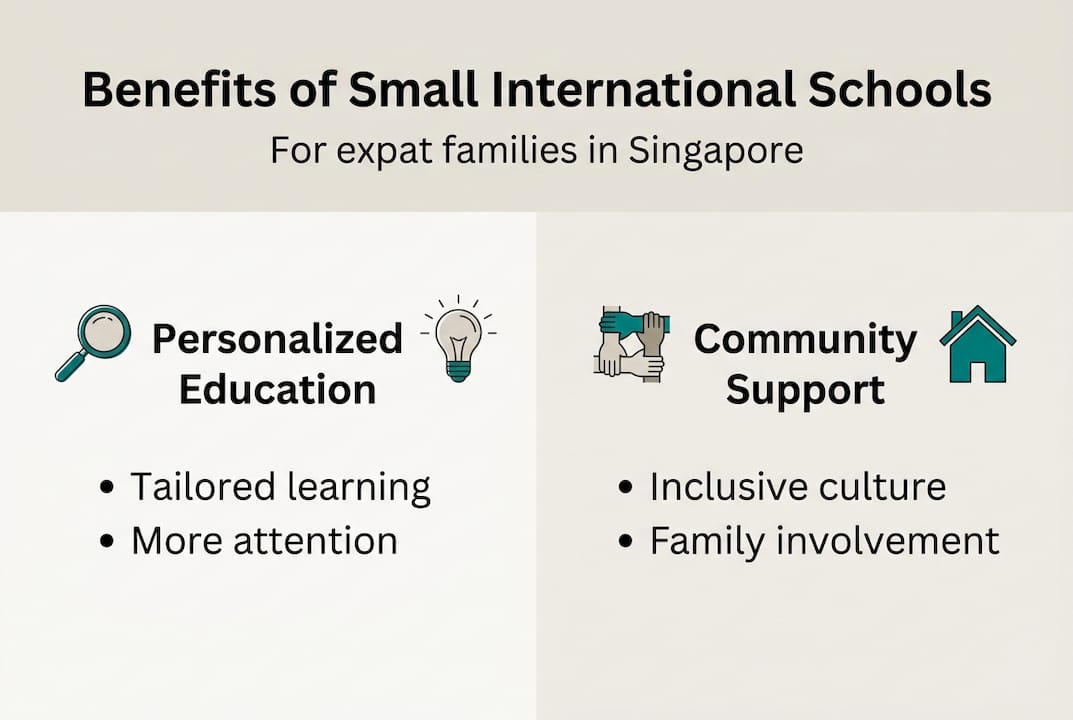
Pro Tip: When evaluating schools, ask specifically about average class sizes for your child’s year group, and then ask how teachers use that smaller group in practice. Do they differentiate lessons? Do they conduct one-on-one check-ins? Those behaviors matter more than the number alone.
Early childhood is where the evidence is most consistent and most exciting. Children aged five to eight who experience small, attentive classrooms develop stronger literacy and numeracy foundations, better emotional regulation, and greater confidence in asking for help. Those skills compound over time, making the early years arguably the most important window to get the environment right.
Personalization and community: The hidden strengths of small schools
Beyond numbers, the real magic of small schools often comes from what data can’t always measure. Personalized learning and genuine community connection are two qualities that transform a school from a place children attend into a place where children truly belong.
In small international schools, teachers typically work with the same group of children for extended periods. They notice when a child who usually participates quietly becomes disengaged. They remember that one student learns better through visual explanations while another thrives with hands-on projects. This level of knowing is not possible when a teacher cycles through 35 students per class across multiple groups.
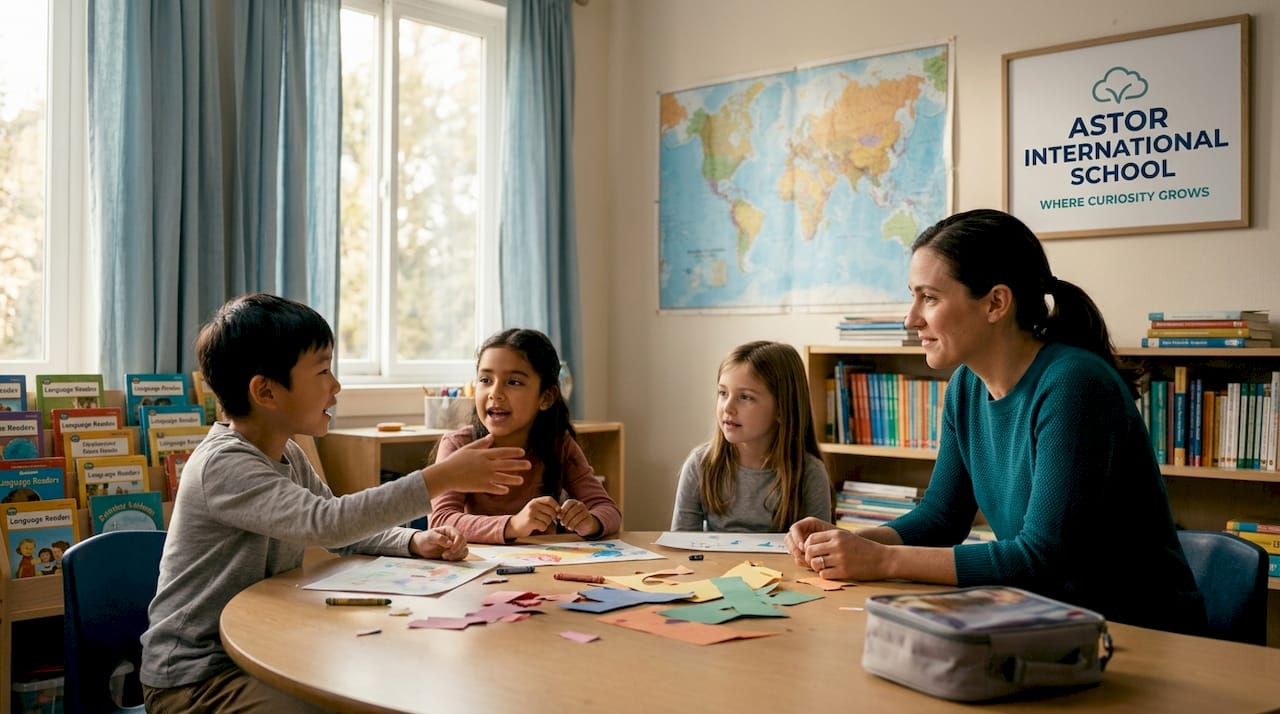
It also extends beyond the classroom. Parents in small schools often describe a sense of warmth that surprises them. Events feel personal rather than corporate. Communication from teachers is specific and meaningful rather than templated. The school community becomes, for many expat families, a genuine social anchor in a country where building connections takes time.
Feature | Small personalized schools | Traditional large schools |
Class size | 12 to 18 students | 25 to 35 students |
Learning approach | Tailored to individual pace and style | Standardized curriculum delivery |
Teacher-student relationship | Deep, consistent, and personal | Broader, less individualized |
Parent involvement | High engagement, frequent personal updates | Structured meetings, general newsletters |
Curriculum flexibility | Adaptable to diverse backgrounds | Fixed sequencing, limited mid-year adjustment |
Community feel | Close-knit, familiar, inclusive | Larger, more compartmentalized |
Here are three clear steps that strong small schools take to personalize the learning journey for every child:
Individual learning profiles. Teachers create and regularly update a profile for each child that tracks academic progress, learning style preferences, social development, and areas needing extra encouragement.
Ongoing feedback loops. Rather than relying solely on term reports, teachers communicate with parents informally and frequently, giving families real-time insight into how their child is doing.
Responsive curriculum planning. Lessons are adjusted based on where the class is, not where a syllabus says they should be. If a child needs more time on fractions, they get it. If a group is ready to move ahead, they do.
It is worth acknowledging a real challenge here. Some smaller schools, particularly those in rural or under-resourced settings, face financial and staffing struggles that can affect program breadth and teacher retention. However, in Singapore’s international school context, well-established small schools maintain strong community ties and use their compact size as a genuine advantage rather than a limitation.
Pro Tip: During any school visit, pay attention to how staff members interact with children in the hallways and common areas, not just in the classroom. In schools with a genuine community culture, those warm, spontaneous interactions between children and educators are everywhere. That is a positive classroom culture you can see and feel.
Strong small schools also build international mindedness into everyday learning, helping children appreciate their own cultural identity while developing respect and curiosity for others. That quality is especially meaningful in Singapore, where your child will sit alongside peers from across the globe.
Meeting the needs of expat families: Flexibility, inclusion, and thriving students
Having explored personalized strengths, let’s focus on how these schools cater specifically to expat families in Singapore.
Expat children face a distinct set of challenges that most local children do not. They may have joined the school mid-year, coming from a completely different curriculum. They may be navigating English as an additional language. They are building new friendships in an unfamiliar social landscape while also processing the emotional weight of leaving behind a previous home, school, and friend group. These are real pressures that deserve thoughtful support.
Small international schools are often better equipped to respond to these needs precisely because they can see each child clearly. When a new student arrives, the transition is managed personally rather than processed administratively. The child is introduced to classmates with intention, paired with a buddy, and given space to settle in at their own pace. Teachers check in consistently during those first weeks because they have the bandwidth to do so.
“When we moved to Singapore, we worried most about how our daughter would adjust. Within two weeks at her small school, she had friends, knew every teacher, and was actually excited to go in each morning. The difference was the people. Everyone noticed her.”
Research continues to confirm that small class environments produce meaningful gains for students from diverse backgrounds, including those adapting to new educational systems. This is especially relevant for expat children whose learning histories vary widely.
Here are the key school features that help new expat families settle in faster and feel genuinely at home:
Flexible admissions that accept students at any point in the academic year and assess each child individually rather than through rigid entry tests
Language support integrated into daily learning rather than delivered as a separate, stigmatized program
Cultural celebration events that honor the diverse backgrounds of every child in the school community
Smaller peer groups that make forming friendships more natural and less overwhelming for new students
Regular parent touchpoints that keep families informed and connected from the very first week
Being part of an award-winning small school gives families an added layer of confidence. Recognition in categories like Best Small School and Best Affordable International School signals that the quality of education and the strength of the community have been independently validated.
Celebration days in school play a surprisingly powerful role in helping expat children feel represented and valued. When a school marks cultural events from multiple countries, children learn that their identity is an asset, not something to minimize in order to fit in. That message is deeply affirming for families who have moved across the world.
For families currently exploring their options, school admissions tips can help you understand what to look for, what questions to ask, and how to evaluate whether a school’s values genuinely match what your child needs.
The truth most guidebooks miss about thriving small international schools
Most guidebooks focus on rankings, fees, curriculum labels, and facility descriptions. These things have their place. But they miss what actually makes a small international school exceptional. It is the culture, and culture is created by people, not policies.
A small school is not simply a large school with fewer students. The entire approach is different. Decision-making is more agile. Teachers know each other’s students. Leadership is visible and accessible. When something isn’t working for a child, the response is measured in days, not semesters.
We have also noticed that parents who thrive in small school communities are those who come in as partners rather than consumers. The school relationship becomes genuinely collaborative. That shifts everything for the child.
What should you really look for beyond test scores? Look for a school where the adults are clearly happy to be there. Look for real parent stories that speak to genuine human connection, not just academic outcomes. Look for leadership that listens. The flexibility and warmth that standardized rankings can’t capture are often the most powerful forces shaping your child’s experience every single day.
Explore the best small international school experience in Singapore
If everything you have read resonates with what you want for your child, Astor International School in the Tanglin area of Singapore brings these qualities to life every day. Recognized as both the Best Small School and the Best Affordable International School in Singapore, Astor serves children aged five to twelve with small class sizes, a nurturing community, and a flexible, engaging curriculum.
Astor’s primary curriculum is designed to spark curiosity and build confident, motivated learners. You can explore the full school curriculum to see how learning is structured across year groups. If you are ready to find out whether Astor is the right fit for your family, visit Astor International School to learn more or schedule a personal tour. Your child deserves a school that truly knows them.
Frequently asked questions
How do small international schools compare in academic results?
Studies show students at small schools often outperform peers in graduation and college enrollment, with 8 to 10 percent higher rates observed in New York City’s small schools initiative, particularly for students in early years programs.
Are there downsides to choosing a small international school?
Potential challenges include financial strain and limited extracurriculars in some small school contexts, but strong community bonds and personalized student support typically offset these concerns, especially in well-established Singapore international schools.
What makes small schools suitable for expat children?
Small schools excel at flexible admissions, individualized transition support, and culturally inclusive environments, all of which help expat children settle in quickly and feel genuinely welcomed into the learning community.
Do small class sizes guarantee better education?
No single factor guarantees success, but research consistently shows meaningful benefits for younger and disadvantaged students, even as some studies find no effect in certain geographic and socioeconomic contexts, making school culture equally important.
Recommended

Comments