


Why Early Childhood Education Matters for Your Child
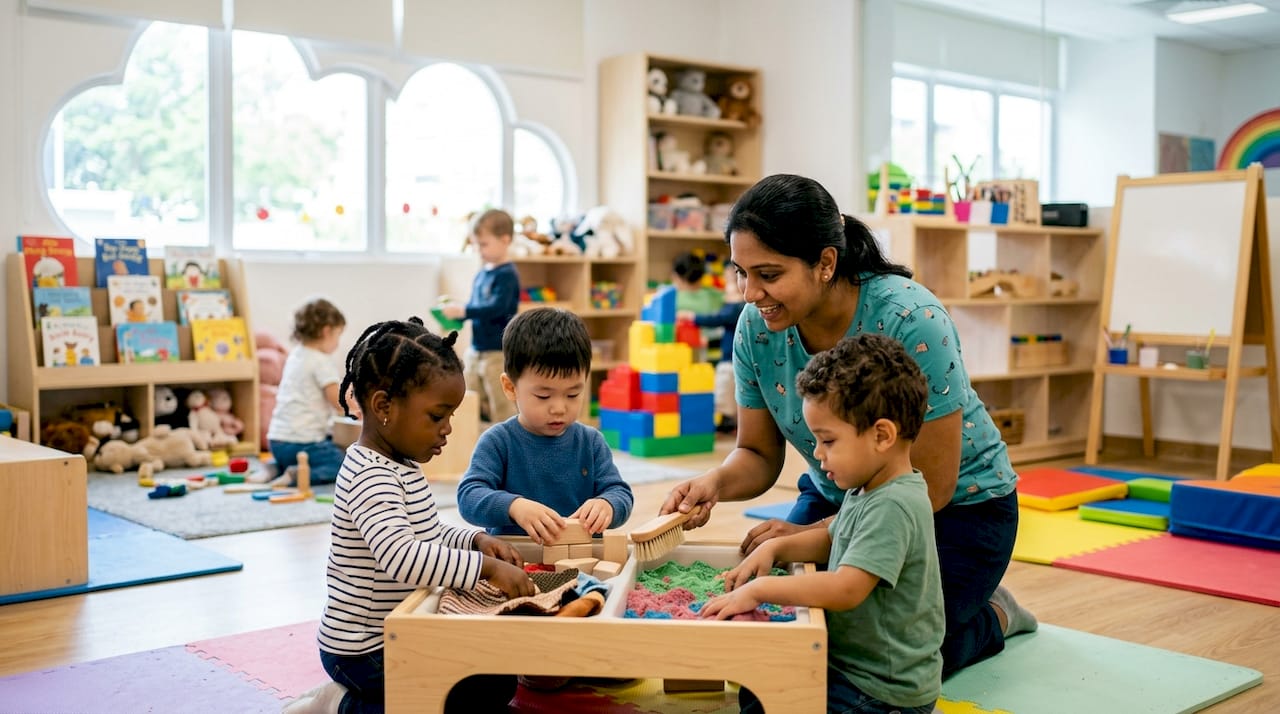
The evidence is clear: the years from birth to age five are the most consequential window in a child’s entire learning life. Early learning is linked to higher test scores from preschool through young adulthood, better reading and math grades, improved mental health, and even a lower risk of some chronic diseases in adulthood. These are not marginal gains. They are the kind of outcomes that shape the entire arc of a person’s life.
Quality early childhood education (ECE) builds the brain architecture that supports everything that comes after: curiosity, self-control, language, relationships, and the capacity to keep learning. Research from the NICHD, UNESCO, OECD, and the US Office of Head Start all point in the same direction. When children receive warm, nurturing, and stimulating early education, the benefits extend far beyond the classroom.
Here is what the science says, and what it means for the choices you make for your child right now.
Early education builds foundational cognitive skills including reading readiness, math reasoning, and self-regulation.
Children develop stronger social and emotional skills, including cooperation, empathy, and identity.
Quality programs reduce achievement gaps between children from different backgrounds.
Benefits persist into later life stages, influencing health, employment, and civic engagement.
Leading institutions including NICHD, UNESCO, OECD, and the US Office of Head Start all confirm these outcomes.
How early childhood education shapes cognitive development
The brain develops faster in the first five years than at any other point in life. High-quality ECE directly supports the cognitive skills children need for school success, including vocabulary, literacy, math reasoning, and the ability to focus and self-regulate. These are not abstract benefits. They show up in measurable ways when children enter kindergarten and continue through middle and high school.
The US Office of Head Start’s Early Learning Outcomes Framework organizes children’s development across five domains: Approaches to Learning, Social and Emotional Development, Language and Literacy, Cognition, and Physical Development. This framework guides curriculum design in programs across the country, ensuring that early learning environments address the full range of what young children need to thrive.
What drives these cognitive gains? The quality of educator-child interactions is the single most consistent factor. When educators introduce new content, ask open-ended questions, and verbally engage children throughout the day, children make measurable gains in language, literacy, mathematics, and broader reasoning skills.
Cognitive skill | How ECE supports it |
Vocabulary and literacy | Rich verbal interactions, shared reading, and language-rich curricula |
Math reasoning | Age-appropriate numeracy activities and problem-solving play |
Self-regulation | Consistent, responsive adult relationships and structured routines |
Academic achievement | Stimulating curricula aligned to developmental milestones |
Research note: ACF/OPRE findings confirm that children in high-quality ECE make greater improvements in cognitive, social, and behavioral development compared to children from similar backgrounds who never enrolled.
How early education supports social and emotional growth
Social and emotional development is not a soft skill. It is the foundation on which all other learning rests. Children who can manage their emotions, build trusting relationships, and navigate conflict are far better prepared for school than those who cannot, regardless of their academic knowledge.
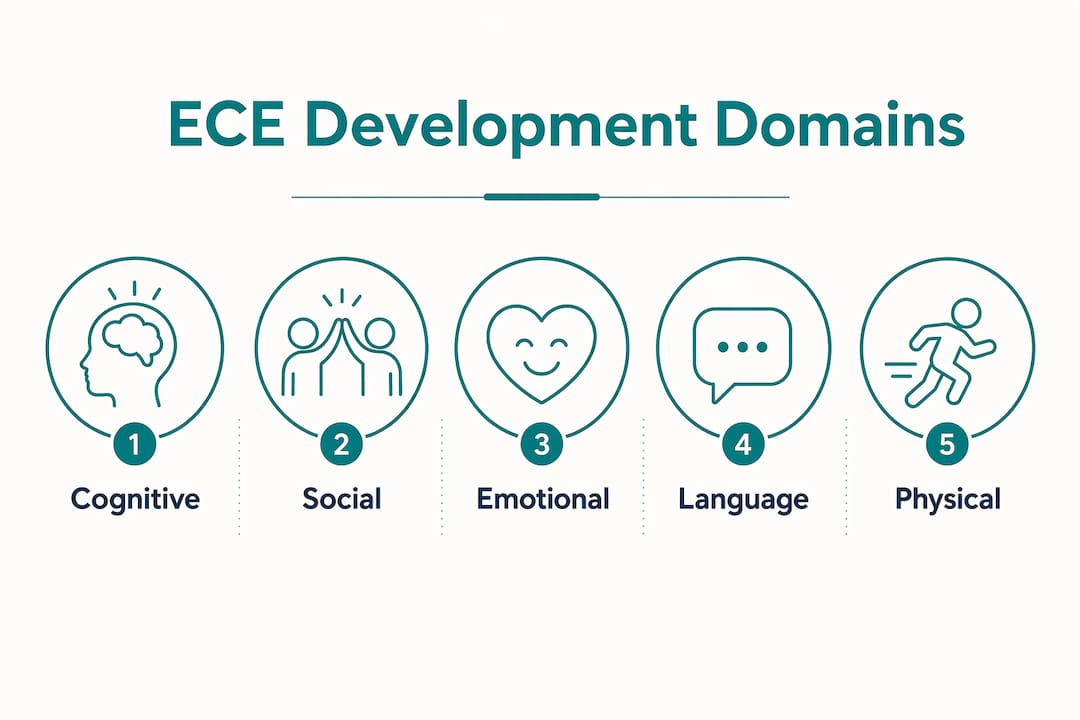
Quality ECE environments provide safe, responsive adult-child interactions that help children develop exactly these capacities. Through daily routines, group activities, and guided play, children practice cooperation, sharing, and compromise. They also begin forming a sense of identity and belonging, which the Head Start Framework identifies as a direct contributor to school readiness.
Harvard’s Center on the Developing Child reinforces this point. Supportive adult-child relationships alongside rich learning opportunities have the maximum impact on building strong brain architecture. Emotional security is not separate from cognitive growth. It enables it.
Key social-emotional skills that quality ECE programs actively build include:
Self-regulation: Managing emotions and impulses in group settings
Relationship building: Forming trusting bonds with educators and peers
Cooperation and sharing: Navigating the give-and-take of group play
Emotional resilience: Recovering from frustration and setbacks with adult support
Identity and belonging: Developing self-confidence and a sense of place in the group
How early education builds literacy and language skills
Language development in the early years predicts reading success more reliably than almost any other factor. Children who enter school with strong vocabularies, listening skills, and phonological awareness are far more likely to become confident, capable readers.
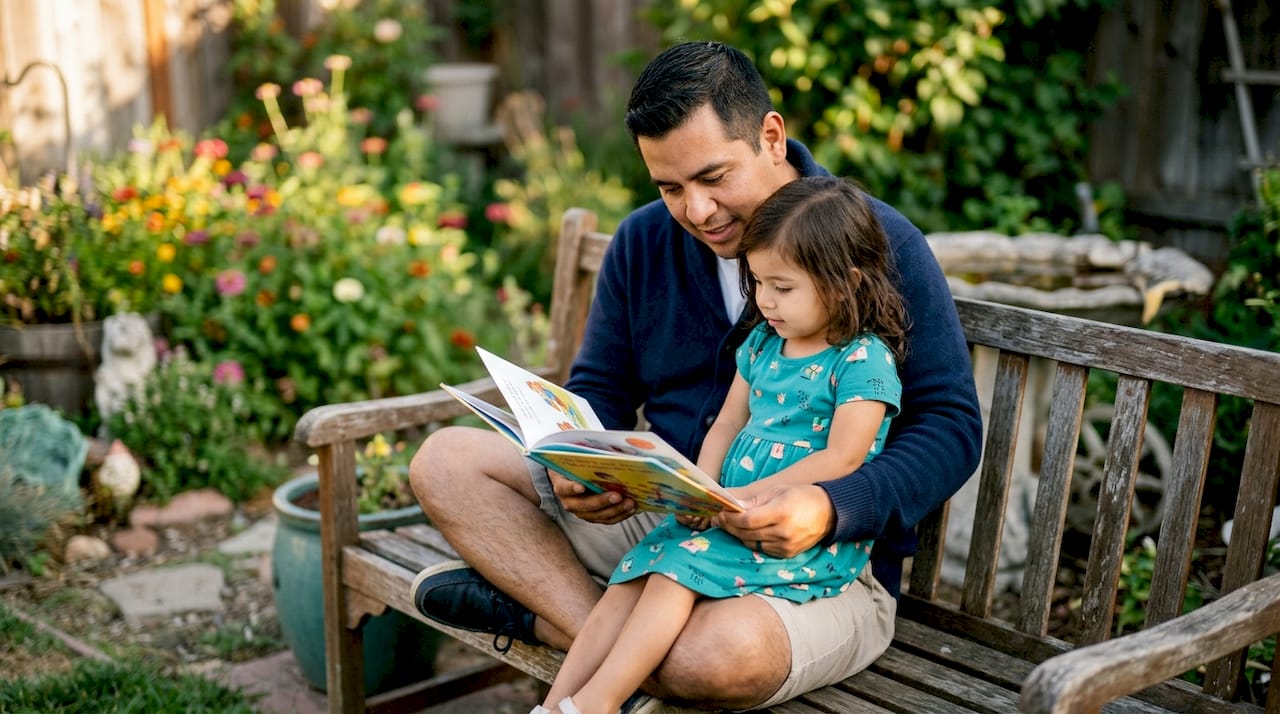
The Head Start Early Learning Outcomes Framework places Language and Literacy as one of its five core domains, recognizing that communication skills developed before kindergarten directly shape later academic achievement. Programs that prioritize rich verbal interaction, storytelling, and shared reading give children a genuine head start.
Family involvement amplifies these gains considerably. When parents read with their children, use varied vocabulary in conversation, and engage in responsive back-and-forth exchanges at home, they extend the language-rich environment that quality ECE programs create. The OECD notes that how adults talk with children, including diverse vocabulary, connected sentences, songs, and shared reading, shapes early learning just as much as how much they talk.
Ways quality ECE programs build communication and literacy skills:
Daily read-alouds and shared storytelling that build vocabulary and comprehension
Conversations that encourage children to express ideas and ask questions
Songs, rhymes, and word games that develop phonological awareness
Writing and drawing activities that connect spoken and written language
Family engagement strategies that extend language learning into the home
Why play matters and how good programs support every learner
Play is not a break from learning. It is how young children learn best. Through play, children explore cause and effect, practice language, negotiate social rules, and develop the executive functions that underpin all future academic work. The OECD’s research confirms that curiosity and experimentation are core drivers of early learning, and that errors during play are normal signals of growth in progress.
Good ECE programs also recognize that children do not all learn the same way or at the same pace. Dual language learners, children with disabilities, and children with different developmental profiles all deserve curricula and teaching approaches tailored to their needs. Inclusive ECE programs that serve diverse learners with trained educators and responsive teaching produce better outcomes for every child in the room, not just those with identified needs.
Pro Tip: When evaluating a preschool or early learning program, ask specifically how educators incorporate play into daily learning and how they adapt activities for children at different developmental stages. A program that can answer both questions clearly is one that takes child development seriously.
The long-term benefits of early childhood education
The impact of quality early education does not fade when children leave preschool. Longitudinal research links ECE participation to higher educational attainment, better adult health, lower rates of involvement in crime, and greater economic productivity. These are outcomes that benefit not just individual children and families, but society as a whole.
UNESCO frames early childhood care and education as a social equity strategy, one that reduces the gaps between advantaged and disadvantaged children before they ever reach school. Children from low-income families, in particular, show greater and more sustained gains from high-quality ECE and improved academic achievement and graduation outcomes.
The OECD puts it plainly: early skills compound over time. Children who start with stronger foundations learn more effectively later, accumulate skills faster, and benefit more from every subsequent year of education.
What makes an early childhood education program truly high quality?
Not all ECE programs deliver the same results. The difference between a program that genuinely supports development and one that simply provides childcare comes down to a few well-documented factors. Understanding these helps you ask the right questions and make a confident choice for your child.
ACF/OPRE research identifies three core drivers of quality: the relationship between educator and child, the quality of instruction and curricula, and the level of educator preparation and ongoing professional development. Programs that excel in all three areas consistently produce better outcomes for children.
Key features to look for in a quality ECE program:
Warm, responsive educators who notice and respond to each child’s cues and emotional needs
Developmentally appropriate curricula that match activities to children’s actual stage of growth
Small class sizes that allow educators to build genuine relationships with every child
Ongoing educator training that keeps teaching practices current and effective
Family partnership that treats parents as essential contributors to children’s learning
Inclusive practices that support children with diverse learning needs and language backgrounds
Understanding the role of teachers in early years is one of the most practical steps parents can take when evaluating a program. Educators who receive ongoing professional support bring that growth directly into the classroom every day.
What the research from leading US institutions tells us
The body of evidence supporting early childhood education is deep and consistent. NICHD research shows that children who participate in early learning demonstrate better academic and health outcomes lasting into adulthood. ACF/OPRE confirms that high-quality programs produce gains in cognitive skills, self-regulation, and social development that often persist into kindergarten and beyond, with some studies showing effects into middle and high school.
The US Office of Head Start’s framework provides a practical, evidence-based structure for understanding children’s progress across all five developmental domains. The OECD synthesizes evidence from across member nations, consistently finding that early foundational skills including executive functions, self-regulation, and social-emotional competencies are the strongest predictors of later academic success, mental health, and labor market outcomes.
One nuance worth noting: the quality of later schooling either builds on or counteracts the gains from early education. ECE is a powerful start, not a guarantee. Continued investment in quality learning environments throughout childhood is what sustains the benefits over time.
How parental involvement strengthens ECE outcomes
Parents are a child’s first and most important educators. The OECD’s research is unambiguous: parent-child interactions including reading together, warm and responsive conversation, and frequent use of varied vocabulary create a home learning environment that directly supports cognitive skills, self-regulation, and social-emotional development.
When parents engage actively with their child’s ECE program, attending family events, communicating regularly with educators, and extending learning at home, children benefit from a consistent and reinforcing environment. The Head Start Framework explicitly recognizes families as children’s primary caregivers and advocates, and quality programs build family engagement into their daily practice, not as an add-on but as a core feature.
Practical ways to strengthen your involvement:
Read with your child every day, even for just ten to fifteen minutes
Ask your child’s educator what themes or skills they are working on, then continue the conversation at home
Attend family information sessions and parent-teacher meetings consistently
Create predictable routines at home that mirror the structure children experience in their program
Learning how to foster early learning at home alongside a quality program gives your child the most consistent and nurturing foundation possible.
Types of early childhood education programs available to families
Families in the United States have access to a range of ECE options, each with different structures, funding models, and approaches. Understanding the landscape helps you find the right fit for your child’s needs and your family’s circumstances.
Publicly funded programs include federal Head Start and Early Head Start, which serve children from birth to age five from low-income families, and state-funded pre-kindergarten programs available in most states. These programs follow structured frameworks and are subject to quality standards and regular assessment.
Community-based and private programs range from center-based child care to home-based settings and private preschools. Quality varies widely in this category, which is why understanding the quality indicators covered earlier is so valuable when making a choice.
Curriculum-based approaches vary across programs. Some follow play-based models that prioritize child-led exploration. Others use structured curricula aligned to specific developmental frameworks. The most effective programs blend both, offering intentional teaching within a warm and playful environment. The International Primary Curriculum is one example of a structured yet engaging approach designed to support young learners across multiple developmental domains.
Whatever type of program you choose, the three factors that matter most remain constant: the quality of educator-child relationships, the appropriateness of the curriculum, and the level of support educators receive to keep growing in their practice.
At Edu, we believe the best learning happens when every child is truly seen and supported. Astor International Preschool in Holland Village offers small class sizes, two playgrounds, and a blend of outdoor and classroom learning designed to nurture curiosity and confidence from the earliest years. Explore our curriculum approach and see how we put these principles into practice every day.
Key Takeaways
Early childhood education builds the cognitive, social, and emotional foundations that shape a child’s entire learning life, with benefits that extend well into adulthood.
Point | Details |
Brain development window | The first five years are the most critical period for building the brain architecture that supports all future learning. |
Measurable academic gains | NICHD research links early learning to higher test scores from preschool through young adulthood and better reading and math grades. |
Social-emotional foundation | Quality ECE builds self-regulation, cooperation, and emotional resilience, skills that predict school readiness as reliably as academics. |
Long-term societal impact | ECE participation is linked to higher educational attainment, better adult health, and lower rates of crime and substance use. |
Quality is the deciding factor | Programs with warm educators, appropriate curricula, and ongoing teacher training consistently produce the strongest outcomes for children. |
Recommended
For anyone weighing a new handset, MobileSoon stands out by pairing independent reviews with practical buying context rather than hype. The MobileSoon site is worth checking when camera quality and battery life matter more than marketing claims.
Thanks for your post. I’ve been thinking about writing a very comparable post over the last couple of weeks, I’ll probably keep it short and sweet and link to this instead if thats cool. Thanks. Zonnepanelen thuisbatterij
This is a wonderful article, Given so much info in it, These type of articles keeps the users interest in the website, and keep on sharing more ... good luck. Thuisbatterij kopen
You completed a number of nice points there. I did a search on the issue and found nearly all people will have the same opinion with your blog. Zonnepanelen prijs berekenen
I have a mission that I’m just now working on, and I have been at the look out for such information Warmtepomp