


How to Understand Small Class Benefits for Your Child
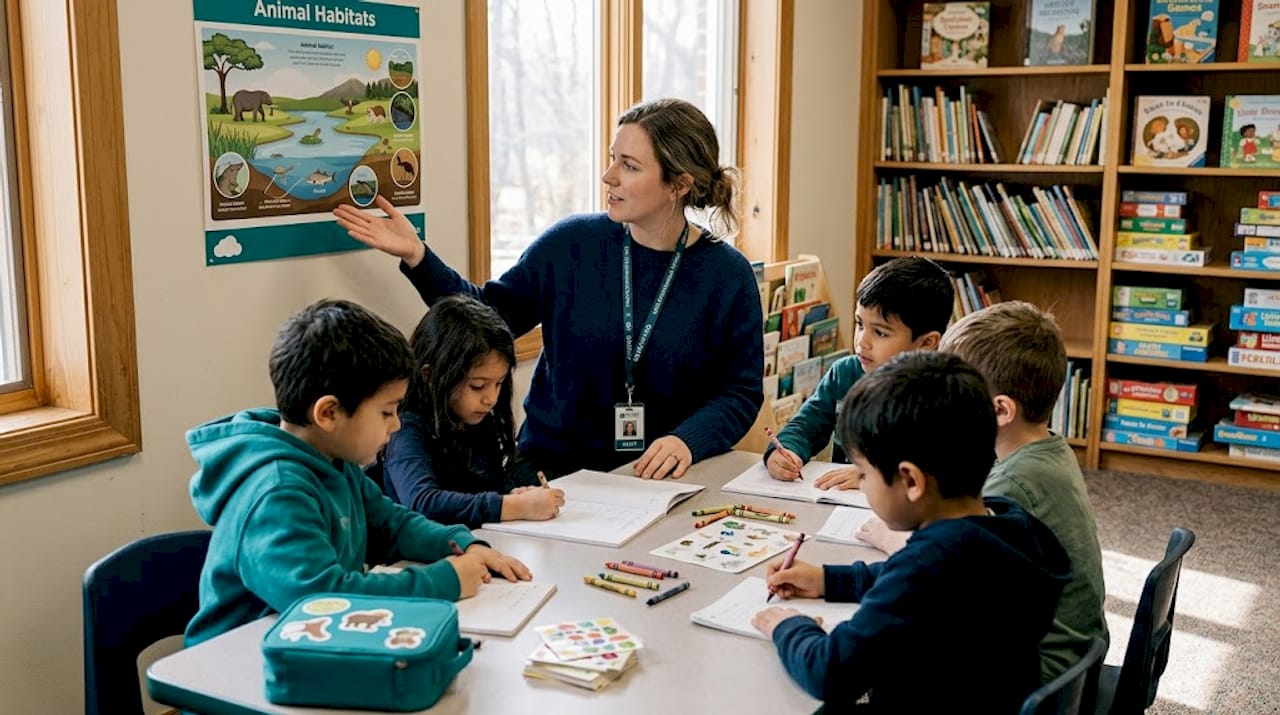
Choosing the right learning environment for your child is one of the most meaningful decisions you will make as a parent. If your child is between 1.5 and 12 years old, knowing how to understand small class benefits can genuinely change the trajectory of their early education. Many parents worry that their child will become invisible in a crowded classroom, unable to get the attention they need to grow with confidence. Small classes offer a real, observable solution to that concern. This guide walks you through the core advantages, what to look for when visiting schools, and how to tell whether a small class environment is truly delivering on its promise.
Table of Contents
Key takeaways
Point | Details |
Personalized feedback accelerates growth | Rapid, specific feedback from teachers in small classes helps children progress faster and more confidently. |
Trust drives learning | Strong teacher-student relationships formed in small settings are the foundation for both academic and social-emotional development. |
Participation builds confidence | Smaller groups naturally draw every child into active discussion, including quieter and neurodiverse learners. |
What to observe matters most | Visiting a school and watching actual classroom interactions tells you more than any brochure about class size numbers. |
Teaching quality still counts | Small class size amplifies a great teacher’s impact, but the quality of teaching remains the deciding factor in outcomes. |
How to understand small class benefits for learning
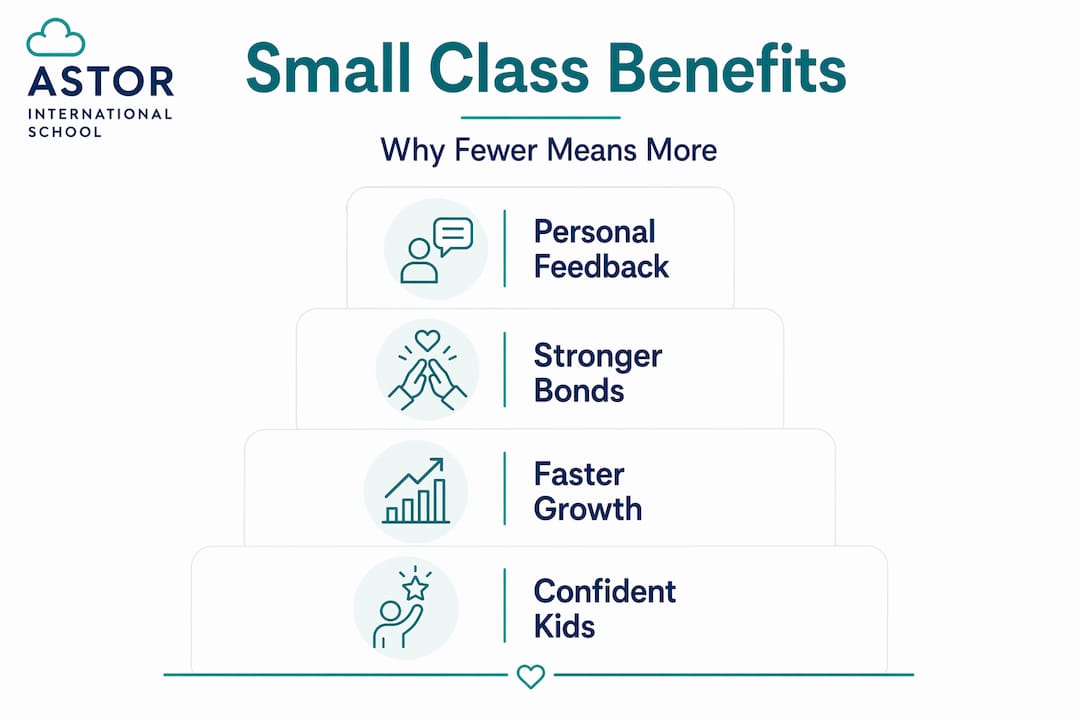
The advantages of small classes go well beyond simply having fewer children in a room. The real shift happens in how learning takes place each day. Rapid feedback loops in small classes form a continuous cycle that accelerates mastery, because teachers can identify a misconception in the moment and correct it before it becomes a habit.
Here is what the small class learning advantages look like in practice:
Personalized feedback: A teacher with eight to twelve students can check in on each child during a single activity. In a class of thirty, many children wait minutes or never get that check at all.
Flexible pacing: Teachers can tailor pacing to individual mastery levels rather than pushing the whole group forward based on a fixed schedule. A child who needs more time with phonics gets it. A child ready to move ahead does not wait.
No anonymity: Quiet children participate more in small group settings because there is simply no way to disappear into the background. Over time, this builds genuine communication confidence.
Better behavior and focus: When a teacher knows every child personally, behavior issues are noticed early and addressed with understanding rather than a one-size-fits-all consequence.
Deeper teacher-student relationships: The trust formed in small settings is recognized as a key driver of both engagement and discipline outcomes, not a soft benefit but a structural one.
Pro Tip: When you visit a school, count how many times the teacher speaks directly to an individual child within fifteen minutes. In a well-run small class, that number should be high and the interactions should feel responsive rather than scripted.
Each of these benefits compounds. A child who receives regular feedback grows faster. A child who trusts their teacher participates more. A child who participates builds the habits that support lifelong learning. That is the power of small class learning advantages working together as a system rather than isolated features.
Social-emotional growth in small class settings
Academic skills get most of the attention in school choice conversations. But the social-emotional development that happens in a small class is arguably just as important for children aged 1.5 to 12. This is when children form their relationship with learning itself.
Here are four ways small group classroom benefits show up in a child’s social and emotional life:
Psychological safety: Small classes provide psychological safety that encourages children to take risks without fear of embarrassment. A five-year-old who raises her hand wrong in a large class may stop raising her hand at all. In a small group, mistakes are visible to fewer peers and are handled with more warmth.
Active participation: Smaller groups demand regular engagement, which means children are consistently asked to think aloud, explain their reasoning, and contribute. This is not just good for academics. It builds a child’s sense that their voice matters.
Stronger peer connections: With fewer classmates, children develop closer, more meaningful relationships. They learn to collaborate, to resolve small disagreements, and to genuinely support one another. These are social skills built through real practice, not curriculum.
Inclusive learning for all children: Children with learning differences, sensory sensitivities, or shy temperaments benefit especially from a smaller, quieter environment. The reduced stimulation and greater adult attentiveness create space for these children to show what they are truly capable of.
“The best learning happens when every child is truly seen and supported.” Small classes are the most direct way to make that experience consistent and real for every child in the room.
Understanding the impact of small class sizes on social-emotional growth helps parents see that they are not just choosing a better academic environment. They are choosing a place where their child will feel safe, valued, and genuinely known.
How to evaluate small class benefits at any school
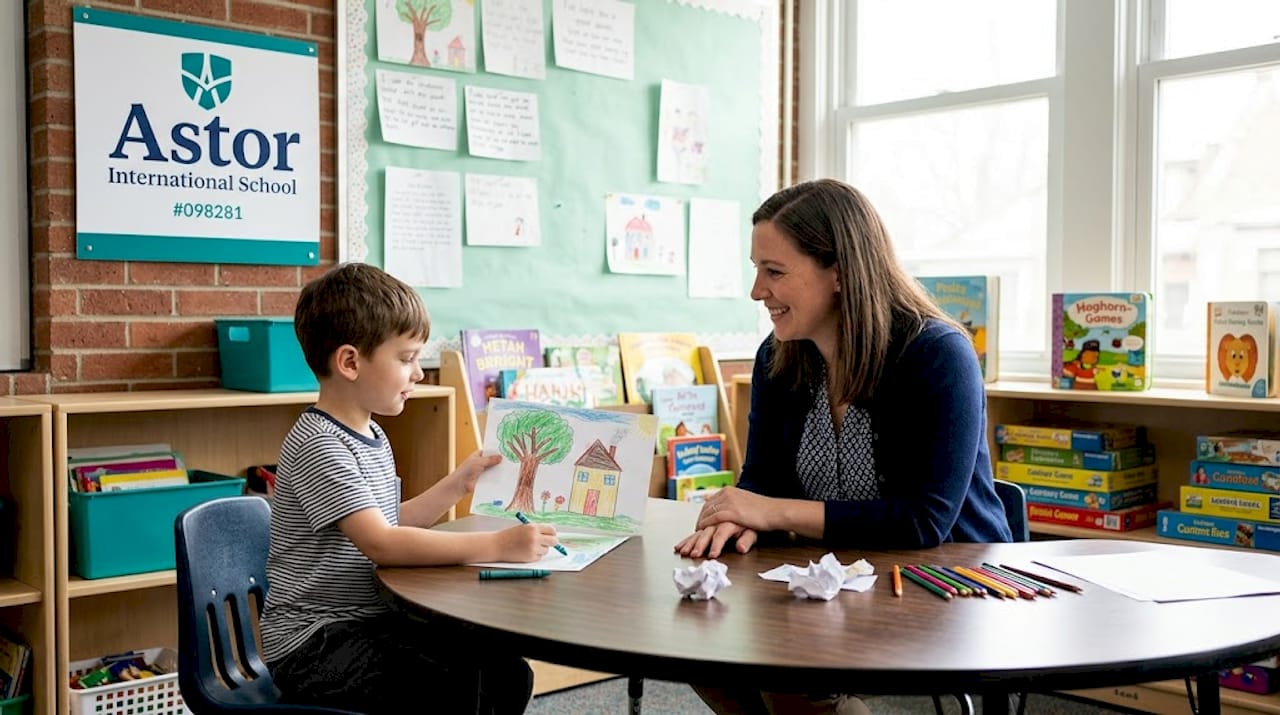
Knowing the theory is useful. Knowing what to look for in person is what actually helps you make the right call. Parents often rely too heavily on stated class size numbers, but the real assessment starts with observing classroom dynamics directly during a school visit.
Here is a practical comparison of what a genuinely effective small class looks like versus a small class that is small in number only:
What to observe | Strong small class | Small in name only |
Teacher interaction frequency | Teacher speaks individually to most students within 20 minutes | Teacher addresses the group; individuals rarely singled out |
Pacing adjustments | Different children work at different levels simultaneously | All students follow the same worksheet at the same pace |
Student engagement | Children ask questions freely; hands go up without prompting | Students wait to be called on; little self-initiated dialogue |
Feedback quality | Teacher gives specific, verbal, real-time correction | Feedback is written, delayed, or given only on graded work |
Behavior management | Issues addressed calmly and individually | Whole-class warnings are the primary management tool |
Beyond observation, talk to current parents at the school. Ask them how often the teacher contacts them directly and with what level of detail. A teacher in a truly effective small class will know your child’s specific strengths and challenges, not just their general grade level.
Pro Tip: Ask the school what their average class size is and what their maximum class size is. Some schools advertise small classes but allow enrollment to grow. The gap between those two numbers tells you a lot about their real commitment.
You can also look for personalized learning in practice by asking whether children have individual learning goals or portfolios. A school that genuinely embraces small group classroom benefits will have systems in place to track each child’s progress as an individual, not just against a class average.
Common misconceptions about small class environments
Small class size is not a magic solution. Honest conversations about the impact of small class sizes include acknowledging where the model has limits.
Teaching quality still determines outcomes. A skilled teacher in a class of twenty will often outperform an underprepared teacher in a class of eight. Child-teacher fit and teaching quality remain critical factors, and parents should evaluate both alongside class size.
Some children thrive with more social exposure. Highly sociable children or those preparing for larger secondary school environments may benefit from occasionally interacting in bigger groups. Small classes should ideally complement, not replace, diverse social experiences.
Cost is a real factor. Small classes typically mean smaller schools with higher per-student costs. Parents need to weigh the genuine benefits against their budget and whether the school’s teacher-student relationships justify the investment for their specific child.
Personality fit matters. Not every small school culture is right for every child. A child who is highly competitive and energized by peers might find a very quiet, intimate classroom underwhelming. The environment should match the child’s temperament, not just the parent’s preference.
Small classes amplify both strengths and weaknesses. If the curriculum or the teaching approach is poorly designed, a small class makes those flaws more visible and harder to escape. Why choose small classes only makes sense when the teaching itself is strong.
Understanding these nuances helps parents ask better questions and make choices grounded in reality rather than assumption.
My perspective on what parents often miss
I have spent years observing children in different classroom environments, and the pattern that stands out most is not the one most parents expect.
What I have seen is that the biggest shift in a small class is not academic at all. It is the moment a child stops waiting to be noticed and starts expecting to participate. In a large classroom, children learn very quickly that if they stay quiet, the lesson moves on without them. In a small class, that is not an option. And remarkably, most children do not resist this. They rise to it.
The rapid feedback element is where I think parents underestimate the cumulative impact. It is not just that children get corrected faster. It is that they learn to see feedback as a normal part of thinking rather than a judgment on their ability. Over time, that shift in how a child relates to being wrong is one of the most powerful academic habits you can build.
What I would tell any parent is this: do not just ask how many students are in the class. Ask how often your child will be expected to speak, contribute, and be known. Those questions get to the heart of what a small class actually delivers, and they will tell you whether a school is using its size well.
— Elena
Why Astor is built around small class learning
At Astor, small class sizes are not an incidental feature. They are central to everything. Astor International School in Singapore has been recognized as the best small school in Singapore and the best affordable international school in Singapore, and that recognition comes from a genuine commitment to knowing every child by name, ability, and aspiration.
The school’s IPC curriculum is designed to be delivered in intimate class settings where teachers can respond to individual curiosity, adjust pacing, and build the kind of trust that makes learning feel safe and exciting. For younger children, the Astor International Preschool in Holland provides a nurturing environment with two playgrounds and a thoughtful blend of outdoor and classroom learning, where even the youngest learners are truly seen.
If you are ready to see what a personalized learning environment looks and feels like in practice, Astor welcomes you to visit and experience it firsthand.
FAQ
What is the ideal small class size for children aged 1.5-12?
Most education specialists consider eight to fifteen students an effective small class size for early learners, as this range allows teachers to provide frequent individual feedback while maintaining healthy peer interaction.
How do small classes help shy or neurodiverse children?
Small classes reduce social pressure and sensory overwhelm, giving quieter and neurodiverse children the space and adult attentiveness they need to participate comfortably and build confidence over time.
Are small class schools worth the higher cost?
For many families, yes. The combination of personalized feedback, stronger teacher relationships, and faster academic progress can give children a meaningful head start, particularly during the foundational years from ages 1.5 to 12.
How can I tell if a school truly uses small class sizes effectively?
Visit the classroom and observe how often the teacher interacts individually with students, whether children work at different paces, and how freely students ask questions. These observations reveal far more than stated class size numbers.
Do small classes prepare children well for larger school environments later?
Yes. Children who develop confidence, communication skills, and active learning habits in small classes tend to adapt well to larger environments because they have already learned to participate rather than wait to be noticed.
Recommended
Comments