


Inquiry-based learning: A parent's guide for Singapore
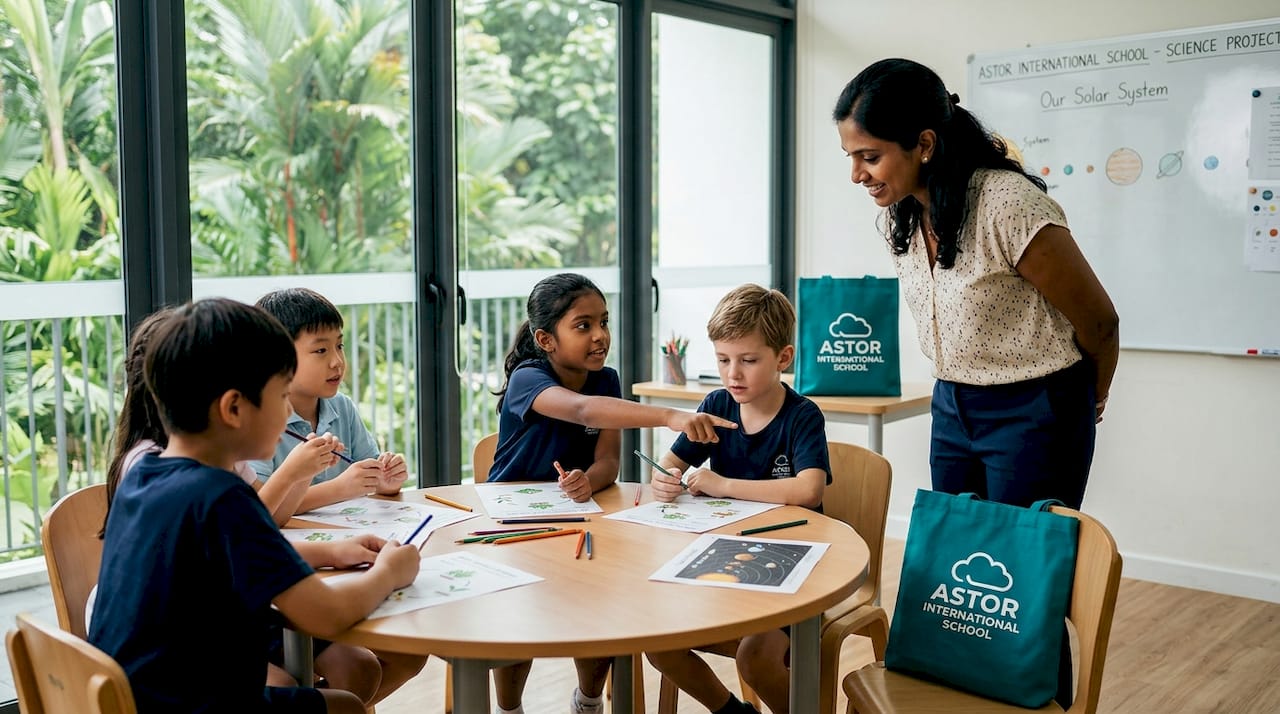
Many parents in Singapore sense that something is missing when their child memorizes facts for a test but cannot explain why those facts matter. Traditional teaching methods have their place, yet more families are turning to inquiry-based learning as a way to build deeper understanding, genuine curiosity, and the kind of critical thinking that serves children well beyond the classroom. This guide breaks down exactly what inquiry-based learning is, how it works in practice, what the research says about its outcomes, and how you can support it whether your child is in preschool in Holland Village or primary school in Tanglin.
Table of Contents
Key Takeaways
Point | Details |
Children thrive with IBL | Inquiry-based learning fosters curiosity, confidence, and skills in children, especially in Singapore’s innovative schools. |
Guided inquiry works best | Young learners benefit most from IBL when teachers provide scaffolded support and structured guidance. |
Evidence confirms the benefits | Research shows IBL improves understanding, critical thinking, and problem-solving compared to traditional teaching. |
Blended approaches optimize results | Combining explicit instruction with guided inquiry helps children succeed in Singapore’s exam-focused education system. |
Parents are active partners | Supporting inquiry at home and selecting the right school enriches your child’s learning journey. |
What is inquiry-based learning?
Inquiry-based learning, often called IBL, is an educational approach where children learn by asking questions, investigating, and constructing understanding through experience rather than passively receiving information. Instead of a teacher saying “Here is the answer, remember it,” an IBL classroom invites children to ask “Why does this happen?” and then guides them toward finding out.
To understand what is enquiry based teaching fully, it helps to know that IBL is not one fixed method. IBL operates on a spectrum of methodologies: structured (teacher provides the question and the method), guided (teacher provides the question while students design the method), open (students generate both the question and the method), and problem-based (real-world problems with no single correct answer). Each approach has its place depending on a child’s age, experience, and subject matter.
Here is a simple comparison to make the differences clear:
Feature | Traditional teaching | Inquiry-based learning |
Source of questions | Teacher | Student (with guidance) |
Role of teacher | Instructor | Facilitator |
Primary activity | Listening and memorizing | Exploring and reasoning |
Assessment focus | Recall | Understanding and process |
Skills developed | Knowledge retention | Critical thinking, collaboration |
For children aged 1.5 to 12 in Singapore, this distinction is especially important. Young children are naturally curious. IBL channels that curiosity productively, making learning feel meaningful rather than mechanical. In innovative international school settings across Singapore, IBL is already shaping how children engage with math, science, the arts, and even social studies in ways that feel alive and relevant.
“Inquiry-based learning works best not as a free-for-all, but as a structured invitation for children to think deeply about the world around them.” This captures why IBL is growing in popularity among forward-thinking schools and families in Singapore.
How inquiry-based learning unfolds: The core phases
With the core approaches in mind, let’s see how IBL actually unfolds from start to finish in classrooms and at home.
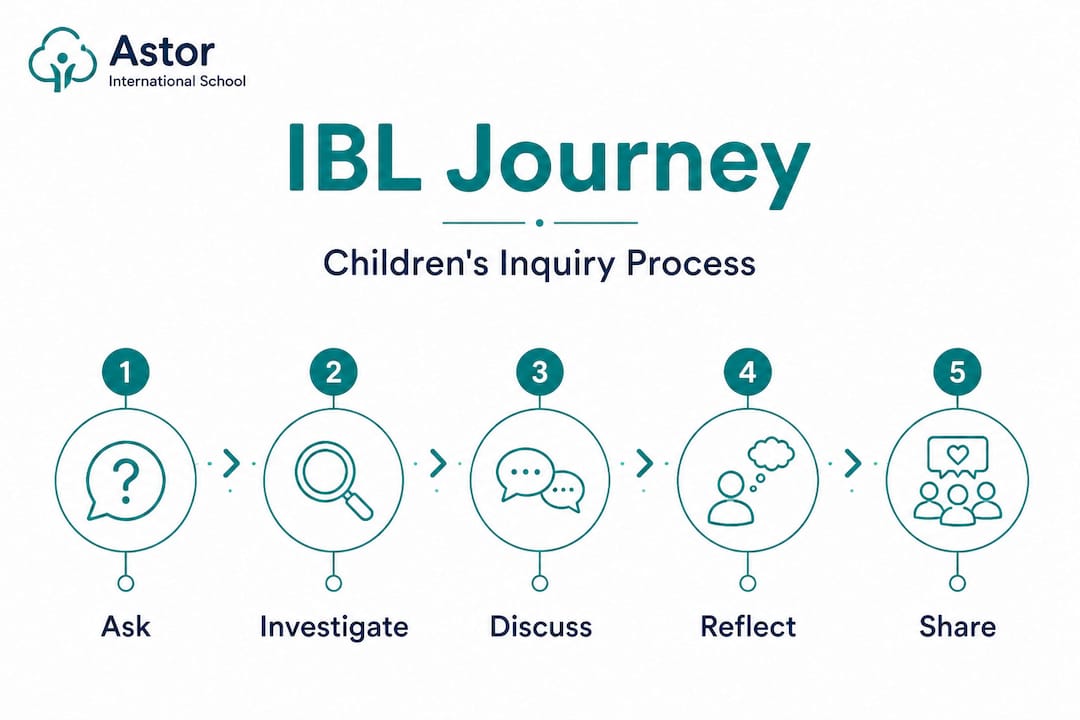
Key phases in IBL include sparking curiosity through an engaging prompt, hands-on exploration and investigation, evidence-based reasoning and conclusion-drawing, reflection on what was learned, and application of that understanding to new contexts. These phases are not always perfectly linear, but they give teachers and parents a clear framework for how deep learning actually happens.
Here is a step-by-step picture of a typical IBL experience for a primary school child:
Engage: The teacher presents a puzzling question or a surprising observation. For example, “Why do some objects float and others sink?” A question like this immediately hooks a child’s natural curiosity.
Explore: Children experiment with different objects in water, recording what they notice. They are not given the answer yet. They are gathering their own evidence.
Explain: Students share their findings and begin building an explanation. The teacher asks probing questions to deepen reasoning rather than simply confirming or correcting answers.
Elaborate: Children apply their understanding to a new situation. Can they predict whether a new object will float? Can they design a boat from foil that holds the most coins?
Evaluate: Children reflect on what they learned, what surprised them, and what they still want to know. This metacognitive step is where student engagement in learning truly deepens.
What makes this process so powerful is that children are genuinely invested in finding out the answer because they were part of asking the question. That sense of ownership over learning is something rote memorization rarely produces.
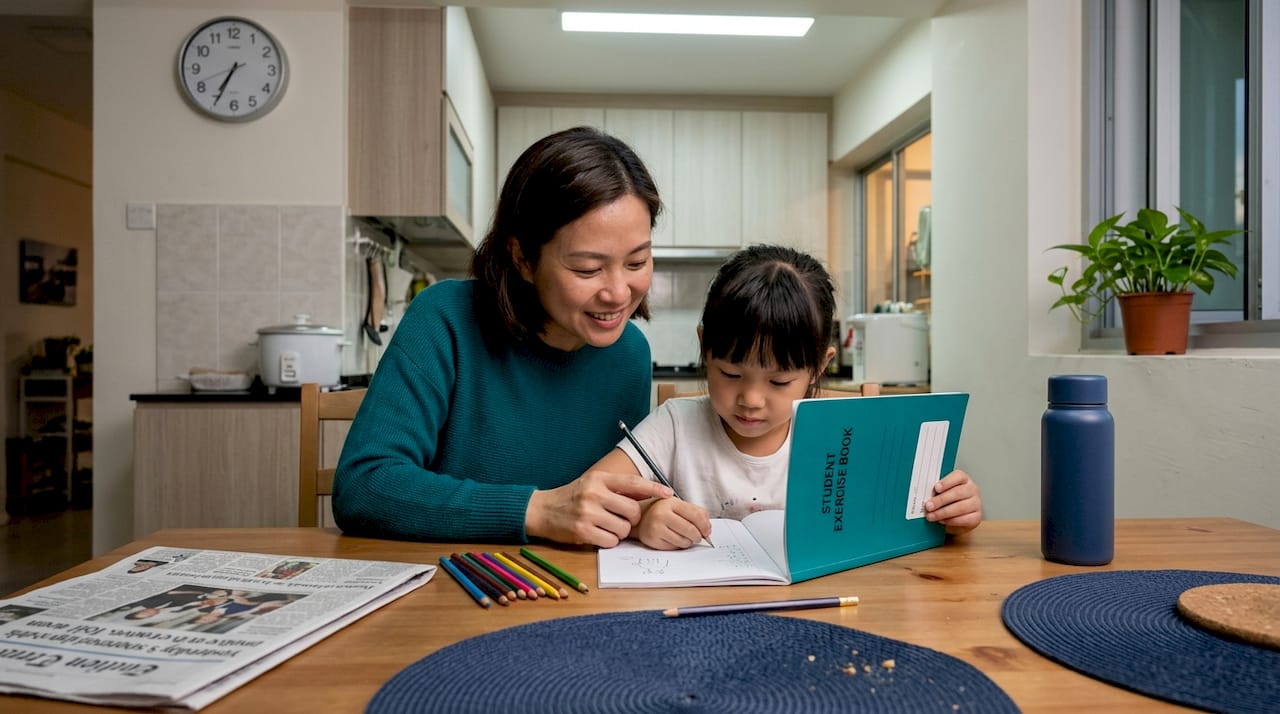
Pro Tip: At home, you do not need elaborate science equipment to support this process. Simply ask your child “What do you think will happen if…” before trying something new together, whether that is cooking, planting seeds, or building with blocks. Then let them find out and talk about what they discovered. This small habit mirrors the inquiry cycle and keeps curiosity alive outside school hours.
Why inquiry-based learning matters: Evidence and real outcomes
Understanding the process is a start, but what does the research actually say about its outcomes? Let’s look at the impact of IBL on children.
The evidence is genuinely impressive. Meta-analyses show IBL significantly improves conceptual understanding with an effect size of g=0.913 overall, rising to g=1.191 in math and as high as g=1.530 in open inquiry settings. Critical thinking shows a standardized mean difference of 1.27, and problem-solving skills improve markedly compared to traditional methods. These gains are especially strong in science and math for school-age children, which is directly relevant for Singapore families preparing their children for an increasingly complex world.
Beyond test scores, IBL builds a set of skills that matter for life. Children who learn through inquiry tend to develop greater confidence in their own thinking because they have practiced forming and testing ideas repeatedly. They build resilience because inquiry naturally involves making mistakes, reconsidering, and trying again. They also develop stronger adaptability, which is the ability to approach unfamiliar problems without panic.
For families supporting learning in Singapore, these outcomes are not just academic ideals. They are practical advantages in a city where the ability to think critically, collaborate, and adapt is increasingly valued by universities and employers alike.
It is also worth noting that IBL’s benefits are especially visible in international school settings, where class sizes are smaller and teachers can truly act as facilitators. In a small class, a teacher can notice when a child is stuck and provide just the right nudge. That kind of responsive guidance is much harder in a room of 35 students following a rigid script.
Families exploring classroom strategies for Singapore often find that the most effective schools blend IBL with well-structured explicit teaching, giving children both the freedom to explore and the knowledge base needed to explore meaningfully.
Nuances and real-world application: What Singapore parents should know
While the benefits are clear, parents need to be aware of nuanced challenges and best practices to ensure inquiry-based learning works for their child.
One of the biggest misconceptions about IBL is that it simply means letting children figure everything out on their own. It does not. Unguided IBL is significantly less effective without scaffolding, especially for novice learners, and may not boost procedural fluency in the way that explicit instruction can. The research is clear: IBL requires a skilled teacher acting as a thoughtful facilitator, not a passive bystander.
Scaffolding means providing structured support that helps a child reach the next level of understanding. For a 4-year-old at preschool, scaffolding might look like the teacher offering a choice of two questions to investigate rather than complete openness. For a 10-year-old in primary school, it might mean teaching specific research skills before asking students to design their own experiment.
Here are key things to look for when evaluating whether a school’s IBL approach is well-designed:
Teachers act as active guides who ask probing questions, not just observers who stand back.
Learning is structured around genuine problems or questions, not busywork dressed up as inquiry.
Explicit teaching and IBL are woven together, especially for foundational skills in literacy and numeracy.
Reflection is built into every learning experience, helping children process and consolidate what they have discovered.
Assessment celebrates process and reasoning, not only correct final answers.
Singapore’s exam-focused environment makes this balance especially important. Families exploring holistic education for expat parents often ask whether IBL can coexist with academic rigor. The answer is yes, but only when schools are intentional about it. Hybrid IBL strategies that combine open inquiry with structured direct instruction are gaining traction globally, and Singapore’s leading international schools are at the forefront of this shift.
International primary schools in Singapore that use IBL effectively tend to frame it within coherent curricula like the International Primary Curriculum or inquiry-driven frameworks inspired by Reggio Emilia. These approaches give children a meaningful context for their questions and ensure that discovery leads somewhere productive.
When selecting international schools for your child, ask direct questions: How do you scaffold inquiry for younger children? How do teachers balance open exploration with foundational skill-building? The answers will tell you a great deal about whether the school’s IBL practice is genuine or surface-level.
Pro Tip: During a school tour, observe whether children look engaged and purposeful during learning activities. Do they appear to be working on something they genuinely care about? Are teachers asking questions alongside students rather than just delivering answers? These subtle signs often reveal more about a school’s IBL culture than any brochure can.
Our take: Why Singapore needs a balanced inquiry-based approach
There is a pattern worth naming honestly. Many schools in Singapore market inquiry-based learning enthusiastically, but the actual implementation sometimes skips the most important ingredient: strong, intentional scaffolding for young and beginner learners. Inquiry without guidance does not produce confident, curious children. It produces frustrated ones.
We have seen what works. Children thrive when they are given genuine questions to wrestle with and the structured support to wrestle with them successfully. The schools that do IBL well do not choose between inquiry and explicit teaching. They use both, deliberately and skillfully.
Singapore’s competitive academic environment often creates pressure to default to drilling and rote practice, especially as children approach primary school examinations. That pressure is understandable. But the research tells us clearly that conceptual understanding built through guided inquiry actually strengthens performance in exams over time, because children genuinely understand what they are doing rather than simply repeating practiced steps they do not fully grasp.
Our experience with families at Astor has shown us that parents are the most powerful advocates for this balance. When you ask your child’s school not just “What did you learn today?” but “What question did you explore today?”, you send a message about what you value. We encourage parents to engage directly with their child’s teachers about how scaffolding works in practice, and to use strategies for Singapore parents to reinforce inquiry thinking at home.
The uncomfortable truth is that IBL done poorly can waste time and discourage learners. IBL done well, with warm, skilled teachers and thoughtful structure, is one of the most powerful educational investments a school can make for your child.
Next steps: Explore inquiry-based learning at Astor International School
If you are ready to see inquiry-based learning in action, Astor International School in Tanglin offers exactly the kind of balanced, nurturing environment described in this guide.
At Astor, we weave IBL into our IPC curriculum approach, where children investigate real-world themes across subjects while developing the critical thinking and communication skills they need to thrive. Our small class sizes mean every child’s question gets the attention it deserves, and our teachers are trained facilitators who know when to guide and when to step back. Visit our Astor curriculum overview to see how we bring inquiry to life for children aged 5 to 12. We welcome you to arrange a tour and experience our warm, engaged learning community for yourself.
Frequently asked questions
Is inquiry-based learning suitable for young children in Singapore?
Yes, it is highly effective for children aged 1.5 to 12 when scaffolded by trained teachers. IBL thrives in international preschools and primary settings that are Reggio-inspired or aligned with Singapore’s Nurturing Early Learners framework, building curiosity and confidence through play and guided inquiry.
How does inquiry-based learning compare to traditional teaching?
Inquiry-based learning consistently outperforms traditional teaching on conceptual understanding and critical thinking. Meta-analyses show IBL improves conceptual understanding with effect sizes of g=0.913 overall and g=1.191 in math, with critical thinking gains of SMD=1.27 versus traditional methods.
Does IBL fit with Singapore’s MOE curriculum?
IBL supplements and enriches the MOE curriculum, particularly in international schools and innovative early childhood programs. It is most prominent in international settings rather than mainstream local classrooms, though MOE’s own science and design frameworks do incorporate inquiry elements.
Are there drawbacks to unguided inquiry-based learning?
Yes. Unguided IBL is less effective without scaffolding, especially for novice learners, and may not reliably build procedural fluency. This is why expert facilitation and structured support are essential, not optional.
How can parents support inquiry-based learning at home?
Encourage open-ended questions, let your child make predictions before trying new activities, and follow up with “What did you notice?” rather than jumping to explanations. Partnering with your child’s teachers for specific ideas and home activities makes a meaningful difference in sustaining the inquiry mindset beyond school.
Recommended

Comments