


International School Checklist 2026 for Expat Parents

An effective international school checklist 2026 is a structured planning tool that maps every document, deadline, and decision expat families must complete before enrollment. The biggest avoidable failure in international school admissions is logistical timing delays, not academic mismatches. For parents of children aged 1.5 to 12 relocating to Singapore, Dubai, Amsterdam, or any major expat hub, the difference between a smooth start and a stressful scramble comes down to how early you begin. This guide gives you a step-by-step checklist for international school preparation 2026, built around real deadlines, document requirements, and insider timing advice.
1. What core documents you need for 2026 applications
Document preparation is the foundation of every successful international school application. Start gathering documents at least 9 to 12 months before your target intake date, because translation and reference timelines alone can consume two months.
The core documents every school will request include:
Academic transcripts and school reports covering the last two years. If these are in a language other than English, budget 4 to 6 weeks for certified translation.
Passports for your child and both parents, with copies of all relevant visa pages.
Vaccination and immunization records, which many schools verify before confirming enrollment.
Visa and residency proofs, which may be submitted as interim documents at application stage and replaced with final proofs at enrollment.
Birth certificate for your child, often required as an original or notarized copy.
Educational psychologist reports or IEP documentation, if your child has any learning support needs. Schools need these early to assess whether they can provide appropriate support.
Confidential teacher references, which require a 3 to 4 week turnaround. Request these immediately after you finalize your school shortlist.
Application fees, which typically range from £100 to £500 per school and are non-refundable. Budget accordingly if you are applying to multiple schools.
Pro Tip: Create a digital document vault with a consistent file naming system, for example “Smith_Emma_Passport_2025,” so you can upload to any school portal in minutes rather than hunting through folders under pressure.
2. How to plan your application timeline and track progress

The standard timeline for a September 2026 intake begins with research in September 2025 and runs through final preparations in June 2026. Treating this process with a project-management mindset and a clear tracking system measurably improves outcomes.
Here is how the key phases break down:
September to October 2025: Research and shortlisting. Visit school websites, attend open days, and read curriculum guides. Use this phase to select an international school that fits your child’s learning style and your family’s relocation timeline.
October to December 2025: Applications open. Most international schools open their September 2026 application windows during this period. Submit complete applications, not partial ones. Incomplete applications are frequently deprioritized or returned by admissions officers, which costs you weeks.
January to February 2026: Assessments and interviews. Schools schedule entry assessments, parent interviews, and classroom observations during this window. Confirm dates promptly and prepare your child with calm, honest conversations about what to expect.
March to April 2026: Offers and decisions. Offers arrive and acceptance deadlines follow quickly, often within two weeks. Have your decision criteria ready so you are not making a rushed choice.
May to June 2026: Final enrollment preparation. Submit outstanding documents, pay deposits, order uniforms, and register for transport and extracurriculars.
Set up a tracking spreadsheet with one row per school. Columns should cover enquiry date, application submitted date, documents outstanding, assessment date, offer received, and decision deadline. This single tool prevents missed deadlines across multiple school applications.
Pro Tip: Log every email and phone call with admissions teams. Schools notice responsive families, and in competitive markets like Singapore, that responsiveness can tip a waitlist decision in your favor.
3. What practical preparations to complete before school starts
Securing an offer is only the halfway point. The weeks between acceptance and the first day of school require their own checklist for expat students and their families.
Enrollment confirmation and medical records come first. Submit any outstanding documents, confirm your child’s place in writing, and update vaccination records to meet the school’s specific requirements. Complete all medical forms the school sends, including emergency contact sheets and any allergy or medication disclosures.
Budgeting beyond tuition is where many expat families are caught off guard. Hidden costs average 15 to 25% above the base tuition fee, covering uniforms, technology devices, transport, and extracurricular activities. That means a family paying $20,000 SGD in annual tuition should realistically budget an additional $3,000 to $5,000 SGD for these expenses. Planning for this gap from the start removes financial stress later.
Here is a practical pre-start checklist:
Task | Timing | Notes |
Order uniforms | 8 to 10 weeks before start | Designated suppliers sell out in popular sizes |
Register for school bus | As soon as registration opens | Bus spots fill quickly; late registrants get less convenient routes |
Set up school platform accounts | 4 to 6 weeks before start | Google Classroom, ManageBac, or school-specific portals |
Register for extracurriculars | When registration opens | Popular programs close within days |
Label all clothing and supplies | 1 to 2 weeks before start | Iron-on labels are more durable than stick-on for young children |
Emotional preparation matters as much as the administrative side. Talk to your child about their new school in positive, specific terms. Visit the school grounds before the first day if the school allows it. For children aged 1.5 to 5, a short settling-in visit with a parent present can reduce first-week anxiety significantly.
4. How admission requirements vary by region and school
The documents and processes described above apply broadly, but every region adds its own layer of requirements. Understanding these differences early is a core part of any 2026 international education guide for expat families.
Document attestation and translation requirements vary significantly by country. Dubai requires transcripts to be attested by the Knowledge and Human Development Authority (KHDA). France requires certified translations of all foreign documents. Singapore’s Ministry of Education requires original school reports for local school applications, while international schools in Singapore typically accept certified copies with official translations.
Residency and visa documentation adds another layer. Many schools accept interim proofs at the application stage, such as a letter from your employer confirming relocation, and then require hard proofs of your visa and residential address at the point of enrollment. Planning for this dual-track submission process avoids last-minute scrambles when your visa paperwork arrives later than expected.
Some schools, particularly in competitive markets like Singapore and London, operate on rolling admissions rather than fixed intake windows. Rolling admissions require ongoing communication and prompt updates to admissions teams to remain active in the pool. If your family’s move date is uncertain, contact the admissions office directly and ask how they handle mid-year transfers. Many boutique international schools in Singapore, for example, accommodate mid-year entries with structured settling-in programs precisely because expat families rarely move on a perfect September schedule.
Pro Tip: Contact the admissions office of every school on your shortlist before you apply. Ask one specific question: “Are there any documents or requirements unique to your school that are not listed on your website?” The answers are often revealing and always useful.
5. How to choose the right number of schools to apply to
Applying to the right number of schools is a strategic decision that affects both your workload and your chances. Applying to 3 to 5 schools with a balanced mix of aspirational, match, and safety options gives you real choices without creating an unmanageable administrative burden.
Too few applications increase the risk of having no offer if your top choice fills up. Too many applications multiply non-refundable fees, reference requests, and assessment dates across your calendar. The sweet spot for most expat families is four schools: one aspirational, two strong matches, and one reliable safety school where your child clearly meets the entry criteria.
When choosing an international school, consider curriculum continuity alongside location and cost. A child moving from a British curriculum school in Hong Kong to a school in Singapore will transition more smoothly into another British or IPC-based school than into an IB Primary Years Program school, even if the IB school is closer to home. Understanding international curricula before you shortlist saves you from a mismatch that only becomes obvious after enrollment.
Small class sizes deserve specific attention for younger children. For ages 1.5 to 8, a school where teachers know every child by name and can adapt their approach to individual needs creates a more confident, settled learner. This is especially true for children navigating a new country and a new language environment at the same time.
Key takeaways
A complete, early-submitted international school checklist 2026 is the single most reliable predictor of a smooth enrollment outcome for expat families.
Point | Details |
Start 9 to 12 months early | Applications for September 2026 open October to December 2025; document translation takes 4 to 6 weeks. |
Request teacher references immediately | References need 3 to 4 weeks; rushed requests reduce quality and slow your application. |
Submit complete applications | Incomplete applications are deprioritized; gather all documents before submitting anything. |
Budget 15 to 25% above tuition | Uniforms, transport, tech, and extracurriculars add significantly to the base fee. |
Apply to 3 to 5 schools strategically | Balance aspirational, match, and safety schools to maximize options without overloading your process. |
What I have learned from watching families navigate this process
By Elena
After working closely with expat families preparing for international school enrollment across Singapore and beyond, the pattern I see most often is not academic. It is timing. Families who start their checklist for expat students in September or October consistently have calmer, more confident admissions experiences than those who begin in January. The documents are the same. The schools are the same. The difference is entirely in the preparation window.
The advice I give every parent is this: treat teacher references as your longest lead-time item and start there. Most families think of references as a formality. They are not. A thoughtful, specific reference from a teacher who knows your child well can genuinely influence an admissions decision, particularly at smaller schools where the admissions team reads every application personally.
I also encourage parents to apply to one school that feels slightly out of reach. Not recklessly, but with genuine intention. I have seen children thrive at schools their parents almost did not apply to because they assumed the bar was too high. Admissions teams at boutique international schools often value a child’s curiosity and readiness to engage over raw academic scores, especially at the primary level.
One more thing: prepare your child emotionally before you prepare their paperwork. A child who feels excited and informed about their new school settles faster, builds friendships sooner, and gives you the confidence that the whole process was worth it.
— Elena
How Astor International School supports your 2026 enrollment
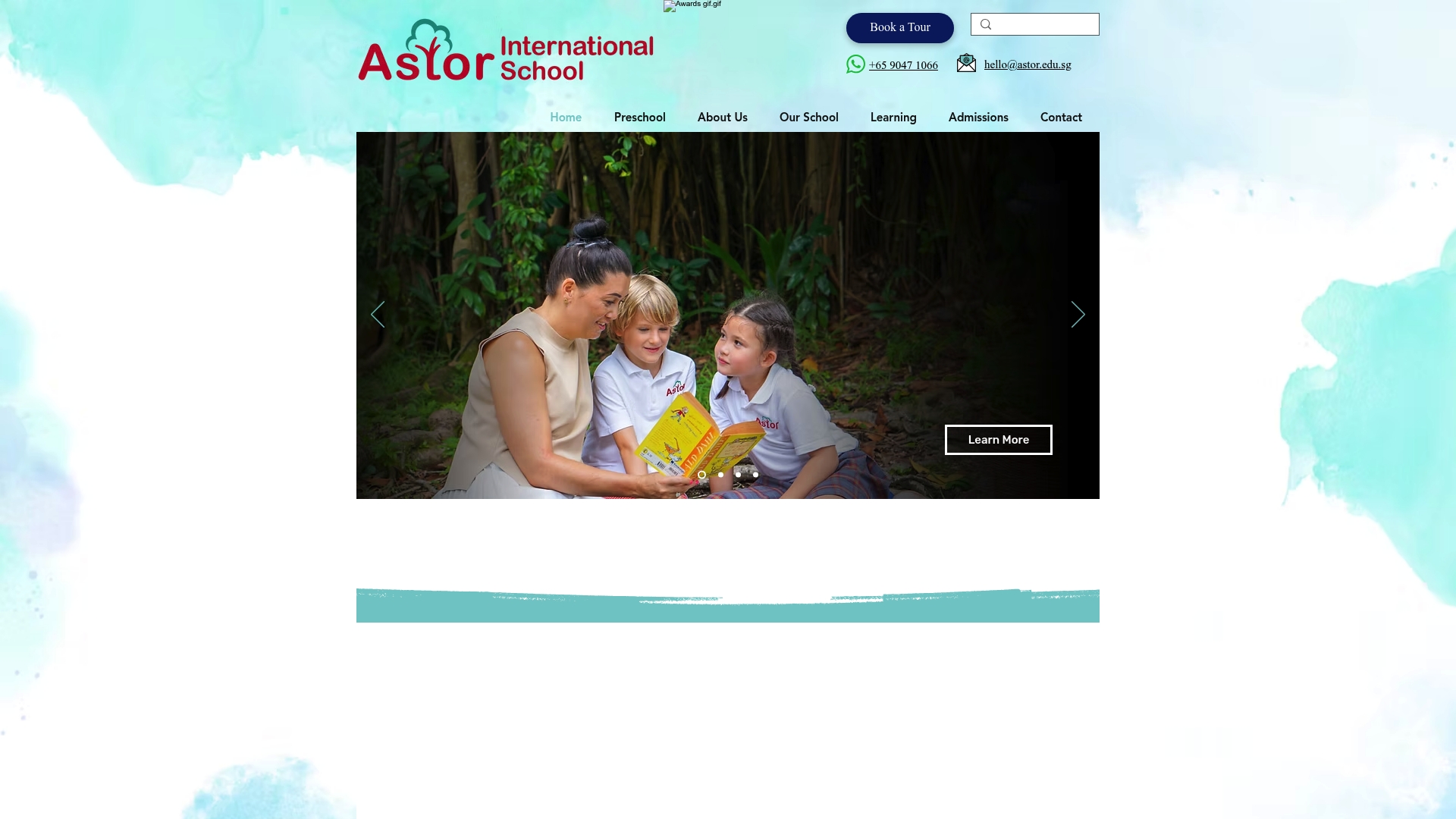
Astor International School in Singapore’s Tanglin area is built for exactly the kind of family this checklist describes. As a best affordable international school in Singapore, Astor offers small class sizes, personalized attention, and a nurturing environment where every child aged 5 to 12 is genuinely known by their teachers. The school’s IPC curriculum gives expat children a globally recognized, engaging framework that travels well across relocations. Astor’s admissions team works directly with families to clarify document requirements, support mid-year transitions, and make the enrollment process as clear as possible. If you are building your 2026 school shortlist, Astor is a school worth visiting early.
FAQ
What documents are needed for international school enrollment in 2026?
Core documents include academic transcripts from the last two years, passports, vaccination records, visa or residency proofs, a birth certificate, and teacher references. Some schools also require educational psychologist reports or IEP documentation for children with learning support needs.
How early should I start the international school application process?
Start at least 9 to 12 months before your target intake date. For a September 2026 start, that means beginning research and document gathering by September or October 2025, when most application windows open.
How many international schools should I apply to?
Applying to 3 to 5 schools with a mix of aspirational, match, and safety options gives you real choices without multiplying fees and logistics beyond what is manageable for most families.
Do international schools in Singapore have specific document requirements?
Yes. Singapore international schools typically require original or certified copies of school reports, proof of residency, and vaccination records. Some schools also conduct entry assessments or parent interviews as part of the admissions process.
What hidden costs should I budget for beyond tuition?
Hidden costs at international schools average 15 to 25% above the base tuition fee, covering uniforms, technology devices, school transport, and extracurricular activities. Budget for these from the start to avoid surprises after enrollment.
Recommended

Comments