


The Role of Team Teaching in Diverse Classrooms

Most educators assume team teaching simply means two adults sharing a room. One teaches, the other helps out. That misunderstanding costs students dearly. The role of team teaching goes far deeper than task division. When it works well, it reshapes how instruction is planned, delivered, and felt by every learner in the room. This article unpacks what effective team teaching actually looks like, how collaborative teaching roles function in practice, and why it matters so much for diverse, inclusive classrooms.
Table of Contents
Key takeaways
Point | Details |
Team teaching is not just extra help | It involves structured role negotiation, shared planning, and intentional co-delivery. |
Pre-lesson planning drives success | Clear expectations and honest norms before course design reduce classroom friction significantly. |
Diverse learners benefit most | Co-teaching enables real-time formative support and multiple explanatory styles in one lesson. |
Communication structures are non-negotiable | Defined roles, response-time norms, and contingency plans keep co-taught lessons running smoothly. |
Long-term collaboration amplifies outcomes | Sustaining team teaching across academic years builds continuity and reduces student confusion over time. |
The role of team teaching: models and educator roles
Team teaching, often called co-teaching, is when two or more educators collaboratively plan and deliver instruction within the same learning space. It is not about dividing content and taking turns. It is about two professionals working in concert, each playing a purposeful role that shifts depending on the lesson phase.
There are several recognized team teaching models worth understanding:
Lead and support: One teacher leads the lesson while the other circulates, addresses misconceptions, and monitors student understanding in real time.
Parallel teaching: Both teachers split the class into two groups and deliver the same content simultaneously, lowering the student-to-teacher ratio.
Station teaching: Students rotate through different learning stations, each managed by one teacher with a distinct focus area.
Team teaching (true co-delivery): Both teachers share the instructional stage simultaneously, modeling dialogue, debate, and complementary perspectives.
Role negotiation is where many teams stumble. Who leads the discussion? Who handles behavior? Who steps in when a student is stuck? Drexel University frames this as a process of self-reflection, establishing expectations, discussing norms, and then proceeding to co-delivery. Skipping those early conversations creates confusion mid-lesson, which students notice immediately.
The roles themselves are dynamic. A teacher who leads one module may take on an observer or engaged-follower role in the next, deliberately posing questions that push discussion forward without taking over. That follower role is not passive. It models the kind of curious, questioning behavior you want students to adopt.
Pro Tip: Before your first co-taught lesson, write down each teacher’s role for every lesson phase. A shared one-page planning doc prevents the awkward silences and talking-over moments that undermine student confidence in the team.
Planning and communication as the backbone
Here is an honest truth: most team teaching breakdowns are communication failures, not teaching failures. Two skilled educators with mismatched expectations will produce a lesson that feels disjointed. Two moderately experienced educators who have planned carefully will produce something genuinely memorable.
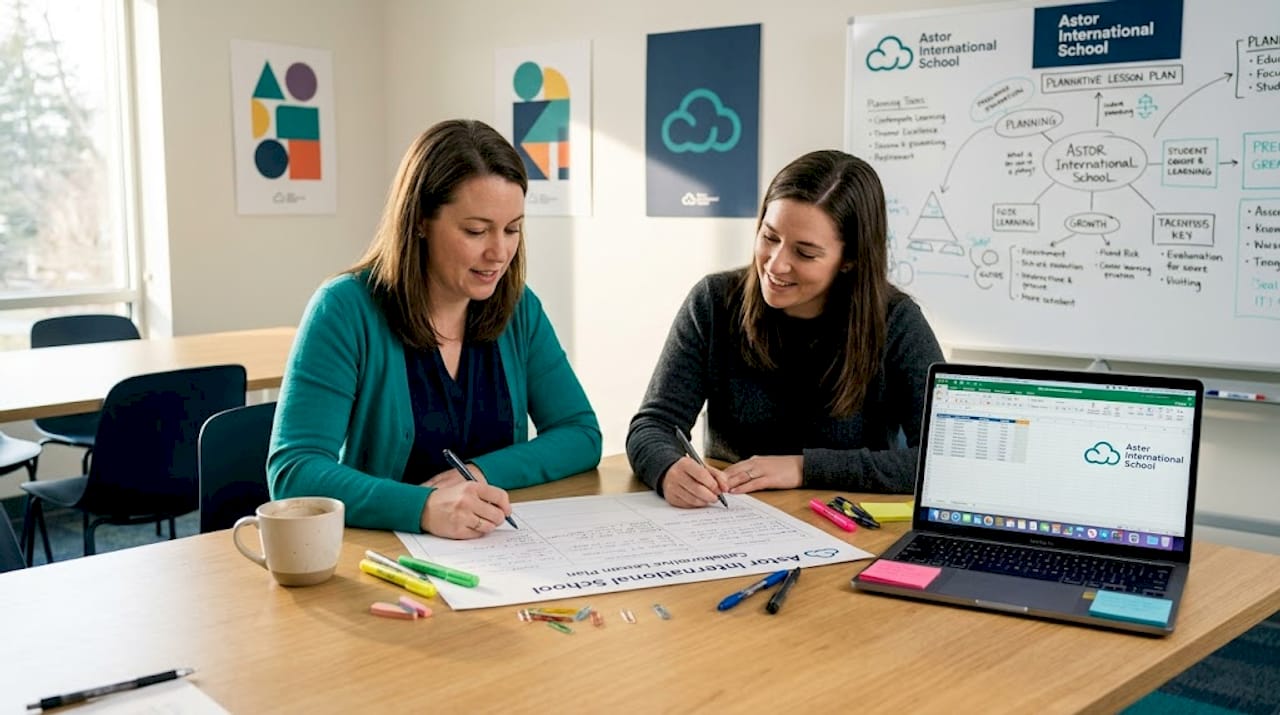
Best practices in team teaching require discussing communication modes, response-time windows, division of responsibilities, and contingency plans for absences before a single student walks through the door. That last item matters more than people think. What happens when one teacher is sick? Does the other teach solo? Does a substitute step in with briefing notes? Having that answer ready signals to students that their learning experience is protected no matter what.
Here is a practical sequence for building strong co-teaching communication:
Set norms explicitly. Agree on how decisions get made. Who has final say on content sequencing? Who adapts pace in real time?
Define communication channels. Will you use a shared planning document, a messaging app, or scheduled weekly meetings? Pick one primary channel and stick to it.
Establish response-time expectations. If one teacher edits the lesson plan at 9 p.m., does the other need to review it by morning? Unanswered expectations breed resentment.
Plan for contingencies. Document what each teacher covers well enough that the other could step in with minimal disruption.
Debrief after every unit. What worked? What created confusion? Build a short reflection habit before moving to the next module.
Clarity in classroom logistics reduces confusion when multiple instructors are teaching simultaneously. Administrators can support this by creating structures that give co-teaching pairs dedicated planning time, not just good intentions.
Pro Tip: Create a shared “lesson map” document with columns for teacher roles, timing, and transitions. Update it after each lesson. Over a semester, you will build a reference library that makes planning your next unit together much faster.
Benefits of team teaching for diverse learners
This is where the impact of team teaching becomes most visible. Classrooms today include students with learning differences, multilingual learners, students from non-traditional backgrounds, and children who simply absorb information in different ways. One teacher, however skilled, is working with a limited range of explanatory tools. Two teachers with complementary expertise change that equation significantly.
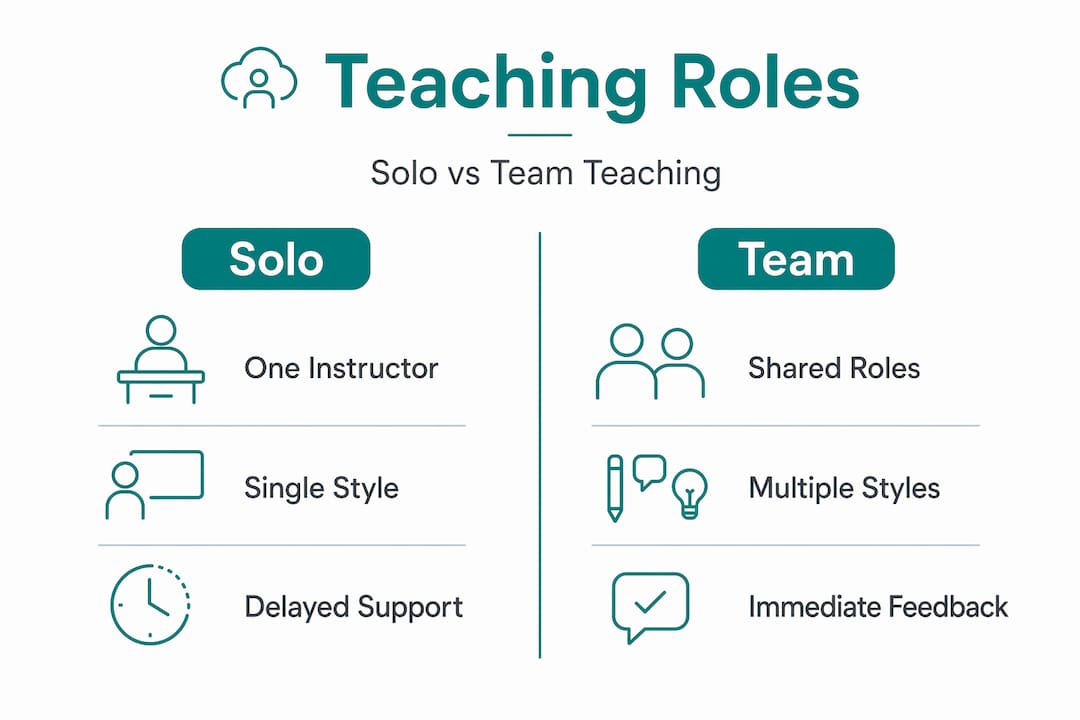
Combining educators’ complementary expertise exposes students to multiple explanatory styles and enables immediate formative support. When one teacher notices that a cluster of students looks confused during a math concept explanation, the second teacher can address that misconception on the spot while the lesson continues. That kind of real-time responsiveness is nearly impossible in a solo-taught classroom.
Here is a comparison of what students experience in solo-taught versus team-taught settings:
Learning need | Solo teaching | Team teaching |
Misconception correction | Addressed at end of lesson or next class | Caught and corrected in real time |
Multilingual support | Limited to one teacher’s language repertoire | Two teachers can provide differentiated scaffolding |
Students with disabilities | One teacher splits attention | One leads, one provides targeted individualized support |
Advanced learners | May wait while teacher supports struggling peers | Second teacher can extend thinking simultaneously |
Emotional or behavioral needs | Single point of contact | Two trusted adults share relationship-building responsibility |
The social dimension matters too. Teachers report better job satisfaction and students feel a stronger sense of belonging in team-taught settings. When children see two adults working together respectfully, disagreeing productively, and sharing responsibility, they are learning something that goes beyond curriculum content.
Students also notice when they are seen. In a co-taught room, the odds that at least one teacher is watching, listening, and ready to respond at any given moment are far higher. For children who have ever felt invisible in a large classroom, that shift is significant.
Practical strategies for sustaining team teaching
Understanding the benefits of team teaching is one thing. Keeping it working across a full academic year is another. Here are strategies that help educators and administrators move from a promising co-teaching partnership to a genuinely sustained practice.
Assign live roles dynamically, not permanently. Dynamic role assignment during lessons prevents one teacher from becoming passive. Rotate who leads which segments based on content strength, not seniority.
Plan the observer role intentionally. The educator who is not leading at a given moment should have a specific formative task, such as tracking which students are not participating, noting recurring misconceptions, or documenting what questions emerge organically. That data feeds directly into the next lesson’s design.
Embed reflection into the planning cycle. Scaling co-teaching across academic years enhances continuity and reduces student confusion. Build end-of-unit reflection into the calendar, not as an optional extra but as part of curriculum delivery.
Invest in professional development together. Co-teaching courses that address collaborative planning, interpersonal skills, and support for diverse learners give teaching pairs a shared vocabulary and framework. Going through that learning together strengthens the partnership.
Address compatibility honestly. Not every pairing works. Administrators should monitor team teaching partnerships and create space for honest conversations when collaboration is creating friction rather than value.
One underrated strategy is using project-based worksheets that both teachers have co-designed. When instructional materials reflect both educators’ thinking, students receive a more coherent experience. It also creates natural conversation between co-teachers about purpose, pacing, and learning goals.
For administrators, the most practical lever is time. Teachers who want to co-teach well need scheduled planning time built into the school week. Goodwill and professional commitment will only stretch so far without structural support.
My perspective on what team teaching actually changes
I have seen a lot of instructional models come and go. What strikes me about effective team teaching is that it does not just change what happens in the classroom. It changes what teachers believe is possible.
When you are planning with another educator, you are forced to articulate your assumptions. Why do you sequence a topic this way? Why does this explanation feel obvious to you but confusing to students? That kind of honest back-and-forth is one of the most underused forms of professional growth in schools. Most teachers never get to observe their own teaching assumptions reflected back at them through a colleague’s questions.
What I have found actually works is choosing partners based on pedagogical compatibility, not just subject overlap. Two teachers who share a belief in student agency and curiosity will build something meaningful together even if their content specializations differ. Two teachers who fundamentally disagree on classroom authority will struggle even with perfect content alignment.
The students pick up on all of it. When they see two teachers genuinely modeling respectful intellectual disagreement, they learn that thinking carefully means sometimes being uncertain, asking questions, and changing your mind. That might be the most important thing team teaching does. Not the coverage, not the differentiation, but the modeling of what grown-up collaborative thinking actually looks like in practice.
— Elena
Team teaching at Astor International School

At Astor International School in Singapore, small class sizes create exactly the kind of environment where team teaching strategies can thrive. With a genuine commitment to seeing every child as an individual, our learning programs are designed so that teachers can work closely together and with their students. Our IPC curriculum integrates collaborative teaching approaches that support diverse learners and bring multiple educator perspectives into each unit. If you are an educator or school leader curious about how thoughtful curriculum design supports co-teaching, we invite you to explore how we put these principles into practice every day.
FAQ
What is the role of team teaching in inclusive classrooms?
Team teaching allows one educator to lead instruction while the other provides real-time targeted support for students with disabilities, language learners, or diverse needs. This setup makes inclusion genuinely practical rather than just aspirational.
How does team teaching work in a typical school day?
Co-teachers share a classroom and alternate instructional roles dynamically across lesson phases, with one leading content delivery while the other observes, supports, or facilitates small group work.
What are the main benefits of team teaching for students?
Students gain access to multiple explanatory styles, faster misconception correction, and a stronger sense of belonging. Research shows they also feel a greater sense of community in co-taught settings.
What are the most common team teaching models?
The most widely used models include lead and support, parallel teaching, station teaching, and true co-delivery. Each suits different learning goals and classroom configurations.
How can administrators support effective team teaching?
Administrators should provide dedicated co-planning time, invest in shared professional development, and create structures for honest reflection on co-teaching partnerships throughout the year.
Recommended
Team teaching reshapes how students experience learning, especially in diverse classrooms where multiple perspectives matter. The models and strategies here show why structured collaboration beats simply sharing a room. For educators seeking fresh approaches to instructional design, resources like Blocky Xtreme demonstrate how dynamic teamwork principles extend beyond education into engaging interactive experiences.
Horario De Las Loterías es un recurso útil para consultar información actualizada. Gracias por compartir esta noticia sobre los casos de hurto en Target. Difundir este tipo de información puede ayudar a la comunidad a colaborar con las autoridades y reforzar la importancia de la prevención y la seguridad.
With its extensive game library and large creative community, Geometry Dash Wave always offers fresh challenges and never bores players.