


Why Choose an Award-Winning School for Your Child

An award-winning school is one that has passed rigorous, independent evaluation across academics, leadership, and community engagement, giving parents a verified signal of genuine quality rather than marketing claims. For parents exploring options for children aged 1.5 to 12, understanding why choose an award-winning school matters more than ever when school choices feel overwhelming and every institution promises excellence. The distinction between a school that says it is excellent and one that has proven it through structured assessment is significant. Organizations like the Arizona Educational Foundation and Jamie Oliver’s Good School Food Awards have developed evaluation frameworks that go well beyond test scores, examining culture, wellbeing, and leadership depth. That verified excellence is what makes recognized schools worth your serious attention.
Why choose an award-winning school: what the process actually means
Award-winning status is not a trophy handed out for good intentions. Schools that earn recognized designations go through structured, multi-stage evaluation processes that test whether their claims hold up under scrutiny. Understanding that process helps you judge whether a particular award carries real weight.
The typical evaluation for a program like the A+ School of Excellence requires schools to submit detailed applications covering academics, leadership practices, and community involvement. Judges then conduct thorough on-site visits, interviewing parents, staff, and students separately to verify that what the application describes actually exists in daily school life. In 2026, only 48 schools were selected from 59 applicants, covering 37,000 students across 26 districts. That selection rate signals that the bar is genuinely high, not ceremonial.
What makes this process particularly meaningful for parents is what happens inside the school during preparation. Schools that pursue recognized awards often experience measurable cultural shifts before they even receive a result. The application process itself becomes a framework for self-assessment and continuous improvement, pushing leadership teams to examine what is working and what is not. Award-winning school leaders frequently participate in leadership academies and mentorship programs that sustain that improvement long after the award ceremony.
Here is what to look for when verifying whether a school’s award is credible:
On-site verification: The award should require physical visits from independent evaluators, not just a submitted portfolio.
Multi-stakeholder interviews: Credible programs interview parents, teachers, and students separately to cross-check claims.
Published selection criteria: Legitimate awards publish their standards publicly so you can read exactly what was assessed.
Named awarding body: The organization granting the award should have a track record, a website, and a history of recognized work.
Recency: An award from five or more years ago tells you less about the school today than a recent recognition does.
Pro Tip: When you visit a school, ask the admissions team to walk you through the specific award criteria they met. A school genuinely proud of its recognition will answer with specifics, not generalities.
How award-winning schools shape student outcomes
The benefits of top schools extend well beyond a polished brochure. Award-winning environments create conditions that directly influence how children learn, how teachers teach, and how families engage with the school community.

One of the most underappreciated advantages is what researchers call the peer effect. The peer effect in elite schools means children are surrounded by motivated, curious classmates who normalize high effort and intellectual engagement. This shapes student growth in ways that curriculum alone cannot replicate. When a child sees peers who read widely, ask questions in class, and take on challenges willingly, those behaviors become the social norm rather than the exception.
The benefits compound across several dimensions:
Academic engagement: Students in award-winning schools tend to participate more actively in class because the culture rewards curiosity and effort, not just correct answers.
Teacher quality and morale: Award-winning schools report cultural shifts that improve teacher recruitment and staff morale, creating positive feedback loops that sustain quality over time.
Extracurricular depth: Schools that win specialized awards, including those recognizing wellness and nutrition programs, report 98% meal uptake rates and increased participation in extracurricular activities. That breadth of engagement supports the whole child, not just academic performance.
Wellbeing alongside rigor: Award-winning schools emphasize balanced development that combines academic challenge with wellbeing support, deliberately avoiding high-pressure environments that produce anxiety rather than confidence.
Parent engagement: Recognized schools attract families who are actively invested in their children’s education, which raises the quality of the school community as a whole.
“The best learning happens when every child is truly seen and supported.” This is not a slogan. It describes the operating principle of schools that earn sustained recognition, where small class sizes and attentive teachers make that visibility possible every single day.
For parents of young children, these outcomes matter most in the foundational years. The habits, confidence, and curiosity a child develops between ages 3 and 10 shape how they approach learning for the rest of their lives. Choosing a school that has demonstrated it can nurture those qualities is one of the most meaningful decisions you will make.
Awards matter, but they are not the whole picture
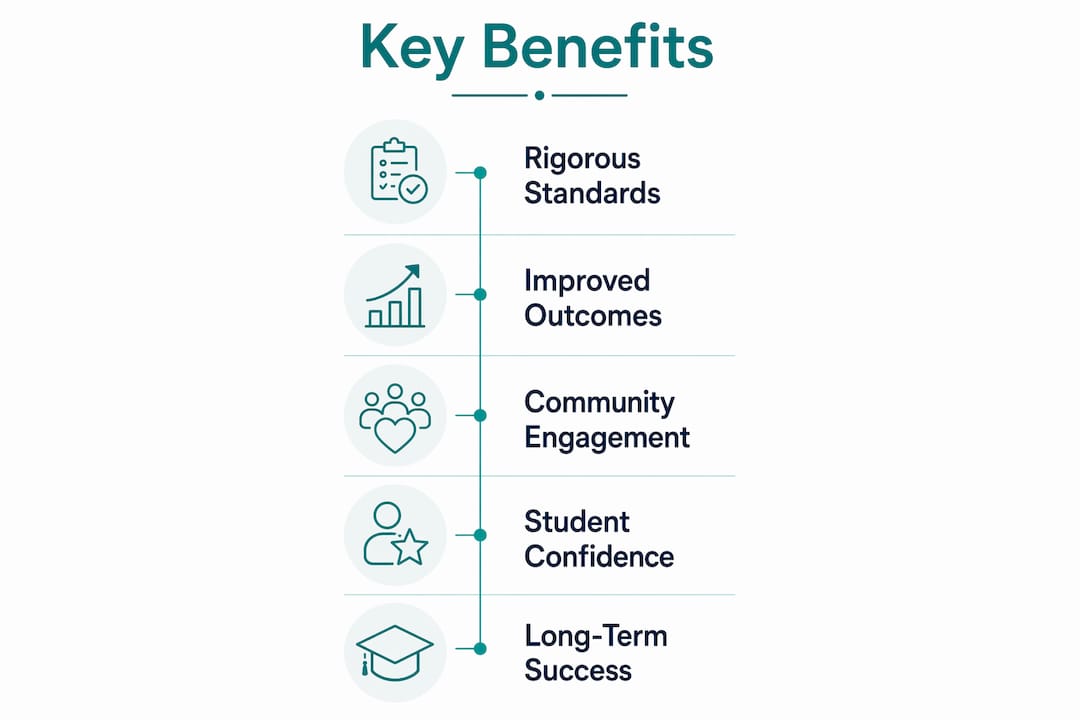
Awards verify that a school meets high standards. They do not guarantee that a particular school is the right fit for your particular child. This distinction is worth holding clearly in mind as you research your options.
Experts consistently advise parents to combine award credentials with thorough personal school visits and direct observation. An award tells you a school has passed a structured evaluation. A visit tells you whether the culture, pace, and community feel right for your child’s personality and learning style. Both pieces of information are necessary.
When you visit a school, pay attention to these factors that awards cannot fully capture:
Classroom atmosphere: Do children look engaged and at ease, or tense and passive? The emotional tone of a classroom reveals more than any award certificate.
Teacher-student interaction: Watch how teachers respond to questions and mistakes. Warmth and patience in those moments signal a nurturing culture.
Physical environment: For younger children especially, the quality of outdoor spaces, sensory areas, and play facilities matters enormously for development.
Communication style: How does the school communicate with parents? Frequent, transparent, and personal communication is a strong indicator of a school that treats families as partners.
Your child’s reaction: If possible, arrange a trial visit. A child’s instinctive comfort or discomfort in a new environment is data worth taking seriously.
Awards provide a credible starting point. They narrow the field and give you confidence that a school has been independently assessed. The final decision, though, belongs to you and your child together.
Long-term advantages of an award-winning education
The advantages of award-winning schools extend well beyond the primary years. The academic confidence, disciplined curiosity, and collaborative skills children develop in recognized schools create a foundation that shapes their trajectory through secondary school, higher education, and professional life.
Research on elite educational environments shows that students exposed to ambitious peer networks are significantly more likely to reach high levels of academic and professional achievement. Students at elite universities are 50% more likely to reach the top 1% of earners by age 33 and earn substantially more a decade after graduation compared to peers from less recognized institutions. That outcome reflects not just curriculum quality but the cumulative effect of years spent in an environment that expects and supports high performance.
For children in primary school today, the long-term picture looks like this:
Benefit | What it means for your child |
Academic confidence | Early success in a challenging environment builds resilience and a growth mindset that persists through harder stages of education. |
Peer networks | Friendships formed in high-achieving environments often become professional and academic networks that open doors years later. |
Teacher development | Award-winning schools invest in ongoing teacher professional development, meaning your child benefits from educators who are continuously improving their practice. |
Preparation for competitive exams | Students from recognized schools tend to be better prepared for selective secondary school entry assessments and international qualifications. |
Lifelong learning habits | Schools that balance rigor with wellbeing produce students who associate learning with curiosity and satisfaction rather than stress and obligation. |
Pro Tip: When comparing schools, ask each one how they support children who are ready to move ahead of the standard curriculum. The answer reveals whether the school genuinely personalizes learning or simply moves all children at the same pace.
Choosing a recognized school is not about chasing prestige for its own sake. It is about placing your child in an environment where the conditions for genuine growth, intellectual, social, and emotional, have been independently verified.
Key takeaways
Award-winning schools offer verified excellence across academics, leadership, and community engagement, making them a strong and credible starting point for parents choosing education for children aged 1.5 to 12.
Point | Details |
Awards require rigorous evaluation | Credible awards involve on-site visits, multi-stakeholder interviews, and published criteria, not just application portfolios. |
Peer environment drives outcomes | Motivated classmates normalize high effort and intellectual curiosity, shaping student growth beyond what curriculum alone achieves. |
Culture shifts benefit everyone | Award processes improve teacher morale, parent engagement, and school culture, creating lasting positive feedback loops. |
Awards are a starting point, not a final answer | Personal school visits and observation of classroom culture are necessary to confirm fit for your individual child. |
Long-term advantages are real | Students from recognized schools build academic confidence, strong peer networks, and habits that support success well beyond primary years. |
What I have learned after years of watching families choose schools
By Elena
Parents often arrive at school selection carrying two competing fears: choosing a school that is too pressured, and choosing one that is not rigorous enough. Award-winning schools tend to resolve that tension better than most, but only if you look past the award itself and into the culture it reflects.
What I have found, after observing many families navigate this decision, is that the schools worth choosing are the ones where the award is a byproduct of genuine commitment rather than a goal pursued for marketing purposes. You can usually tell the difference within ten minutes of a school visit. The schools that earned recognition through authentic practice feel calm and purposeful. Teachers speak about children by name. Leaders know what is happening in every classroom. That is the culture an award should signal, and when it does, the recognition is worth taking seriously.
My honest advice: use awards to build your shortlist, then use your own eyes to make the final call. Ask the principal what they are still working to improve. A school confident enough to answer that question honestly is a school worth trusting with your child.
Combine your award research with a read on identifying quality education and a look at how small schools give children a stronger start. The picture that emerges will be far more useful than any single ranking or certificate.
— Elena
Astor International School: award-winning education in Singapore
Astor International School has earned recognition as Singapore’s Best Small School and Best Affordable International School, awards that reflect exactly the kind of rigorous, multi-dimensional evaluation described throughout this article. Located in the Tanglin area of Singapore and serving children aged 5 to 12, Astor combines small class sizes with a nurturing, personalized environment where every child is genuinely known by their teachers. The school’s International Primary Curriculum connects academic learning to real-world inquiry, building the curiosity and confidence that recognized schools are known for. If you are exploring options for your child, Astor’s two gold awards at the Singapore Education Awards 2025 are a credible place to start your research.
FAQ
What makes a school award-winning?
An award-winning school has passed independent evaluation covering academics, leadership, and community engagement, typically including on-site verification and stakeholder interviews. The process goes well beyond test scores to assess school culture and continuous improvement.
Are awards enough to choose a school?
Awards are a strong and credible starting point, but experts advise parents to also visit schools and observe classroom culture directly. Personal fit for your child’s learning style and personality is equally important and cannot be captured by any award alone.
How do awards affect the day-to-day school experience?
Award-winning schools report improved teacher morale, stronger parent engagement, and higher student participation in academic and extracurricular programs. These cultural benefits create a positive environment that children experience every day, not just during evaluation periods.
Do award-winning schools benefit younger children too?
Yes. The foundational years between ages 3 and 10 are when habits of curiosity, confidence, and collaboration are formed. Award-winning schools that serve young children are specifically evaluated on how well they nurture those qualities in age-appropriate ways.
How can I verify that a school’s award is credible?
Check whether the awarding organization publishes its evaluation criteria publicly, requires on-site visits, and has a track record of recognized work. Ask the school directly which standards they met and how recently the award was granted.
Recommended
Comments