


Benefits of Affordable Education for Kids: 2026 Guide

Affordable education is defined as quality schooling that families can access without excessive financial strain, and its benefits for children aged 1.5 to 12 are both measurable and lasting. The benefits of affordable education extend well beyond tuition savings. They include stronger academic outcomes, richer social development, and reduced family stress. Public schools, charter programs, and boutique affordable international schools like Astor International School in Singapore all demonstrate that cost-effective schooling can deliver genuinely meaningful learning experiences. The right affordable option gives every child a real chance to grow, explore, and thrive.
1. benefits of affordable education: lower costs without lower quality
The most persistent myth about affordable schooling is that a lower price tag means a weaker education. Research does not support that claim. Private schools have smaller class sizes (averaging 17 students versus 24 in public schools), yet academic outcome differences are often negligible once you account for family demographics. The gap in results has more to do with household income and parental involvement than with the school’s price.
Affordable international schools and well-resourced public schools both employ certified teachers, follow structured curricula, and offer extracurricular programs. The value is real. Parents who choose affordable options are not settling. They are making a financially sound decision that research consistently backs.
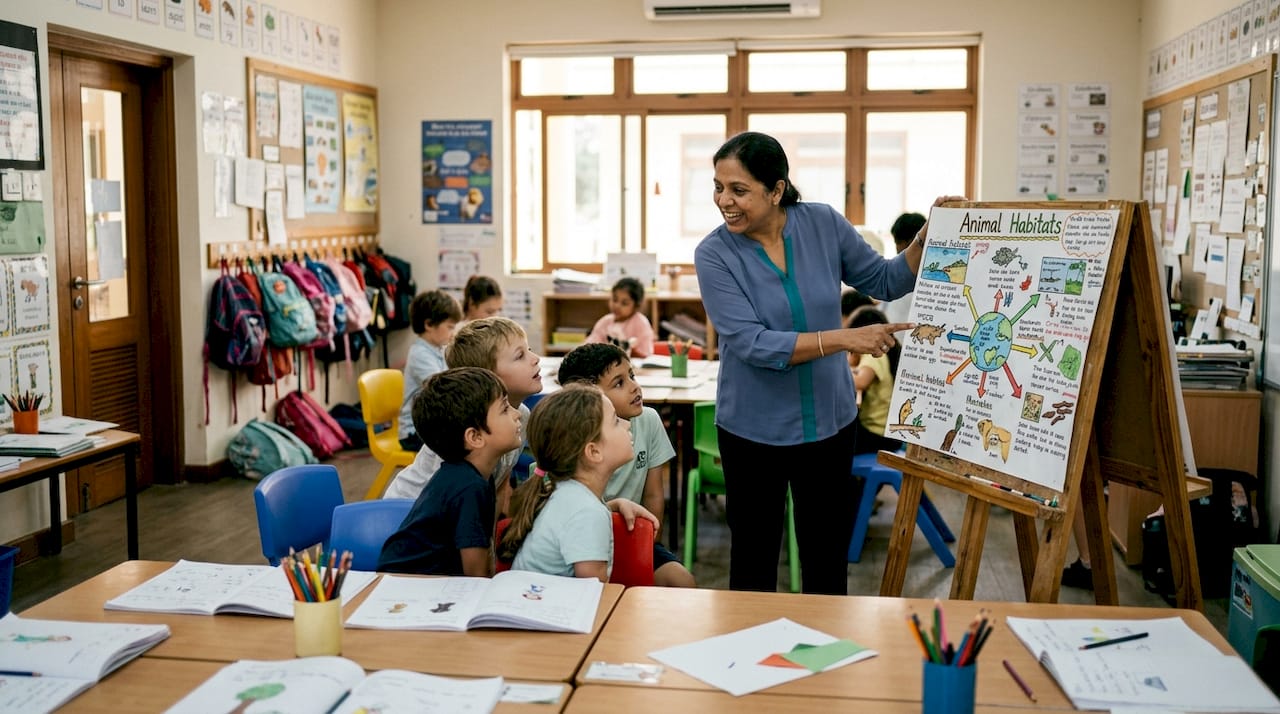
Pro Tip: When comparing schools, ask for standardized assessment results and teacher certification rates rather than relying on tuition cost as a proxy for quality.
2. tuition-free and low-cost access opens doors early
Public K-12 education remains tuition-free, serving 97% of dependent students and producing graduates with a median debt below $20,000. That accessibility starts a child’s educational journey without placing a financial burden on the family from day one. Early access matters most for children aged 1.5 to 6, when foundational language, motor, and social skills develop at their fastest rate.
Affordable preschool programs and international schools with manageable fees allow families to enroll younger children earlier. Earlier enrollment correlates with stronger literacy and numeracy skills by age seven. The importance of low-cost education at the preschool level is therefore not just financial. It is developmental.
3. wraparound supports make affordable schools more valuable
Affordable education’s advantages go far beyond the tuition line. Public schools offer free or reduced-price meals, transportation, extracurricular programs, and special education services that add real value to every family’s budget. These services reduce out-of-pocket expenses significantly. A family that saves on school meals, transport, and therapy services is saving hundreds or thousands of dollars per year.
Research confirms that wraparound supports like childcare and food security are essential to student retention and completion. That principle applies at every level, from preschool through primary school. When a child arrives fed, rested, and transported safely, they learn better. Affordable schools that bundle these services deliver compounding value that a raw tuition comparison will never capture.
Free or reduced school meals reduce hunger-related attention deficits
Subsidized transportation removes a major logistical barrier for working parents
Integrated special education services mean children with learning differences receive support without costly private referrals
After-school programs extend supervised learning time at no extra cost
4. financial aid programs boost enrollment and persistence
Government financial support programs amplify the impact of affordable schooling. Receiving SNAP and EITC benefits increases low-income young adults’ postsecondary enrollment by 63% and 36%, respectively. Those numbers show that financial stability at home directly drives educational participation. When families are not choosing between groceries and school fees, children stay enrolled and engaged.
For parents of young children, this means that pursuing every available financial aid option is as important as choosing the right school. Many affordable international schools also offer sibling discounts, need-based bursaries, and flexible payment plans. Combining school-level affordability with government support creates the most stable foundation for a child’s learning journey.
Pro Tip: Check whether your child’s school participates in government meal subsidy programs or community partnerships. These programs often go unclaimed simply because families are unaware they qualify.
5. day-one access to learning materials raises achievement
One underappreciated advantage of affordable schooling programs is the inclusion of learning materials from the first day of class. Affordable Access programs providing day-one learning materials reduce course withdrawals by 3% and increase passing rates by 27%. Students in these programs save an average of $800 per year on course materials. For a primary school family, that saving compounds across six or more years of schooling.
When children have their textbooks, workbooks, and digital tools ready on the first day, they start learning immediately. There is no lag while parents source materials or wait for deliveries. Schools that include materials in their fees remove a hidden cost that often surprises families mid-term.
6. social diversity builds critical thinking and empathy
Affordable schools, particularly public schools and affordable international schools, tend to serve broader, more diverse student populations than elite private institutions. That diversity is a genuine academic and social asset. Children who learn alongside peers from different cultural, linguistic, and economic backgrounds develop stronger empathy, more flexible thinking, and better communication skills.
At Astor International School in Singapore, for example, the small class sizes and international student body create a community where children practice cross-cultural collaboration daily. The International Primary Curriculum used at Astor is specifically designed to build global awareness alongside core academic skills. These outcomes are not exclusive to expensive schools. They are the product of thoughtful teaching in a diverse, nurturing environment.
Skill Developed | How Affordable Schools Support It |
Empathy | Diverse peer groups expose children to varied life experiences |
Critical thinking | Mixed-ability classrooms encourage problem-solving and peer learning |
Communication | Multilingual environments build language flexibility |
Confidence | Small class sizes give every child a voice and visible recognition |
7. small class sizes in affordable international schools personalize learning
Small class sizes are not exclusive to expensive private schools. Affordable international schools like Astor International School in Singapore are recognized for their small, attentive classrooms, and the school has been awarded best affordable international school in Singapore precisely because it delivers that personalized experience at an accessible price point. When a teacher works with fewer students, every child receives more direct feedback, more encouragement, and more tailored instruction.
Research on small class benefits consistently shows that children in smaller groups demonstrate higher engagement and better retention. For children aged 5 to 12, this translates into stronger foundational skills in literacy and numeracy. The best learning happens when every child is truly seen and supported, and that is achievable without a premium price tag.
8. affordable education reduces family financial stress
Financial stress in the household directly affects a child’s ability to learn. When parents are stretched thin by high tuition fees, that tension enters the home and the classroom. The impact of budget-friendly education on family wellbeing is therefore both economic and emotional. Families who choose affordable schooling retain more disposable income for enrichment activities, books, travel, and the kind of experiences that deepen a child’s education outside school walls.
Public universities average roughly $10,000 in-state tuition annually, significantly less than private institutions. That gap starts early and compounds over a child’s entire education. Families who make cost-effective choices from preschool onward are building long-term financial resilience, not just saving money this year.
9. affordable schools prepare children for a credential-driven future
72% of American jobs by 2031 will require postsecondary education or training. That statistic reframes the importance of low-cost education entirely. Affordable schooling is not a compromise. It is the pathway that keeps postsecondary education within reach. Children who graduate from affordable primary and secondary programs without family debt are far better positioned to pursue further education and career training.
The value of affordable schooling is therefore cumulative. Every year of cost-effective, quality education is a year of financial runway preserved for the future. Parents who prioritize educational affordability advantages early are giving their children options, not limitations.
10. how affordable and private schools compare for families
Parents often wonder whether the higher cost of private schooling translates into meaningfully better outcomes. The evidence says it usually does not. The socioeconomic status of families explains more of the private school academic advantage than instruction quality. A child from a stable, engaged household will thrive in a well-run affordable school just as readily as in an expensive private one.
Factor | Affordable Public or International School | High-Fee Private School |
Annual tuition | Low to moderate | High to very high |
Average class size | 17–24 students | 12–17 students |
Curriculum quality | Strong, certified, structured | Strong, certified, structured |
Wraparound services | Often included | Often charged separately |
Social diversity | High | Lower |
Academic outcomes | Comparable when demographics are controlled | Comparable when demographics are controlled |
The most important factors for your child’s success are school values, teaching quality, community culture, and the fit between the school’s approach and your family’s priorities. Price is rarely the deciding variable.
11. practical steps for choosing the right affordable school
Choosing the right affordable school requires research, not guesswork. Start by assessing the public school options in your area and requesting their most recent assessment results and teacher qualification data. Then explore charter, magnet, and affordable international school options that may offer specialized curricula or smaller class sizes within a manageable budget.
When you visit schools, look beyond the facilities. Ask about wraparound services, financial aid availability, and how teachers handle mixed-ability classrooms. Explore affordable preschool options in Singapore if you are enrolling a child aged 1.5 to 4, since early years programs vary widely in quality and cost. Align the school’s educational philosophy with your family’s values. A school that shares your approach to learning, discipline, and community will serve your child far better than one with a prestigious name but a mismatched culture.
Request standardized test results and teacher certification data before enrolling
Ask specifically about meal programs, transport subsidies, and learning material inclusion
Visit at least two or three schools before deciding, and bring your child if possible
Inquire about financial aid, sibling discounts, and flexible payment options
Research the curriculum model used and whether it aligns with your child’s learning style
Key takeaways
Affordable education delivers quality learning, social development, and long-term financial resilience for families who choose wisely and use every available support.
Point | Details |
Cost does not determine quality | Academic outcomes in affordable schools match private schools when family demographics are controlled. |
Wraparound services add real value | Meals, transport, and materials inclusion reduce total family costs far beyond tuition savings alone. |
Early enrollment matters | Affordable preschool access supports faster language and social development in children aged 1.5 to 6. |
Financial aid amplifies access | SNAP and EITC programs increase enrollment by up to 63%, showing stability drives educational participation. |
School fit beats school price | Values alignment, teaching quality, and community culture predict success better than tuition cost. |
Why i think parents overestimate what a higher price tag buys
After years of writing about education and speaking with families across Singapore and beyond, I have noticed one pattern that repeats itself: parents equate cost with care. The assumption is that a school charging more must be doing more for your child. That assumption is understandable, but it is not well supported by evidence.
The families I have seen thrive are not the ones who stretched their budgets to afford the most prestigious address. They are the ones who found a school where their child was known by name, where teachers had time to notice a quiet struggle or celebrate a small win. That kind of attention is not a function of tuition fees. It is a function of class size, school culture, and teacher commitment.
What I find genuinely encouraging about affordable international schools like Astor is that they prove the “small but mighty” model works. A school does not need a sprawling campus or a sky-high fee to deliver a nurturing, academically strong environment. It needs the right people, the right curriculum, and a genuine commitment to every child in the room.
My honest advice: visit the school, watch how teachers interact with students, and ask how they handle a child who is struggling. Those answers will tell you far more than the fee schedule ever will. Prioritize fit, community, and care. The financial education habits your family builds by choosing wisely now will shape your child’s relationship with learning and money for decades.
— Elena
Affordable international education at astor: quality you can trust
Astor International School in Singapore’s Tanglin area has earned recognition as the best affordable international school in Singapore, and that recognition reflects something real. Small class sizes, the internationally respected IPC curriculum, and a genuinely nurturing community make Astor a place where children aged 5 to 12 are truly seen and supported. For families with younger children, Astor’s preschool in Holland offers a warm, play-based environment with two playgrounds and a blend of outdoor and classroom learning.
If you are exploring cost-effective education options that do not ask you to choose between quality and affordability, Astor is worth a closer look. Visit the Open House at Astor to meet the teachers, see the classrooms, and ask every question on your mind. Your child deserves a school that knows their name.
FAQ
What are the main benefits of affordable education for young children?
Affordable education gives children aged 1.5 to 12 access to quality instruction, social development, and wraparound services without placing excessive financial strain on families. Research shows that academic outcomes in affordable schools are comparable to private schools when family demographics are accounted for.
Does affordable schooling mean smaller class sizes?
Not always in public schools, but affordable international schools like Astor International School in Singapore are specifically recognized for small class sizes that support personalized learning. Smaller groups give teachers more time with each child, which directly improves engagement and retention.
How do wraparound services improve educational outcomes?
Services like free meals, transportation, and included learning materials reduce barriers that prevent children from attending and engaging fully. Affordable Access programs that provide day-one learning materials have been shown to increase passing rates by 27% and reduce withdrawals.
Is an affordable international school a good option in singapore?
Yes. Affordable international schools in Singapore, particularly those offering structured curricula like the International Primary Curriculum, deliver strong academic and social outcomes at a fraction of the cost of elite private institutions. Astor International School has been awarded best affordable international school in Singapore, confirming that quality and affordability coexist.
How should parents choose between affordable school options?
Parents should visit schools, review teacher qualifications and assessment results, and ask about wraparound services and financial aid. Choosing the right affordable school depends more on values alignment and teaching culture than on tuition cost alone.
Recommended
Great tips and very easy to understand. This will definitely be very useful for me when I get a chance to start my blog. Prijs SMA thuisbatterij
Admiring the time and effort you put into your blog and detailed information you offer!.. Prijs SMA thuisbatterij
A great website with interesting and unique material what else would you need. Thuisbatterijen vergelijken
Much thanks for composing such an intriguing article on this point. This has truly made me think and I plan to peruse more Prijs SMA thuisbatterij
I don’t think many of websites provide this type of information. 20 kWh thuisbatterij kopen