


Transition to Primary School Checklist for Parents
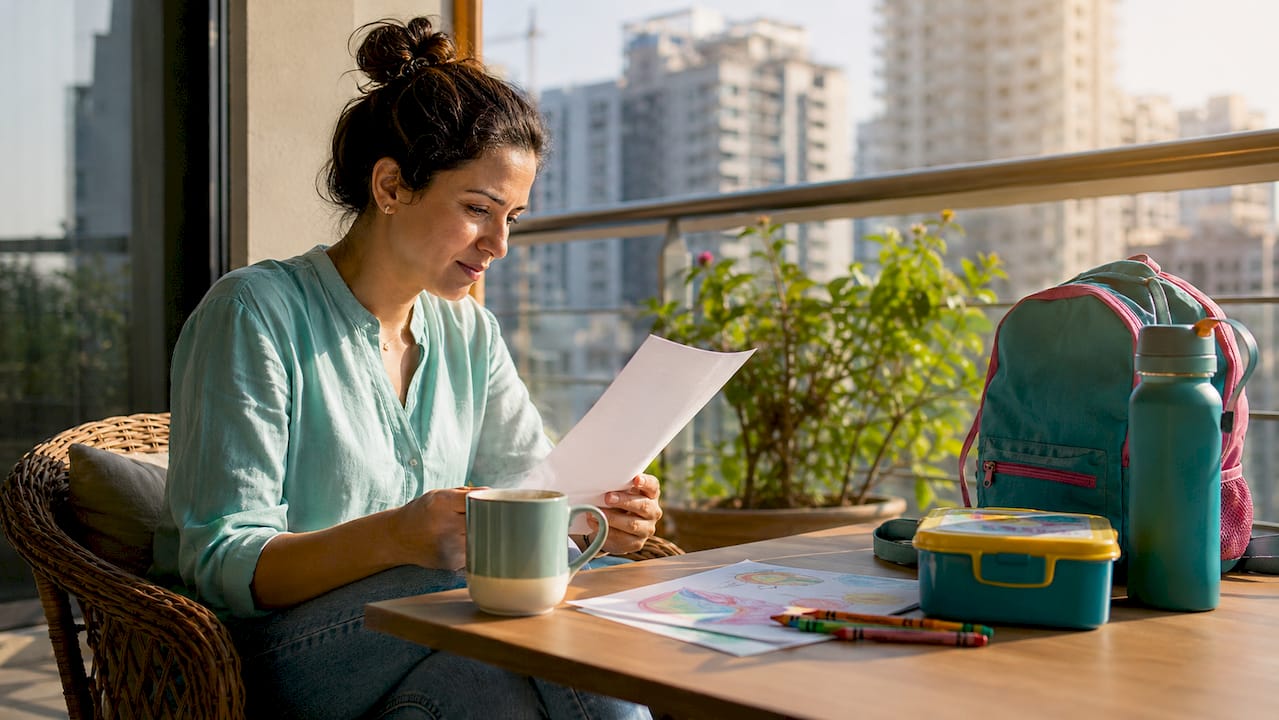
A transition to primary school checklist is a practical tool that helps parents prepare children aged 4–6 for the independence, social skills, and emotional readiness school demands. The shift to primary school is one of the most significant milestones in early childhood, and preparation matters far beyond buying a new backpack. School readiness focuses on self-care, communication, and emotional regulation rather than early reading or writing. The right checklist turns that broad goal into clear, manageable steps you can work through at home, starting months before the first day.
1. Your complete transition to primary school checklist at a glance
School readiness focuses on independence, emotional regulation, communication, and attention rather than early academic skills like reading or writing. That single fact reframes everything. Parents who spend months drilling letter sounds often miss the skills teachers actually prioritize. The checklist below covers every major readiness area, from self-care to parental engagement, so nothing falls through the cracks.
The checklist is organized into six core areas:
Independence and self-care: toileting, dressing, eating, carrying belongings
Social and emotional skills: separating calmly, sharing, following rules, regulating emotions
Communication and focus: asking for needs, following two-step instructions, sitting quietly for 10–15 minutes
Health and development: vision, hearing, and developmental checks before enrollment
Parental engagement: attending orientation events, meeting teachers, sharing your child’s needs
Practical preparations: labeling supplies, packing bags, adjusting sleep routines, completing school forms
Use this list as a reflective guide, not a test. Avoid “testing” children on readiness items. Instead, look for everyday moments where each skill shows up naturally.
2. Independence and self-care skills
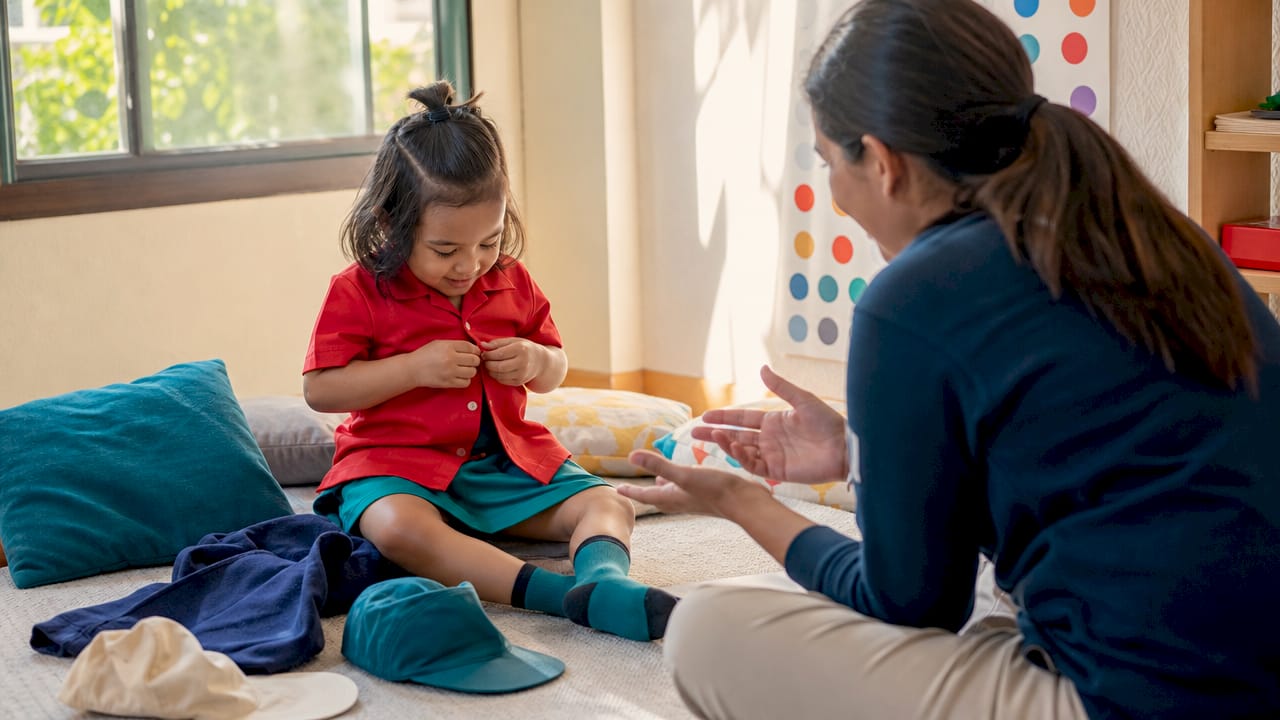
Physical self-care is the foundation of a smooth school day. A child who can manage toileting, dressing, and eating independently frees up teacher attention for learning rather than logistics. Practicing the morning routine, independent dressing, and carrying a bag helps children adjust to the structured school day before it begins.
Key self-care skills to build before the first day:
Use the toilet independently, including wiping and washing hands
Put on and take off shoes, socks, and a jacket without help
Open and close a lunchbox and eat without assistance
Carry a school bag with their own belongings
Recognize their own name on labels and belongings
Experts advise steady, stress-free practice over perfection. A child who sometimes needs help with buttons is still ready for school. The goal is confidence, not flawless execution.
Pro Tip: Label every item your child brings to school with durable, waterproof or iron-on labels. Permanent labels prevent loss far better than marker pen, which washes off within weeks. Include the child’s name on shoes, water bottles, lunchboxes, and every piece of clothing.
3. Social and emotional skills for easing school transition
Emotional regulation is the skill teachers value most. Teachers prioritize emotional regulation and the ability to separate from parents as the most critical readiness skills. A child who can say goodbye calmly and ask a teacher for help will settle into the classroom far faster than one who knows the alphabet but struggles with separation.
Social skills to nurture in the months before school:
Separate from parents without prolonged distress
Ask an adult for help when needed
Share toys and take turns with other children
Follow simple group rules like lining up and listening
Cope with small changes to routine without becoming upset
“Teachers expect a range of abilities on day one. The goal of the first term is adjusting to routine, not academic output.” — Vita et Pax
Reading storybooks about school is one of the most effective ways to prepare children emotionally. Discussing school through stories reduces anxiety and builds positive anticipation. Books like The Kissing Hand by Audrey Penn or First Day Jitters by Julie Danneberg open natural conversations about feelings and expectations. Ask your child what they think school will be like, and listen without correcting their worries.
4. Communication and focus skills for classroom readiness
Clear communication and basic attention skills are the two classroom tools children need most on day one. A child who can tell a teacher “I need help” or “I don’t understand” has a significant advantage. Following two-step instructions and sitting focused for 10–15 minutes are the attention benchmarks teachers work from in the early weeks.
Build these skills through everyday activities at home:
Play games that require listening and following directions, like Simon Says or simple board games.
Read aloud together daily to build vocabulary and listening stamina.
Practice two-step instructions: “Put your shoes on, then get your bag.”
Set a timer for 10 minutes and do a quiet activity together, like drawing or puzzles.
Encourage your child to ask questions and express needs clearly during meals and play.
Early academic mastery is not required before school entry. A child does not need to read, write, or count to 100 before starting primary school. Fostering curiosity and a love for stories is more impactful preparation than pushing early literacy or numeracy.
Pro Tip: Mimic the school schedule at home in the weeks before term starts. Wake up, get dressed, eat breakfast, and do a quiet activity at the same time school would begin. This builds the physical and mental stamina children need for a full school day.
5. How parental engagement with school improves your child’s readiness
Transition is a partnership between home and school. Sharing your child’s habits and routines with teachers supports continuity and eases adjustment. When teachers know a child needs extra time to settle, prefers visual instructions, or has a medical need, they can plan support from day one.
Open days and meetings allow parents to discuss medical or learning support needs up to 6 months before school starts. That lead time matters. A child with a hearing concern, for example, benefits from a classroom seat near the front, but only if the teacher knows in advance.
Steps to take before the first day:
Attend open days, orientation sessions, and meet-the-teacher events
Share your child’s temperament, routines, and any medical or developmental needs in writing
Ask the school for a transition booklet or photos of the classroom to show your child at home
Meet teachers early and ask how they handle separation anxiety in the first week
Follow up after the first two weeks to check how your child is settling
Engagement action | Best timing |
Attend school open day | 4–6 months before start date |
Submit medical and learning support forms | 2–3 months before start date |
Visit classroom with your child | 4–8 weeks before start date |
Meet class teacher one-on-one | 2–4 weeks before start date |
Check in with teacher after first week | End of week one |
6. Essential supplies and practical preparations before the first day
Practical preparation reduces first-day stress for both parents and children. A comprehensive health and development check within 12 months before school entry is strongly recommended, covering vision, hearing, and developmental milestones. Programs like StEPS offer vision screening specifically designed for school-entry age children.
Supplies checklist before the first day:
School bag sized appropriately for your child’s frame
Labeled water bottle and lunchbox with easy-open clasps
Spare set of clothes in the school bag for accidents
Durable, waterproof labels on all clothing, shoes, and supplies
Completed medical forms, emergency contact details, and any allergy action plans submitted to the school
Adjusting sleep and morning routines two to three weeks before school starts makes a real difference. A child who has been waking up at the right time and following a morning sequence arrives at school calm rather than rushed. Fill out all school forms early. Late paperwork delays support plans and creates unnecessary stress in the first week.
Item | Why it matters |
Waterproof name labels | Prevents lost items in the first term |
Easy-open lunchbox | Supports independent eating at school |
Spare clothes in bag | Manages accidents without embarrassment |
Health check completed | Identifies vision or hearing issues early |
Forms submitted early | Allows school to prepare support plans |
Key takeaways
A successful primary school transition depends on building independence, emotional regulation, and communication skills at home, combined with early and active engagement with your child’s school.
Point | Details |
Prioritize self-care skills | Toileting, dressing, and eating independently reduce classroom disruptions and build confidence. |
Emotional readiness comes first | Teachers value calm separation and help-seeking over academic knowledge in the first term. |
Engage with school early | Attend orientation events and share your child’s needs at least 2–3 months before the start date. |
Label everything durably | Waterproof or iron-on labels prevent lost items far better than marker pen. |
Use checklists as guides | Treat readiness checklists as reflective tools, not pass-or-fail tests for your child. |
What I’ve learned about preparing children for primary school
Parents often ask me whether their child is “ready enough.” My honest answer is that the question itself points in the wrong direction. Parents overemphasize academic readiness, while teachers value emotional coping and practical social skills far more for early success. I have seen children who could read full sentences struggle deeply with the first term because they had never learned to separate from a parent without distress.
The most useful shift I can suggest is this: stop measuring readiness and start building it through daily life. Let your child pack their own bag. Let them order their own food at a restaurant. Let them work through small frustrations without stepping in immediately. These moments build the exact skills that make school feel manageable.
Gradual routine shifts work better than intensive preparation in the final week. Start adjusting wake times and morning sequences a full month before school begins, not the night before. And if your child shows signs of real difficulty after the first few weeks, reach out to the teacher early. Schools have support structures in place, but they work best when parents support their child’s learning at home and communicate openly with educators.
Every child settles at their own pace. Confidence and curiosity are the two qualities worth nurturing most. A child who loves asking questions and feels safe enough to try new things will find their footing, even if it takes a little longer than you hoped.
— Elena
Astor International School’s approach to primary school transitions
At Astor International School in Tanglin, Singapore, the transition into primary school is treated as a whole-family experience, not just a child milestone. Astor has been recognized as the best small school and best affordable international school in Singapore, and its small class sizes mean every child is genuinely known by their teacher from the first week.
Astor’s International Primary Curriculum is designed to build the exact skills this checklist covers: independence, curiosity, communication, and social confidence. Parents are welcomed into the process through orientation events and direct teacher access, making it easier to share your child’s needs and build a real support plan. If you are preparing your child for primary school in Singapore, Astor’s nurturing, personalized environment gives families a meaningful head start. Visit astor.edu.sg to learn more about admissions and upcoming open days.
FAQ
What is a primary school readiness checklist?
A primary school readiness checklist is a practical guide covering self-care, social, emotional, and communication skills children need before starting school. It helps parents identify areas to develop through everyday activities rather than formal testing.
What age should children start primary school in Singapore?
Children typically start primary school in Singapore at age 6. A health and development check within 12 months before enrollment is strongly recommended, covering vision, hearing, and developmental milestones.
What skills do teachers actually prioritize on the first day?
Teachers prioritize emotional regulation and the ability to separate from parents calmly over academic skills. Children who can ask for help and follow simple instructions settle into the classroom routine fastest.
How early should parents attend school orientation events?
Parents should attend open days and meet-the-teacher events up to 6 months before the school start date. Early engagement allows schools to prepare personalized support plans for children with specific needs.
Do children need to read or write before starting primary school?
No. Early academic mastery is not required before school entry. Fostering curiosity, listening skills, and a love for stories is more effective preparation than drilling literacy or numeracy at home.
Recommended

I want you to thank for your time of this wonderful read!!! I definately enjoy every little bit of it and I have you bookmarked to check out new stuff of your blog a must read blog! Airco Antwerpen
You know your projects stand out of the herd. There is something special about them. It seems to me all of them are really brilliant! Buitenzwembad
Wow! Such an amazing and helpful post this is. I really really love it. It's so good and so awesome. I am just amazed. I hope that you continue to do your work like this in the future also. Airco plaatsen
It proved to be Very helpful to me and I am sure to all the commentators here! Polypropyleen zwembad
Nice knowledge gaining article. This post is really the best on this valuable topic. Airco Vlaams-Brabant